Go to: Associahedron and associator identities · Publications and Preprints · Markus Rost's Web Page
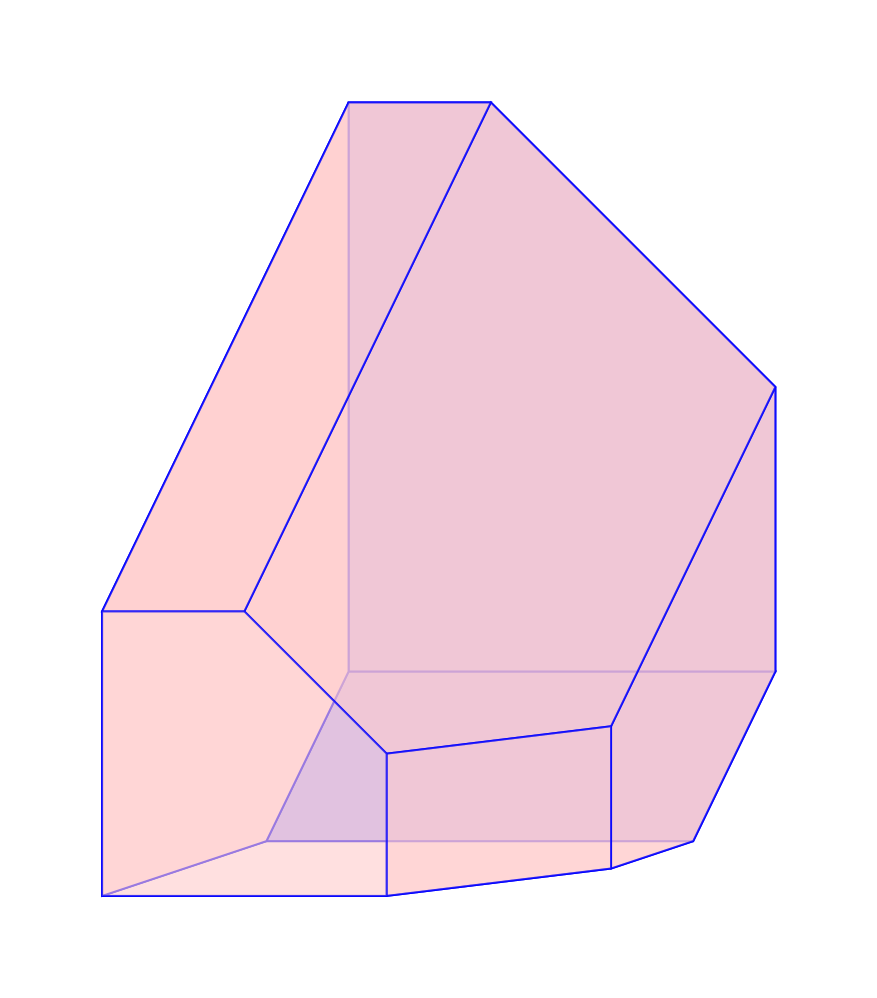
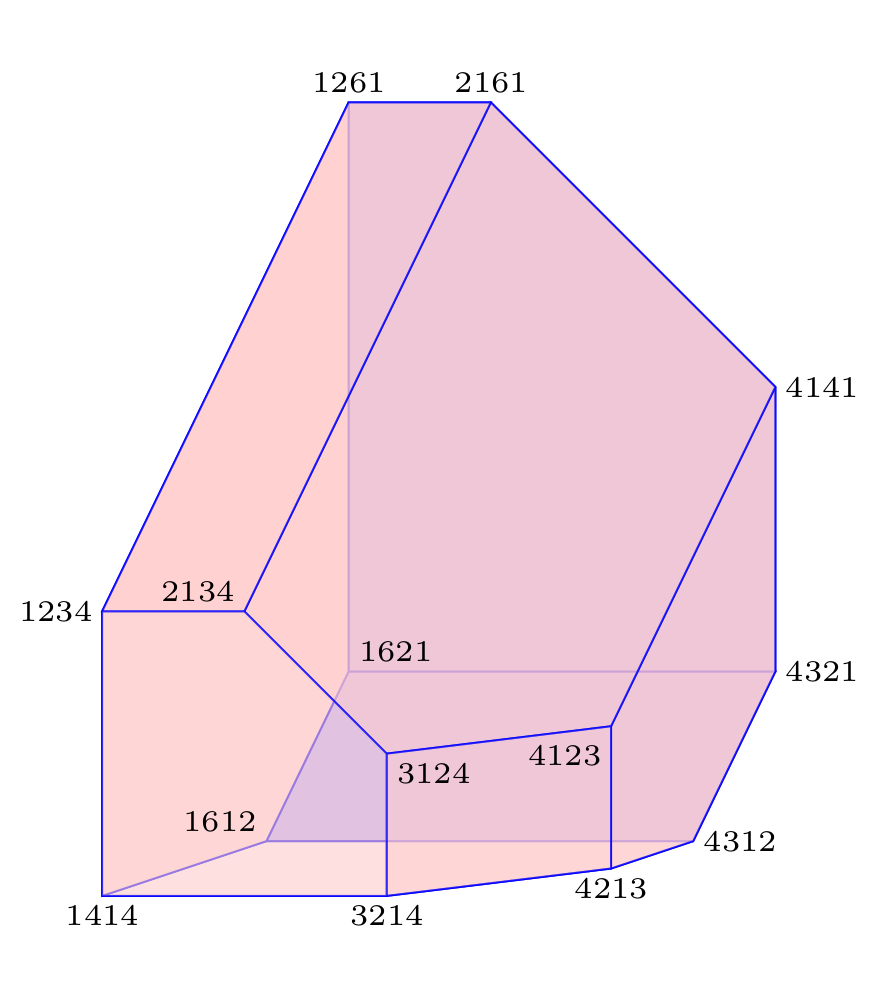
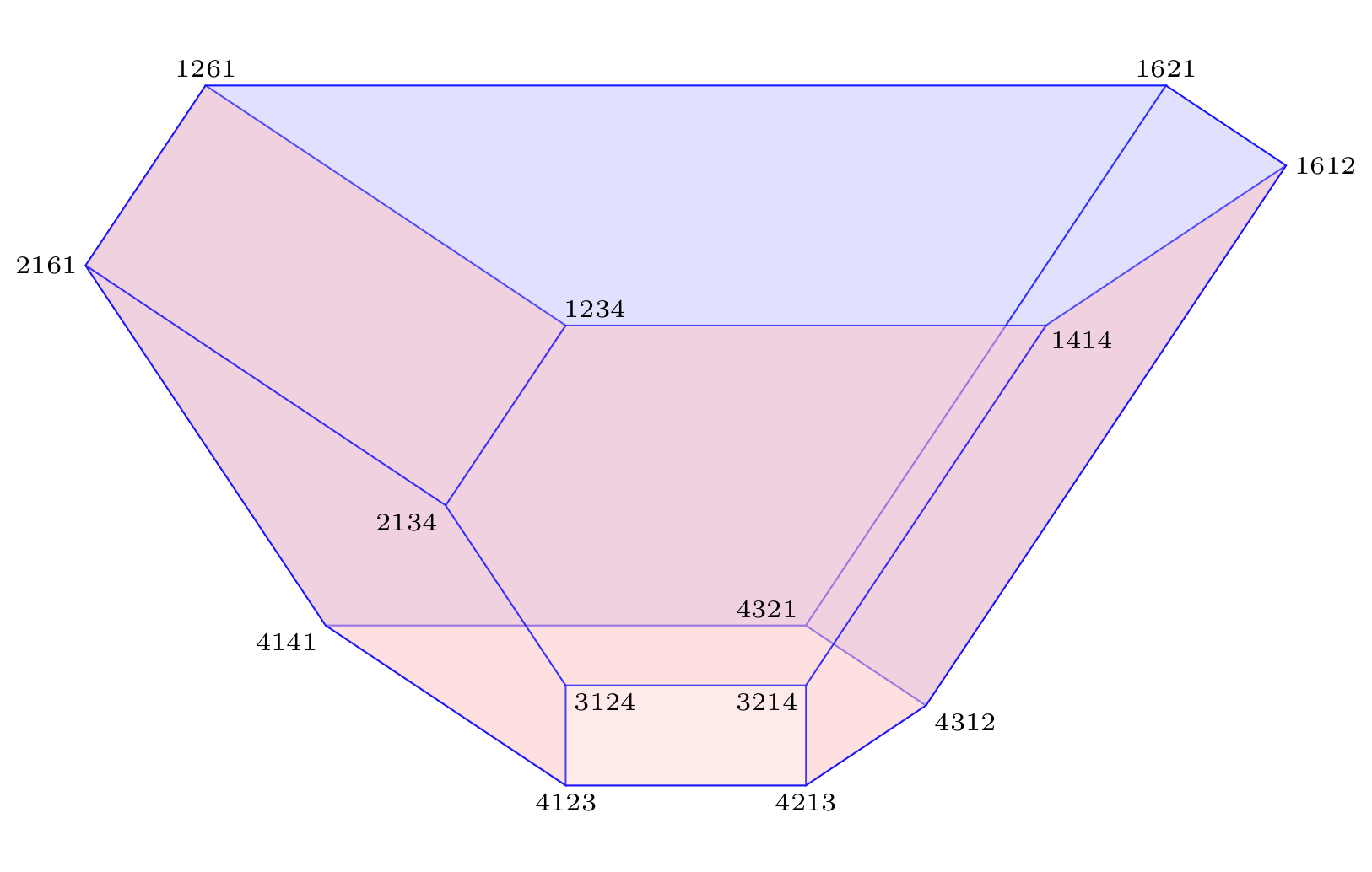
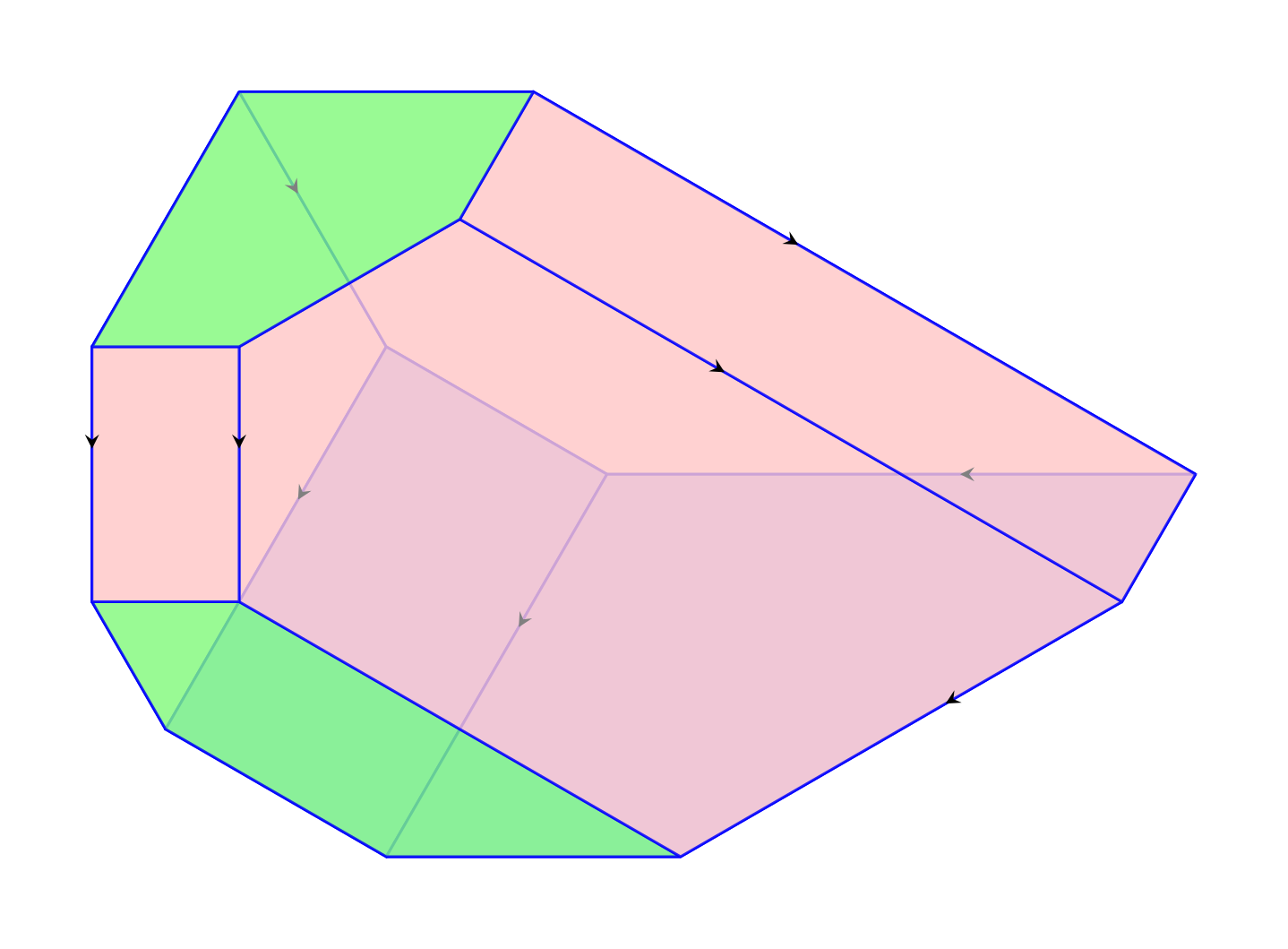
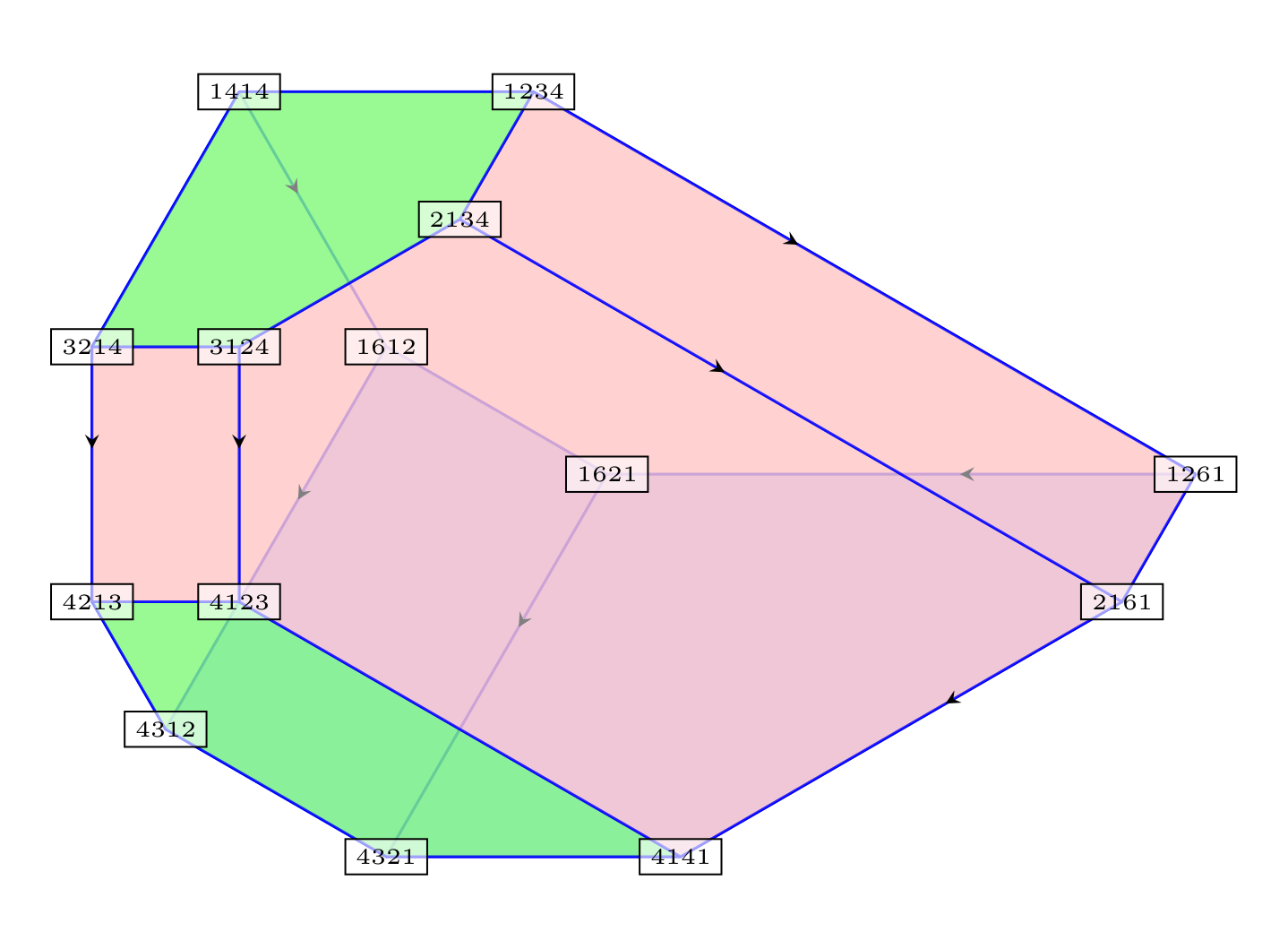
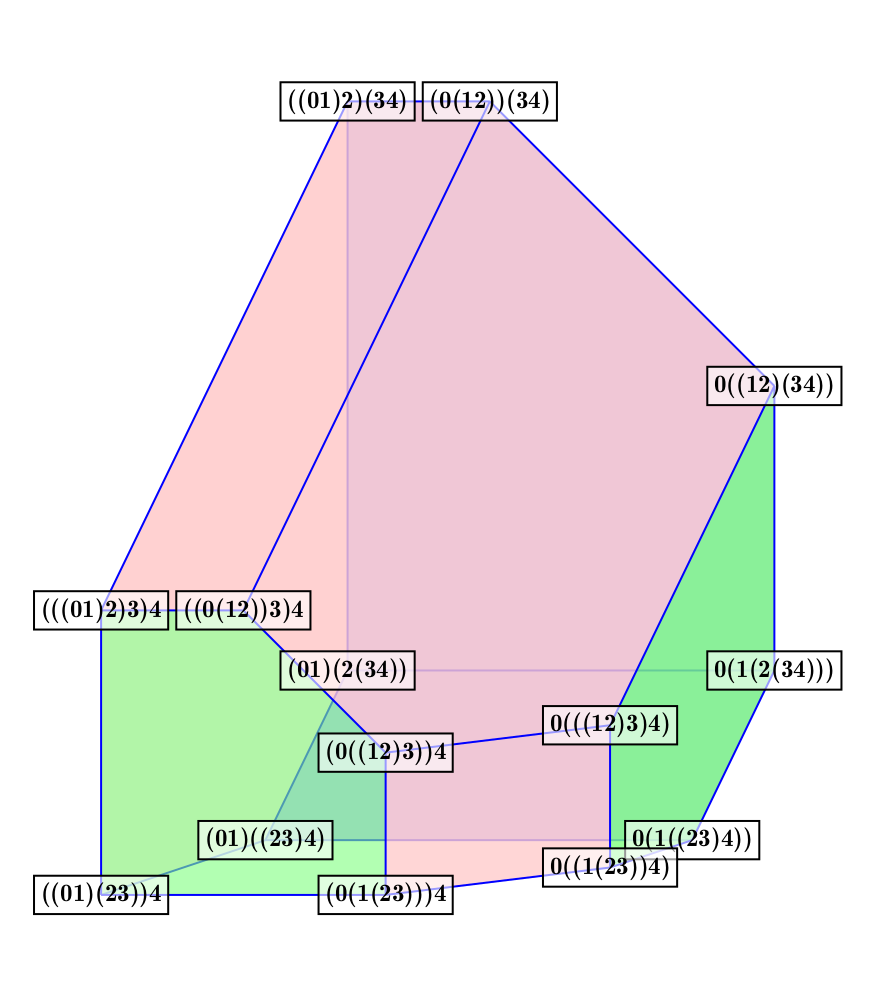
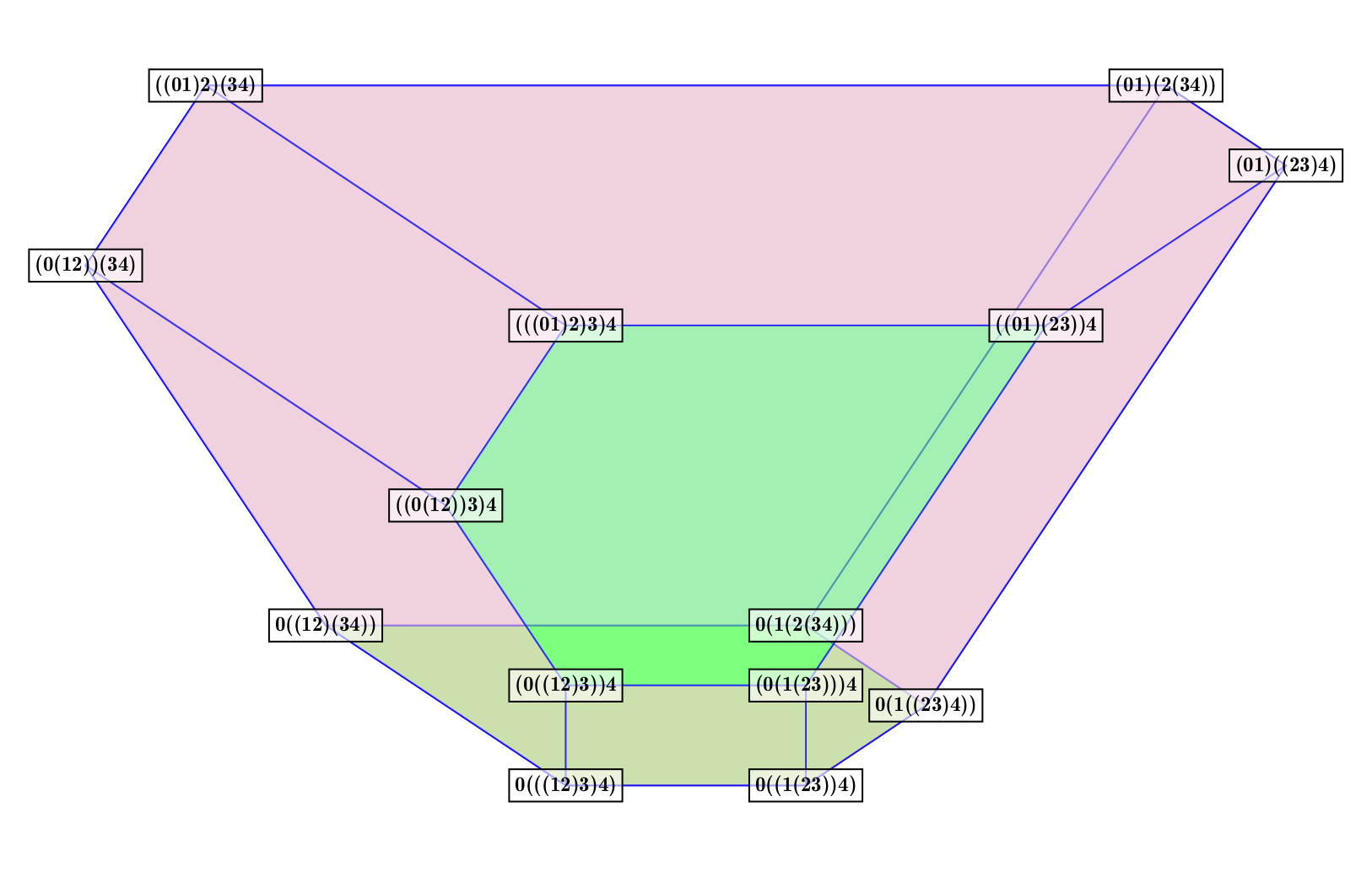
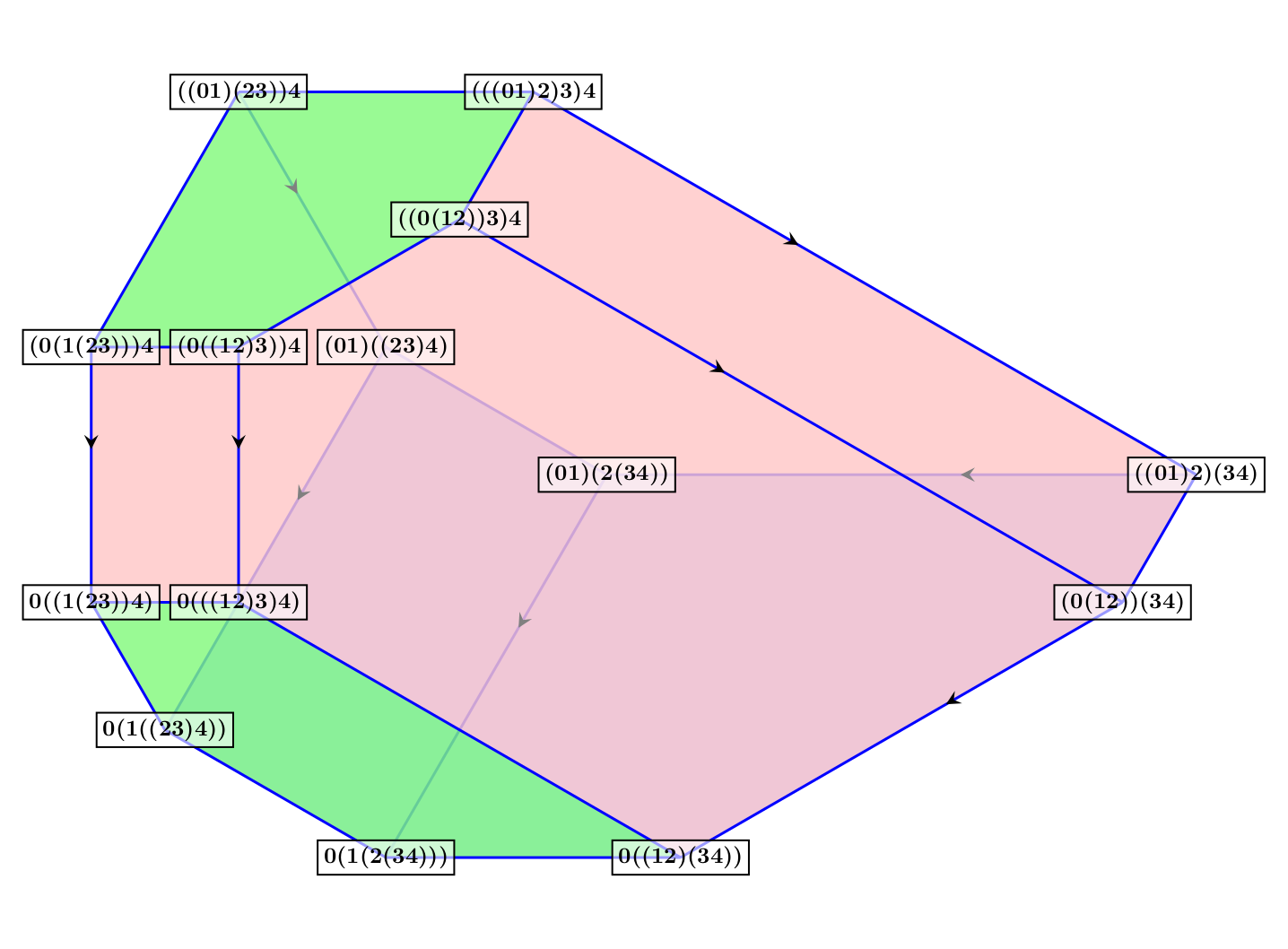
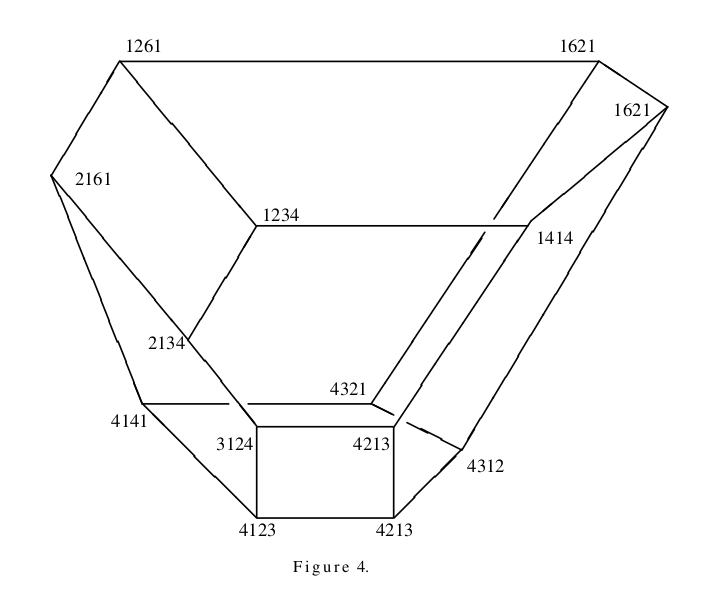
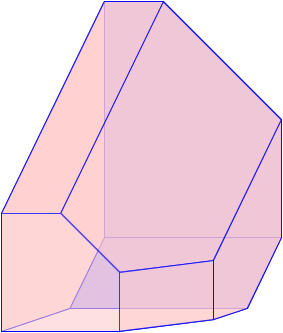
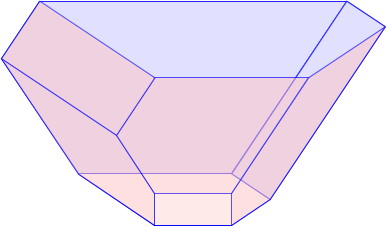
Here are affine projections to the plane of the Loday realization of the 3-dimensional associahedron as a polytope.
The first image is simply the result of a first attempt.
The second image is close to the drawing at the end of Loday's paper [Loday, Jean-Louis. Realization of the Stasheff polytope. Arch. Math. 83, no. 3, 267-278, 2004. MR 2108555].
The third image is the orthogonal projection to a particular face (the pentagon in front). The 2-dimensional sub-associahedron and its opposite are drawn in green. The homotopy between them is indicated (see the page The 3-dimensional associahedron unfolded and the blue arrows in the "homotopy" variant of Tamari's diagram).
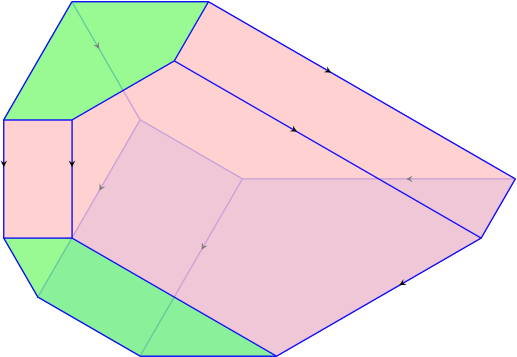
The 9 faces (6 pentagons and 3 rectangles) yield 4 essentially different orthogonal projections.
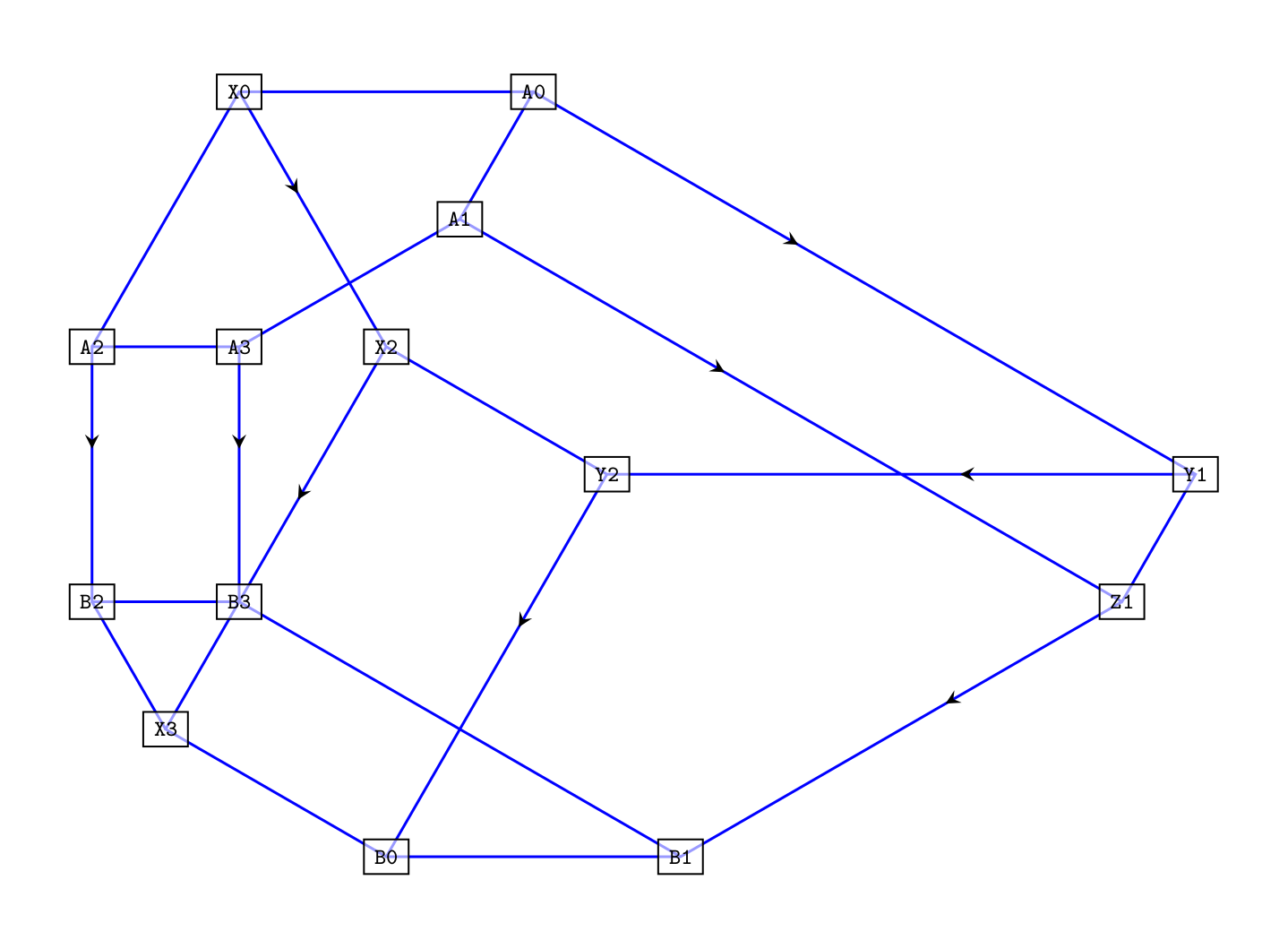
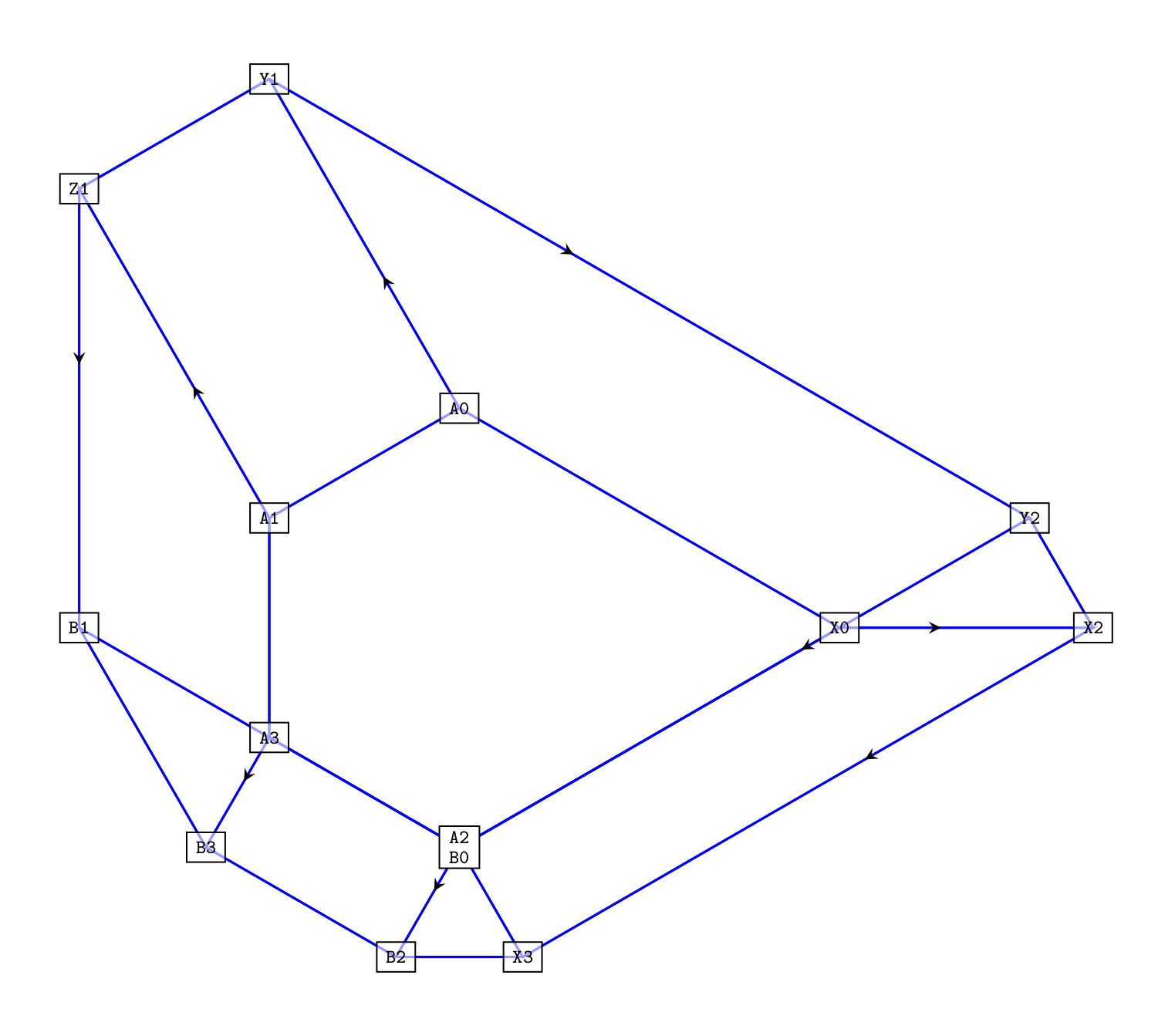
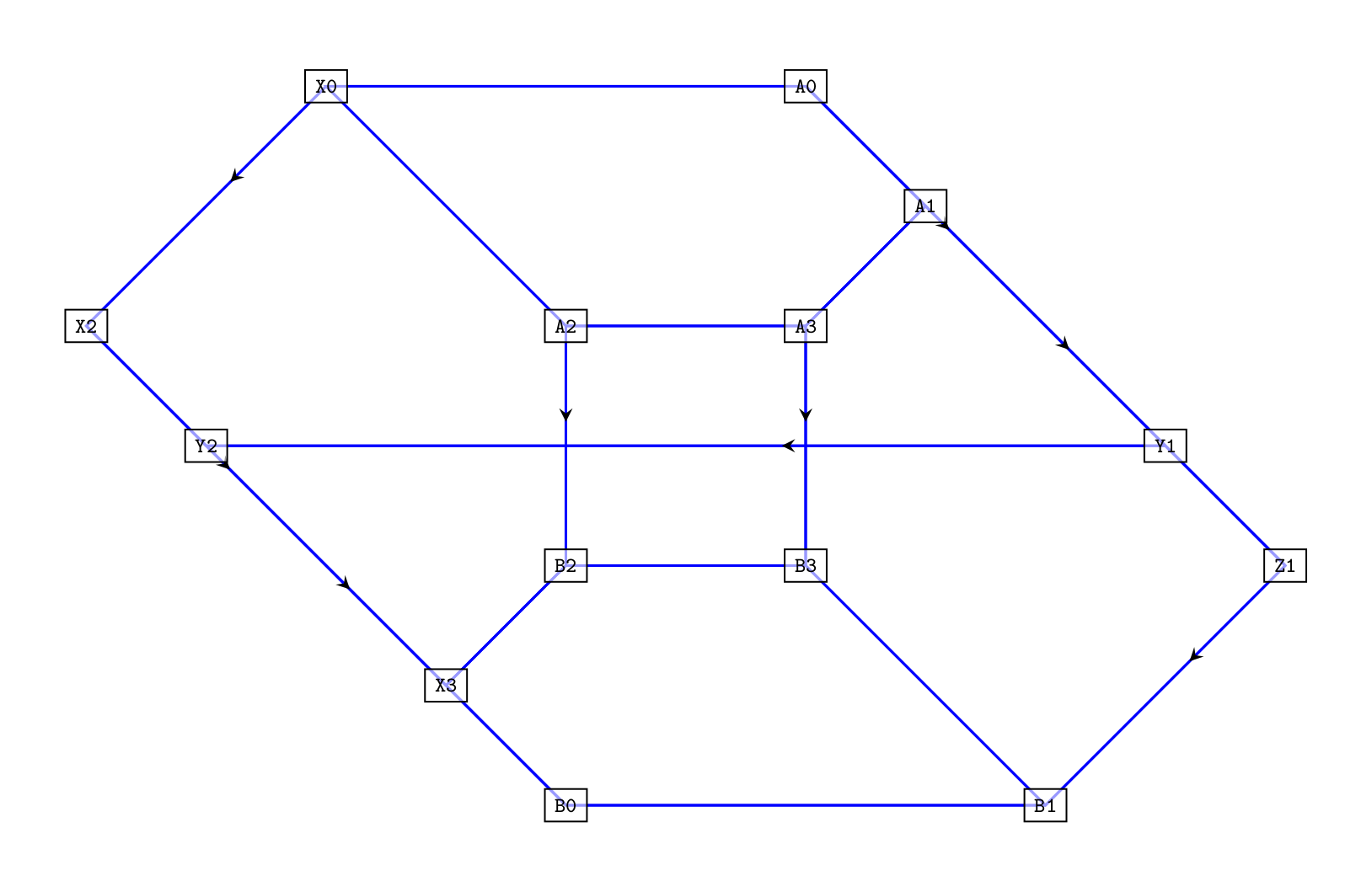
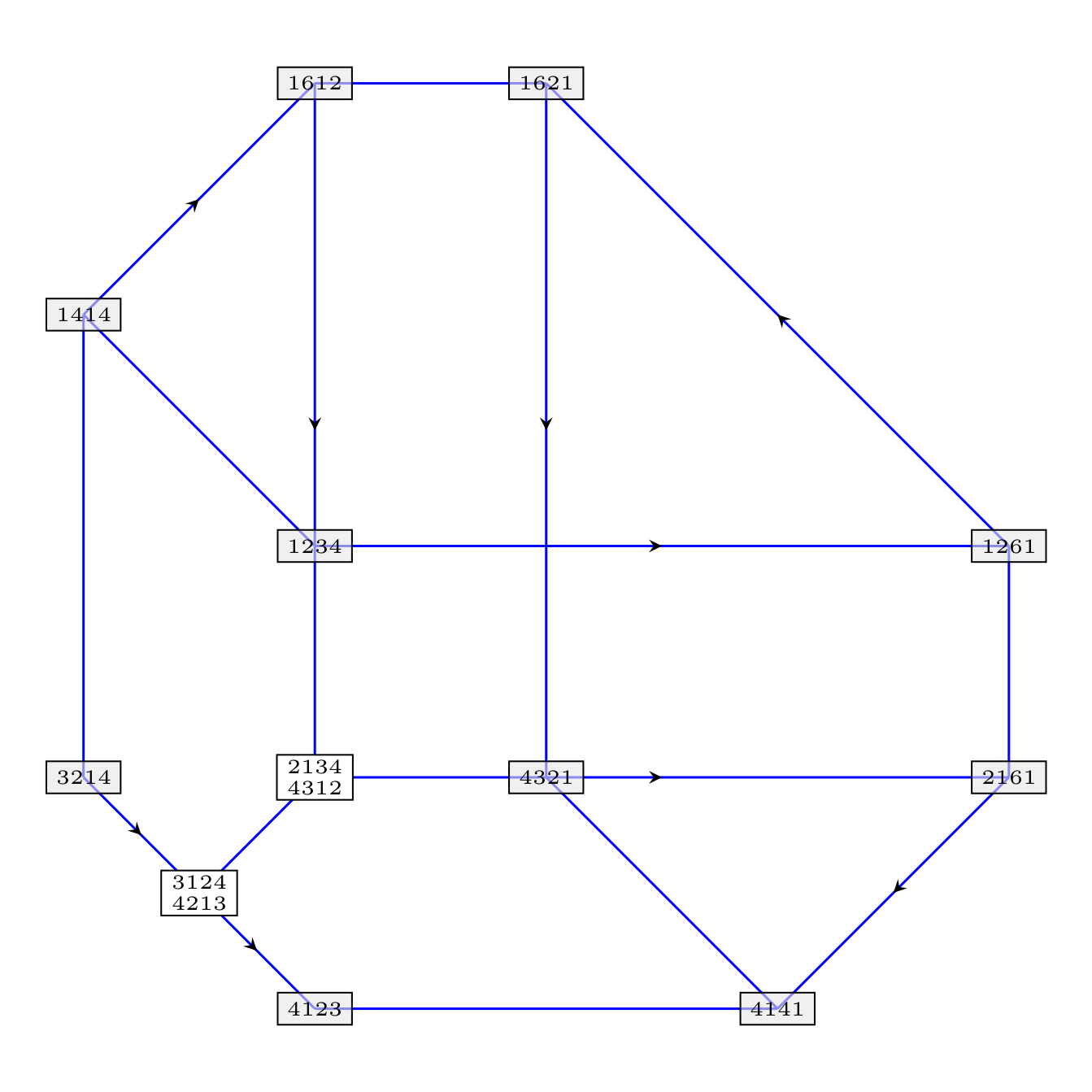
[click on the images for more detailed high resolution versions]
The realization has the symmetry
T: (x,y,z,t) ↔ (t,z,y,x)
The quadrilateral faces are
with notation point+vector1+vector2 for parallelograms.
Quadrilateral Q0 is a square invariant under T. Quadrilaterals Q1, Q2 are 1x3 rectangles lying in parallel planes and interchanged by T.
The lines orthogonal to some face are
Counting faces: (1+1)+(2+2)+1+2=9.
[Projection 1] [Projection 2] [Projection 3] [Projection 4] are flat high resolution images for the projections along the Lk (linked also above from their small condensed versions).
Projections 2,3,4 appear as more degenerate than Projection 1.
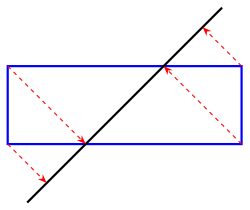
Projection 3 collapses Q1, Q2 like this:
Projection 4 collapses the square Q0 to its diagonal 3214-4123.
See also [Source: cube-3LO.tex].
The pentagon orthogonal to L1 and the 2 pentagons orthogonal to L2 have the shapes:
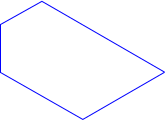
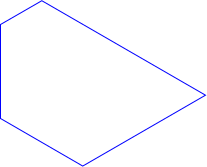
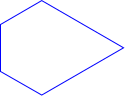
For each pentagon the vertical edge is distinguished by having no parallel edge. The long edges in the 3 pentagons have length ratio 3:4:2. The 3rd pentagon is the Loday realization in the 2-dimensional case.
Go to: Associahedron and associator identities · Publications and Preprints · Markus Rost's Web Page