|
FAKULTÄT FÜR MATHEMATIK |
|
Allgemeine Theorie des Informationstransfer und Kombinatorik
Darstellung der erreichten Ergebnisse
Erstantrag
Apart from the funding granted by the DFG the project also received financial strengthening by the much more broadly applied 3 year research project ``General Theory of Information Transfer and Combinatorics'', led by us, at the Zentrum für interdisziplinäre Forschung (ZiF) with the intensive research year 1.10.02-31.8.03. Within this scope it was in particular possible to relieve the DFG project financially, so that its period of time extended itself by about 2 1/2 years. The interaction with about 100 fellows in two weekly seminars of four hours each led to fundamental ideas and publications, which for a large part, but not exclusively, appeared in the book ``General Theory of Information Transfer and Combinatorics'', Lecture Notes in Computer Science, Springer Verlag, Vol. 4123, 2006 and appear in a Special Issue of Discrete Applied Mathematics. While discussing contributions to the areas A.1-A.4 and B.1-B.4 we indicate also connections to the questions (1)-(42), which are formulated in the original project (Erstantrag).
A.1
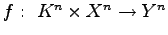
We start with one of the key results. Transmission, identification and common randomness, via a wiretap channel with secure feedback are studied in the work [P6]. Recall that wiretap channels were introduced by A. D. Wyner [28] and were generalized by I. Csiszár and J. Körner [15]. Its identification capacity was determined by R. Ahlswede and Z. Zhang in [9]. In the article here secure feedback is introduced to wiretap channels. Here by secure feedback we mean that the feedback is noiseless and that the wiretaper has no knowledge about the content of the feedback except via his own output. Lower and upper bounds to the transmission capacity are derived. The two bounds are shown to coincide for two families of degraded wiretap channels, including Wyner's original version of the wiretap channel. The identification and common randomness capacities for the channels are completely determined. Also here again identification capacity is much bigger than common randomness capacity, because the common randomness used for the (secured) identification needs not to be secured! (ad (1))
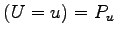
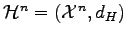
In [P4] we discuss the watermarking identification introduced by Y. Steinberg and N. Merhav. It is assumed in their model that the attacker uses a single channel known by both, information hider and decoder, and the decoder either completely knows the covertext or knows nothing about it. Thus Steinberg and Merhav asked for more robust watermarking systems i.e., the attacker can choose an unknown attack channel from a family of channels, and more general watermarking models i.e., the decoder has side information about the covertext. To answer their questions we present a direct coding theorem of identification watermarking codes for compound channels with the presence of side information at the decoder. To construct the codes we establish coding theorems for the related common randomness.(ad(1))
Shannon (1948) has shown that a source

where  is the length of
  .
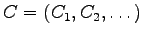
In [P2] a prefix code
.
In [P2] a prefix code  is used for another purpose, namely noiseless
identification, that is every user who wants to know
whether a
is used for another purpose, namely noiseless
identification, that is every user who wants to know
whether a 
 of his interest is the actual source output or
not can consider the RV
of his interest is the actual source output or
not can consider the RV  with
with
 and check whether
 coincides with
in the first,
second etc. letter and stop when the first different letter occurs
or when
coincides with
in the first,
second etc. letter and stop when the first different letter occurs
or when  .
Let
.
Let
 be the expected number of checkings, if
code
is used.
Discovered is an identification entropy, namely the function
be the expected number of checkings, if
code
is used.
Discovered is an identification entropy, namely the function
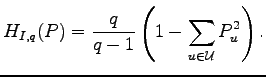
We prove that 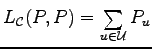
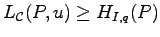 and thus also that

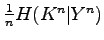
and related upper bounds, which demonstrate the operational significance of identification entropy in noiseless source coding similar as Boltzmann/Shannon entropy does in noiseless data compression. It has been brought to our attention that in Statistical Physics an entropy  has been used in
Equilibrium Theory for more pathological cases, where Boltzmann's
has been used in
Equilibrium Theory for more pathological cases, where Boltzmann's  fails.
Attempts to find operational justifications in Coding Theory have failed.
It is important here that
fails.
Attempts to find operational justifications in Coding Theory have failed.
It is important here that
 (in particular also
  ),
which is to be compared with
),
which is to be compared with
 ,
does not have the parameter
,
does not have the parameter  , the size of the alphabet for coding.
The factor
, the size of the alphabet for coding.
The factor
 equals the sum of the geometric series
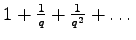 ,
which also has an operational meaning for identification as explained in [P3].
also has a
in its formula, it is the basis of the
,
which also has an operational meaning for identification as explained in [P3].
also has a
in its formula, it is the basis of the  - function for which Shannon's result
holds!
We emphasize, that storing the outcome of a source as a leaf in a prefix code constitutes a
data structure which is very practical. Let for instance the
specify the person
out of a group
- function for which Shannon's result
holds!
We emphasize, that storing the outcome of a source as a leaf in a prefix code constitutes a
data structure which is very practical. Let for instance the
specify the person
out of a group  of persons, who has to
do a certain service. Then every person traces along the tree to find
out whether he/she has to go on service. We know that its expected reading time is always
of persons, who has to
do a certain service. Then every person traces along the tree to find
out whether he/she has to go on service. We know that its expected reading time is always  no matter how big
 is. This goes so fast, because the persons care in this model only about themselves.
If they don't have service, then they don't care in this model who has.
Finding out the latter takes time
is. This goes so fast, because the persons care in this model only about themselves.
If they don't have service, then they don't care in this model who has.
Finding out the latter takes time  and goes to infinity as
does. Notice that
and goes to infinity as
does. Notice that
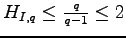 .
Recently we learned that J. Havrda and F. Charvát ([21]) introduced already in 1967 an entropy,
which for
.
Recently we learned that J. Havrda and F. Charvát ([21]) introduced already in 1967 an entropy,
which for  coincides with identification entropy for
  . There are no applications
and cases
. There are no applications
and cases  are not covered. (ad (3))
C. Heup introduced in his dissertation [P8] a related L-identification entropy. (ad (4) and (5)). Codes with identifiable parent property were introduced by H.D.L. Hollmann, J.H. van Lint, J.P. Lennartz, and L.M.G.M. Tolhuizen [22] for protection of copyright. Let  and
and  be two words of the same length
from a finite alphabet. Then a descendant of them is a word of the same length
such that each component coincides with the corresponding component of either
or
, who are called its parents. Identifiable parent property
of a code means that one can discover at least one parent from the descendant
of any pair of codewords in the code. R. Ahlswede and N. Cai observed in [P7]
its relation with coding for multiple access channels. Its probabilistic
version is coding for a multiple access channel such that two senders have
the same codebook and the receiver has to decode the message at least from one
of the two senders. This leads them to a coding problem for the multiple
access channel, where the two senders are allowed to use different
codebooks and again the receiver only needs to decode the message
sent by anyone of the two senders. The capacity region is determined
and the result shows that an optimal strategy for the receiver is to always
decode the message from a fixed sender. The result has a simple consequence
for the interference channel with one deterministic component which seems to be
new.
be two words of the same length
from a finite alphabet. Then a descendant of them is a word of the same length
such that each component coincides with the corresponding component of either
or
, who are called its parents. Identifiable parent property
of a code means that one can discover at least one parent from the descendant
of any pair of codewords in the code. R. Ahlswede and N. Cai observed in [P7]
its relation with coding for multiple access channels. Its probabilistic
version is coding for a multiple access channel such that two senders have
the same codebook and the receiver has to decode the message at least from one
of the two senders. This leads them to a coding problem for the multiple
access channel, where the two senders are allowed to use different
codebooks and again the receiver only needs to decode the message
sent by anyone of the two senders. The capacity region is determined
and the result shows that an optimal strategy for the receiver is to always
decode the message from a fixed sender. The result has a simple consequence
for the interference channel with one deterministic component which seems to be
new.
In [P9] and [P10] we studied a special type of
The model considered in [P11] has applications when storing
information on digital media. The corresponding
A.2
The results of L. Bäumer's phd thesis were published in [P12].
A.3 and A.4
This work received financial support in part also from DFG-AH 46/2. We refer to our final report (Abschlussbericht) there. We just point out here two highlights, [P20] and [P21], relating to the fundamental question of finding quantum versions of classical methods. The first paper [P20] is on classical quantum multiple access channels. The coding and weak converse theorem for classical multiple access channels of [1] was extended to classical quantum multiple access channels in [27]. But the extension of the strong converse theorem has been open for several years. One reason, but likely not the only one, for it is that so far an analogue to the Blowing Up Lemma [7] has not been discovered. Also other methods failed. However the Wringing Technique, a powerful technique of [4], could be extended In [P20] to the quantum case and then gave the desired strong converse. We expect that the work not only helps us to better understand quantum multiple access channels, but also brings new ideas and techniques into the whole area of quantum multi-user information theory.
We conclude now with the second paper [P21].
We prove that the average error capacity
B.1
A Kruskal-Katona type theorem has been proved in [P25] for intersecting families.
Namely, let [P26] contains the simplest proof for Katona's Intersection Theorem. (ad (19))
A communication network is modelled as an acyclic directed graph
We found the asymptotics of the number of labelled uniform hypergraphs with given degree sequences in [P29] by using a new switching algorithm. [P30] gives progress on Young Tableaux and [P31] generalizes work of V. Blinovsky from Hamming to general sum-type metric spaces. The rate-wise optimal results find applications to search with lies with general cost constraints introduced in [P57].
B.2
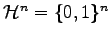
Problem: At most how many (0,1)-vectors of given weight can be embedded in a
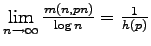
Solving in [P34] this long standing geometrical extremal problem first raised by Longstaff (1977) and by Odlyzko (1981) was the starting point for developing a new area : Extremal Problems under Dimension Constraints. Some recent results, conjectures and research problems can be found in [P35], [P36] and forthcoming work in J. Comb. Theory on Intersecting systems under dimension constraints. (ad (22)) An extremal problem raised by Bohman in connection to a sum packing problem of Erdös was studied in [P37]. In particular, we disproved Bohman's conjecture stating a new conjecture for this problem. (ad (26))
A very basic inequality, known as the
Ahlswede-Daykin inequality and called Four Function Theorem
by some authors,
which is more general and also sharper than known correlation inequalities
in Statistical Physics, Probability Theory, Combinatorics and Number Theory (see the preface
and survey by Fishburn and Shepp [19])
is extended elegantly to function spaces in [P32].
That is, the inequality of the same type holds for a Borel measure
on
It seems that with [P33] a new direction started.
In the last century together with Levon Khachatrian we established a
diametric theorem in Hamming space
B.3
It was planned to continue with A. Sárközy our investigations of extremal sets of numbers, especially primitive sets. Unfortunately, various obligations prohibited to work on the problems (33)-(44), but we still want to do it! On the other hand, occasional meetings in Luminy and in Bielefeld, also with C. Mauduit and J. Cassaigne, led to nice number theoretical contributions to Cryptology.
The papers are devoted to the investigation of the problem of
generating pseudorandom sequences and their statistical properties.
This is an important task for cryptology since for instance these pseudorandom
sequences can serve as a source of key bits needed for encryption. The
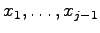
first problem in [P40] is to find a proper test for sequences
of elements from a finite alphabet to be pseudorandom.
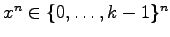
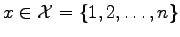
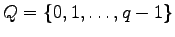
For a binary sequence with alphabet
More explanations are given by the excellent introductions also in earlier work, where C. Mauduit and A. S'arközy explain their approach to cryptology. Roughly speaking their philosophy is that less can be more: instead of going after complex problems whose high complexity till now cannot be proved and therefore always there can be a bad end of a dream, they suggest to work with number theoretical functions of likely not highest complexity, but for which some degree of complexity can be proved. Together with V. Blinovsky classical number theoretical extremal theory was advanced in [P43].
A decade ago Ahlswede and Khachatrian settled a problem of Erdös
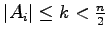
about maximal sets of positive integers less than
These authors also found an extension to algebraic number fields [P43].
There they prove that for all sufficiently large The famous Green/Tao result says that the primes have arbitrary long arithmetical progressions. Subsequently Tao found a novel connection: Information Theory as tool for Graph Theory and Number Theory The final form of Tao's inequality relating conditional expectation and conditional mutual information Recently Terence Tao ([26]) approached Szemerédi's Regularity Lemma from the perspectives of Probability Theory and of Information Theory instead of Graph Theory and found a stronger variant of this lemma, which involves a new parameter. To pass from an entropy formulation to an expectation formulation he found the following
Lemma.
Let Then we have

We show that the constant 2 can be improved to
B.4
Enrichments for the project are gained from relations between coding for channels with feedback and search problems (c.f. [8]).
For example error-correcting codes with feedback, which were introduced by Berlekamp [11]
are equivalent
to the following search problem. A search space
This search model is often described
equivalently as ``Renyi-Berlekamp-Ulam-Game''.
The models readily extends to
In [P52] the authors assume some
symmetry of
A coding scheme for delayed feedback, which shows that in this case the capacities of all memoryless channels with non-delayed feedback can be achieved, is given in [P47]. A characterization of the zero-error capacity of a DMC and the average-error capacity of an AVC, when the delay time increases linearly with the length of the codes, is also obtained.
In [P46] the Kraft inequality for d-DBS codes is sharpened, based on the work of Ambains-Bloch-Schweizer, who introduced these codes.
A new suffix sorting algorithm to sort all suffixes of a
string
Already in his Lectures on Search Renyi suggested to consider a search
problem, where an unknown
Katona gave in 1966 the lower bound
In [P57] we consider the question, whether there
exists a fix-free code for a given sequence of codeword lengths.
We introduce general
A famous problem in coding theory consists in finding good bounds for
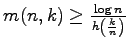
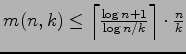
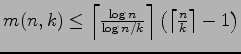
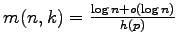
the maximal size, say
C.1
A broad class of statistical problems arises in the framework of hypothesis testing in the spirit of identification for different kinds of sources, with complete or partial side information or without it. [P60] is devoted to the investigation of a hypothesis testing problem for arbitrarily varying sources with complete side information. [P59] considers the more difficult but more promising problem of hypothesis identification.
C.2
In [P61] readers find an interesting application of Information Theory in the study of Language Evolution. The model was originally introduced by M.A. Nowak and D.C. Krakauer [23], where the fitness of a language is introduced. For this model they showed if signals can be mistaken for each other, then the performance of such systems is limited. The performance cannot be increased over a fixed threshold by adding more and more signals. Nevertheless the concatenation of signals or phonemes to words increases significantly the fitness of the language. The fitness of such a signalling-system depends on the number of signals and on the probabilities to transmit individual signals correctly. R. Ahlswede, E. Arikan, L. Bäumer and C. Deppe investigated optimal configurations of signals in different metric spaces. In [P61] we prove for all metrics with a positive semidefinite associated matrix a conjecture by Nowak including all important metrics studied by different authors in this direction. The conjecture holds for all ultra-metric spaces. Especially the authors analyze the Hamming space. In this space the direct consequence of the theorem is that the fitness of the whole space equals the maximal fitness and the fitness of Hamming codes asymptotically achieves this maximum.These theoretical models of fitness of a language enable the investigations of traditional information theoretical problems in this context, in particular, for feedback problems, transmission problems for multi-way channels etc. It is shown that feedback increases the fitness of a language.
C.3
The paper [P62] has been discussed in 2.1.
C.4
In the recent paper [P61] it is shown that the work under B.2 finds applications in Statistical Database Security (see [20]) and settles several of the problems there.
Fortsetzungsantrag
In the short phase of the sequel proposal (31.8.2006-29.2.2008) only some tasks could be worked on with the granted resources (7 BAT IIa positions for one year were applied for and 1.5 positions for one year could be given). Progresses were achieved in B.1 (Development of Methods: Inequalities and Extremal Problems) B.4 (Search and Sorting), and C.4 (Security in Database), which are explained beneath.
B.1
Ahlswede and Soloveva considered in [P63] .........
B.4
In [P64] we close the gap between the bounds of [P54] (see first phase B.4) and provide
matching upper and lower bounds also if
C.4
A statistical database (SDB), considered in [P65], is a database that is used to return
statistical information derived from the
records to user queries for statistical data analysis.
Sometimes, by correlating enough statistics, confidential data
(stored in a SDB) about an individual can be inferred.
Examples of confidential information stored in a SDB might be salaries
or data concerning the medical history of individuals.
An important problem is to provide security to SDB
against the disclosure of confidential information.
A statistical database is said to be secure if no protected data can be
inferred from the available queries.
One of the security-control methods suggested in the literature
consists of query restriction:
the security problem is to limit the use of the SDB, introducing
a control mechanism, such that no protected data
can be obtained from the available queries.
Chin and Ozsoyoglu [13] introduced a control mechanism,
called Audit Expert, where
only SUM queries, that is only certain sums of individual records,
are available for the users. This SUM query model leads to several
challenging optimization problems.
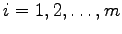
Assume there are Noch nicht bearbeitete Teilgebiete für Informationsflüsse wurden im gegenwärtigen Antrag des DFG-Projektes ``Informationflüsse'' - wie dort unter 2.1 erläutert - mit aufgenommen.
|







![$ R^{[0,1]}$](img62.png)


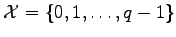








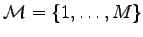
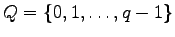
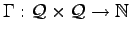
![$ \mathcal Y\subset[-1,1]$](img83.png)



















![$ E\subset [n]=\{1,\ldots ,n\}$](img133.png)

![$ E\in\mathcal E_t=\binom{[n]}t$](img135.png)
![$ [n]$](img136.png)