Nebenbemerkungen
Die Oberfläche eines Lebewesens
Fast jedes Lebewesen ist im wesentlichen
ein Torus:
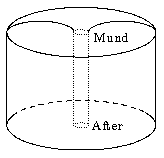
(nicht jedoch die Hohltiere).
Hier die interne Struktur eines Hohltiers:
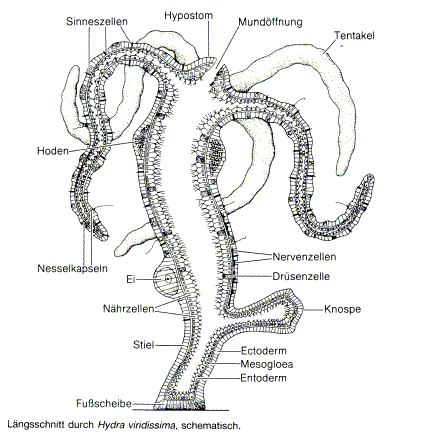
Es ist interessant, der Frage nachzugehen, wann in der Embryonal-Entwicklung
aus dem anfänglichen Zellhaufen ein Torus wird.
Gastrulation:
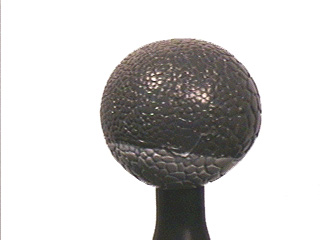
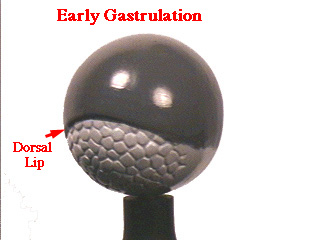
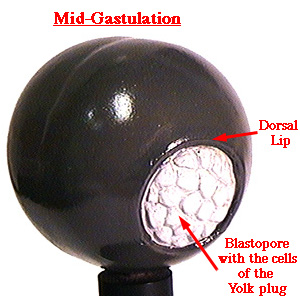
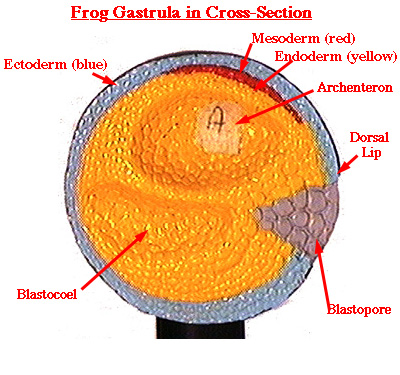
Gradually the micromeres overgrow the yolk and form a dorsal lip over the yolk. The tissue tucks in below the lip and an opening develops that is known as a blastopore. This process is known as gastrulation. It is similar to pushing your finger into an inflated balloon. The internal cavity ultimately becomes the gut of the animal.
| Stages in the formation of the blastopore.
|
| Early | The Start of the Dorsal Lip | Completely formed blastopore
| Cross-section of the gastrula.
|
| 
| 
| 
|
Later in gastrulation irregular cells bud off from the advancing tip of the gut and give rise to the mesoderm or third germ layer. In the gastrula, embryo with three cell layers, the anterior portion of the gut gives rise to a body cavity known as a coelom.
From: http://www.howe.k12.ok.us/~jimaskew/banintro.htm
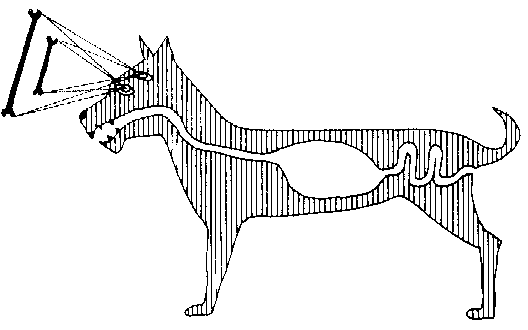
Der zweidimensionale Hund
Er sieht einen Knochen ...
Der Knochen im Magen:
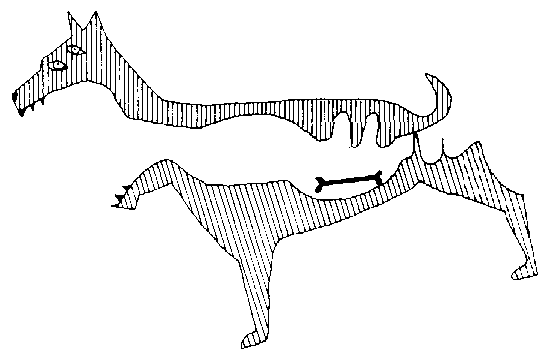
Die, wenn auch unappetitliche, aber einzig existenzmögliche
Variante für das Überleben eines zweidimensionalen Hundes -
Mund und After sind Eins:
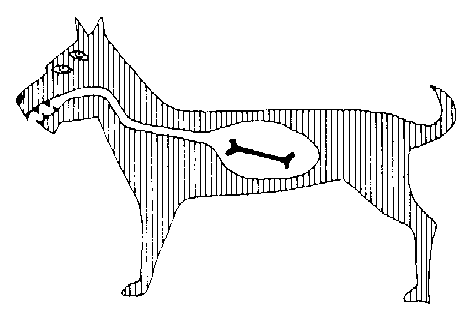
Aus: Otto Patzelt. Faszination des Scheins. 500 Jahre Geschichte der Perspektive. Verlag für Bauwesen. Berlin. 1991.
Bild 204. Ein zweidimensionaler Hund mit seinen existenziellen Problemen.
Ringel
Last modified: Sun Nov 2 13:13:36 CET 2003