Go to: Associahedron and associator identities · Publications and Preprints · Markus Rost's Web Page
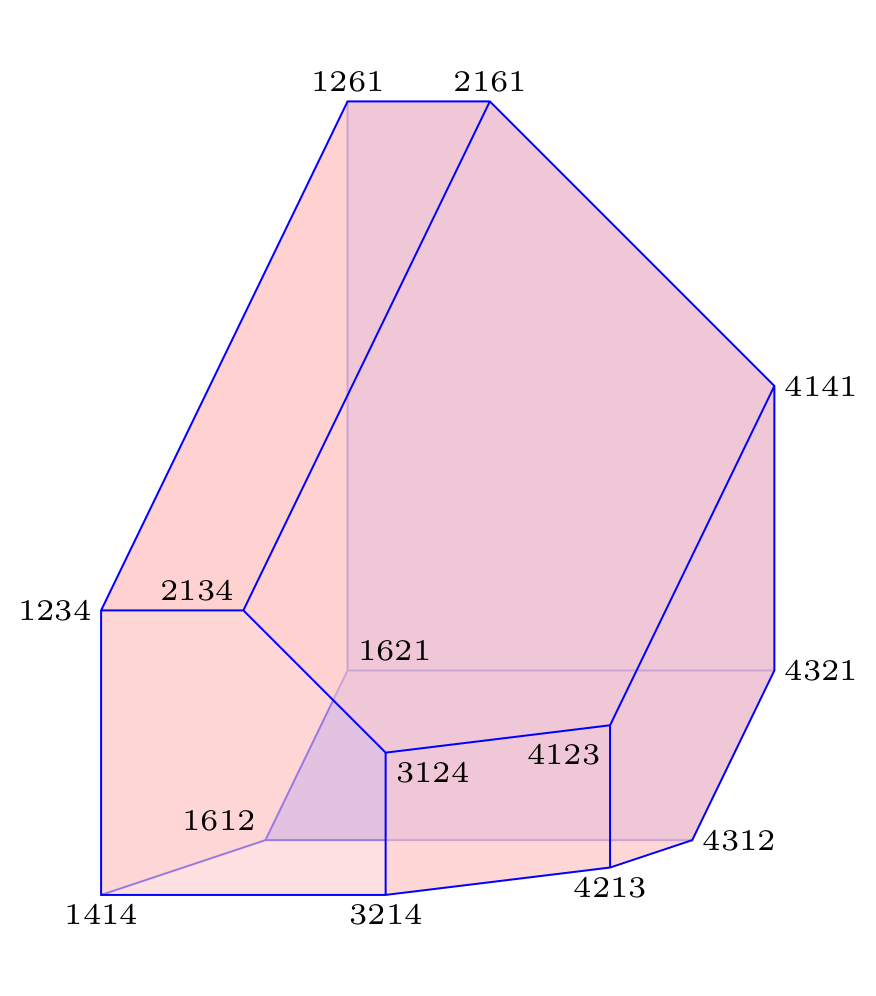
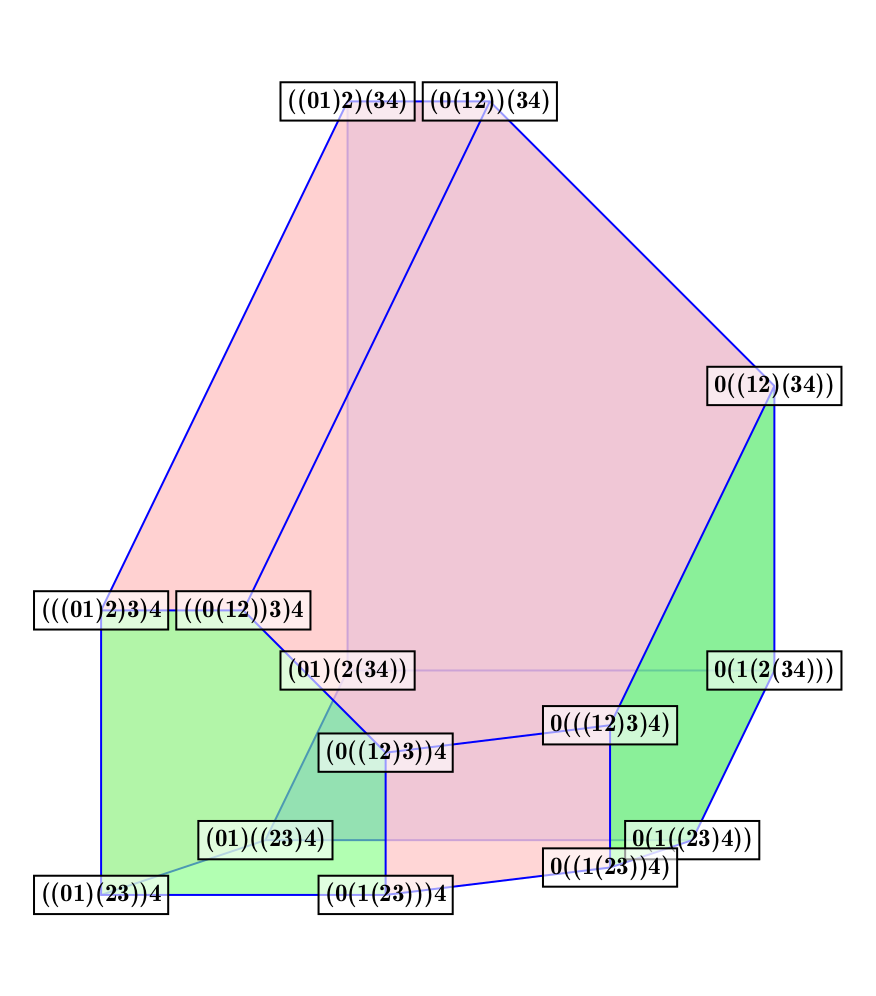
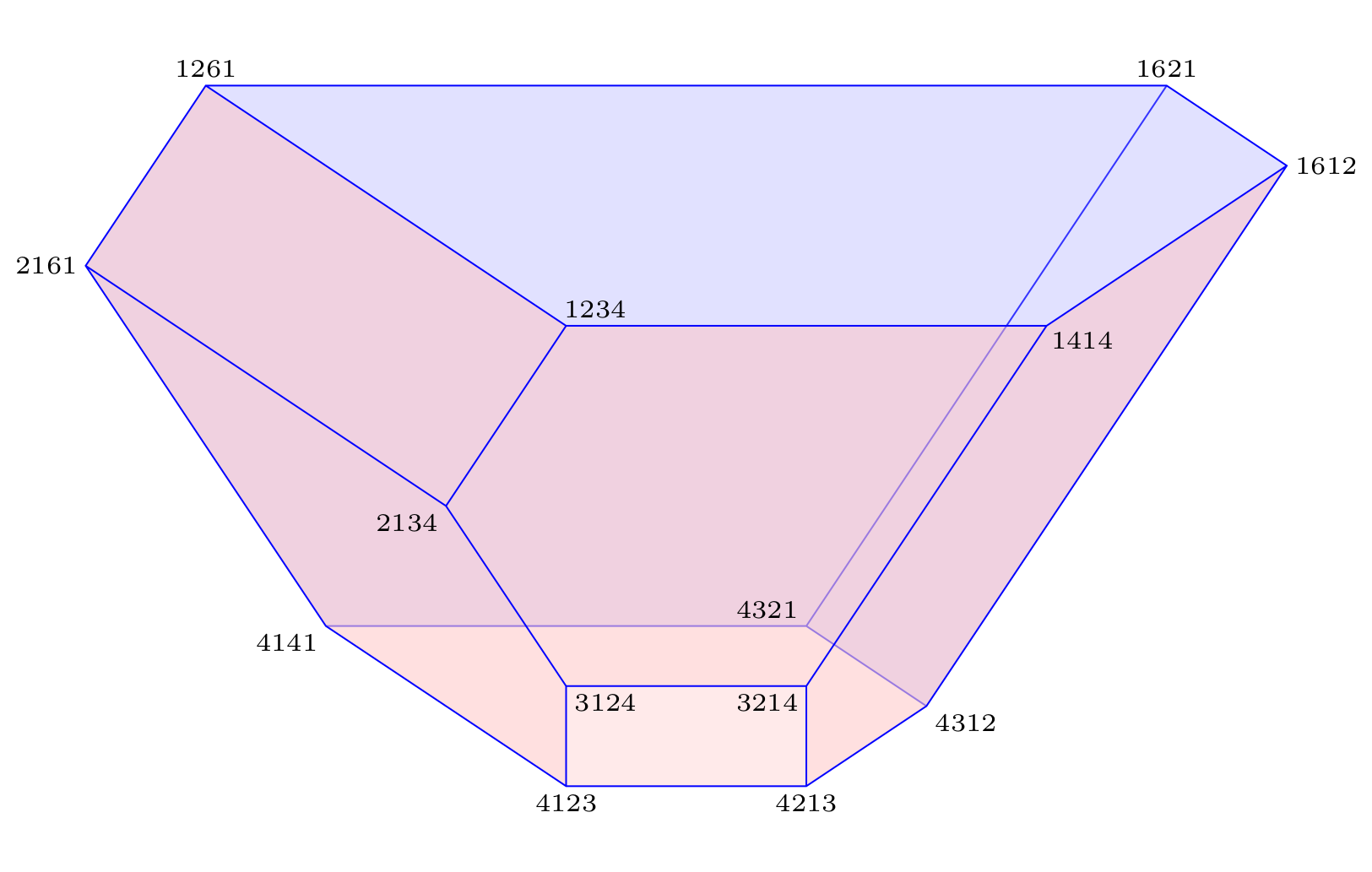
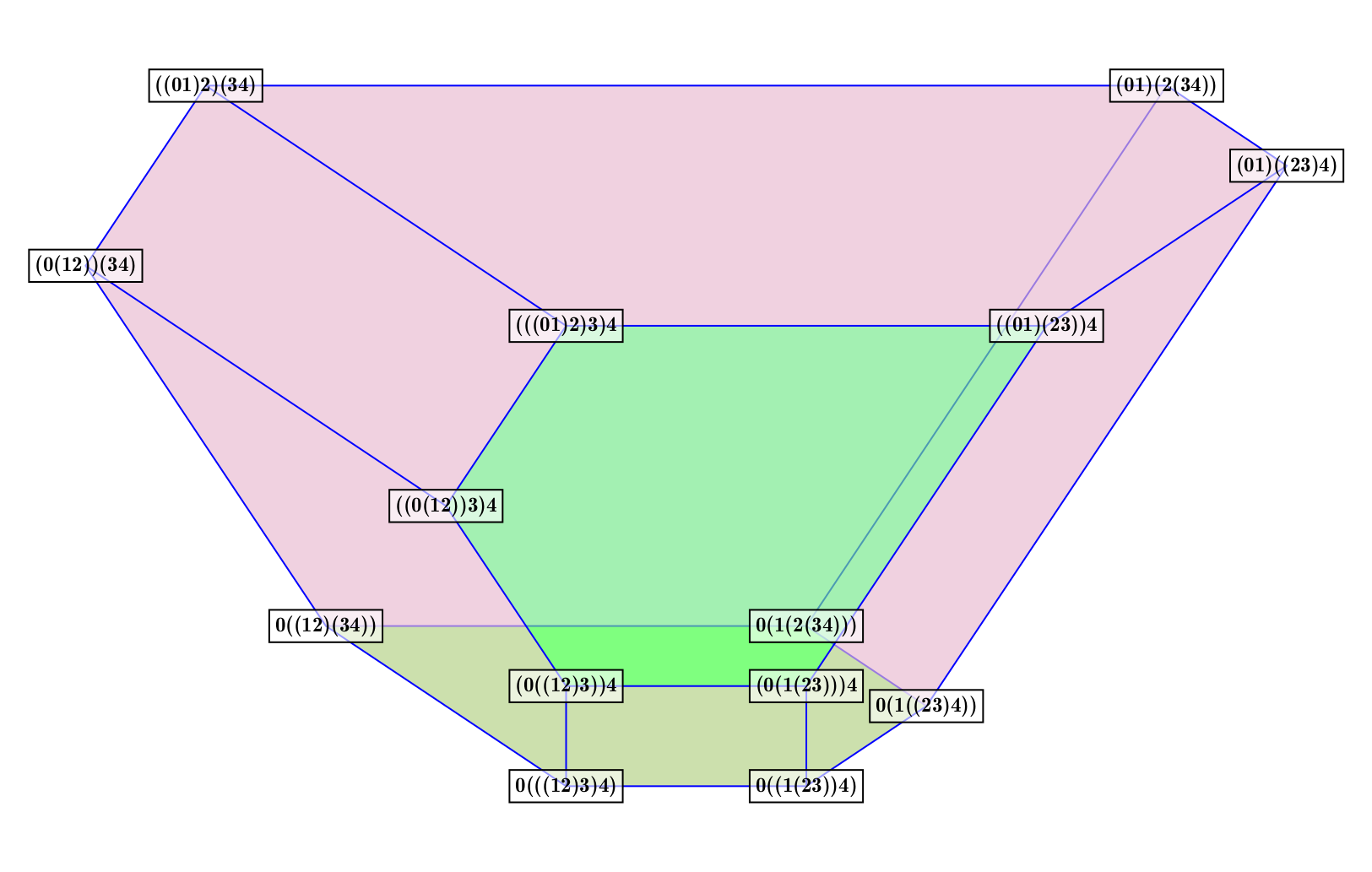
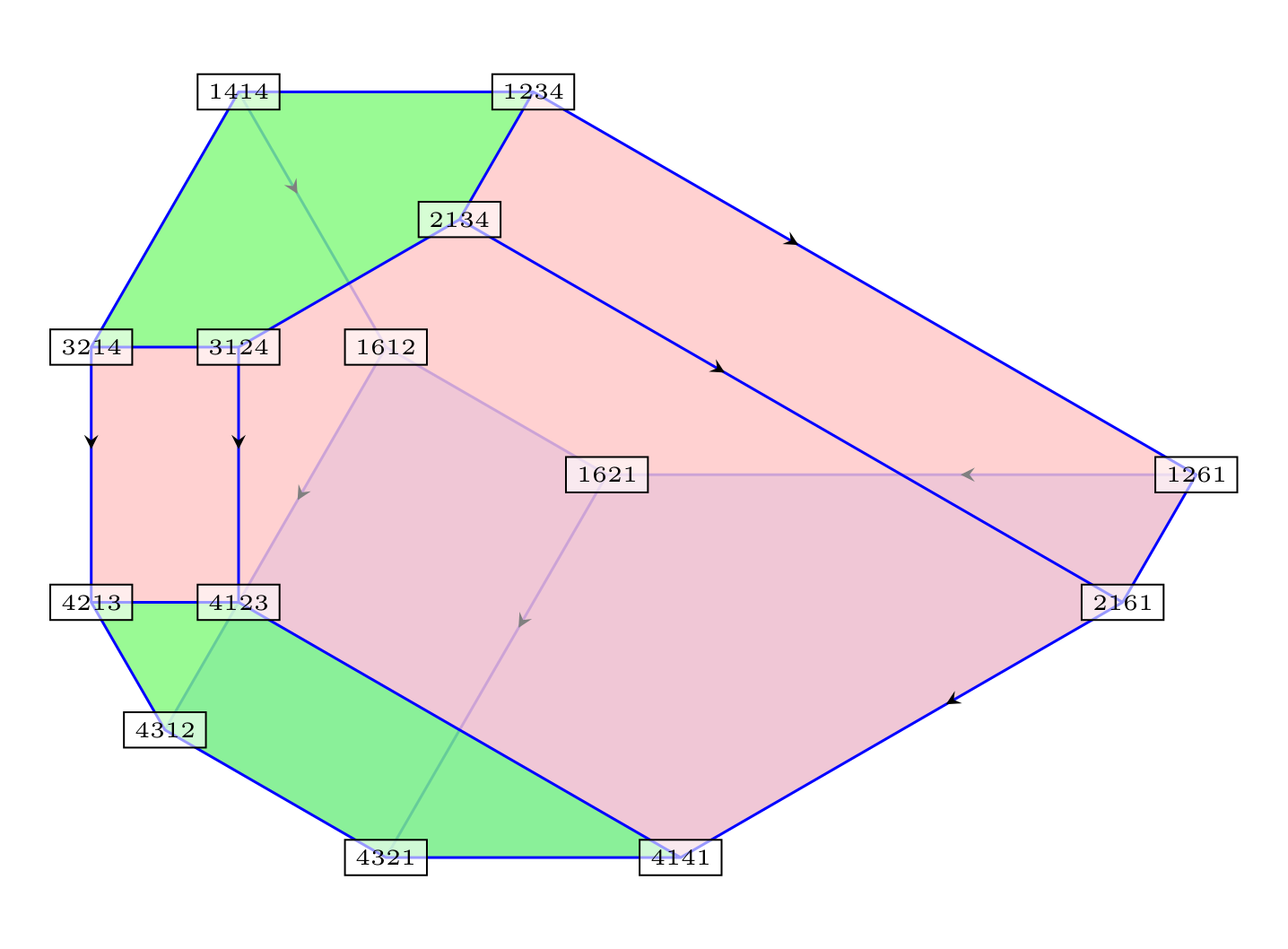
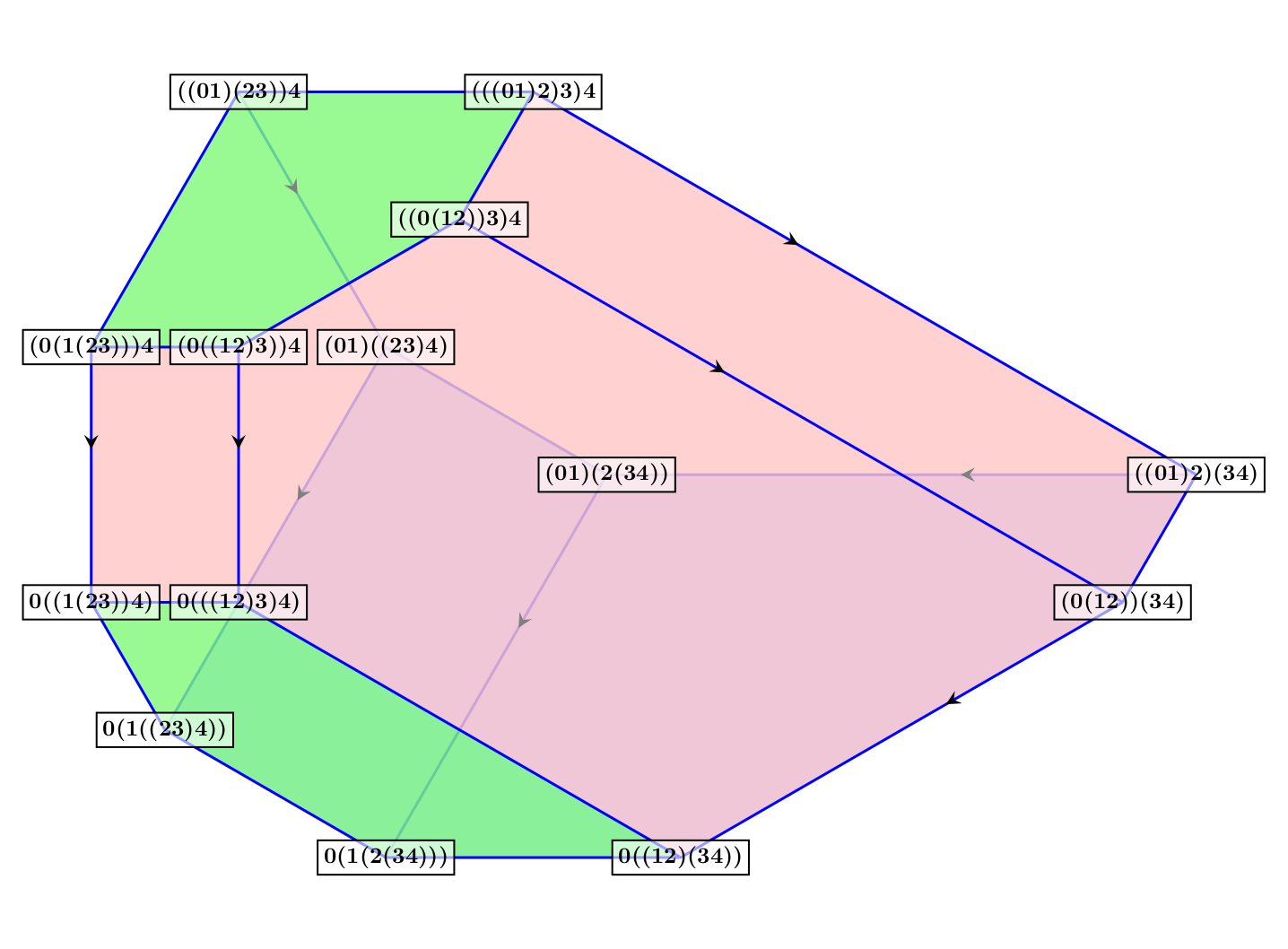
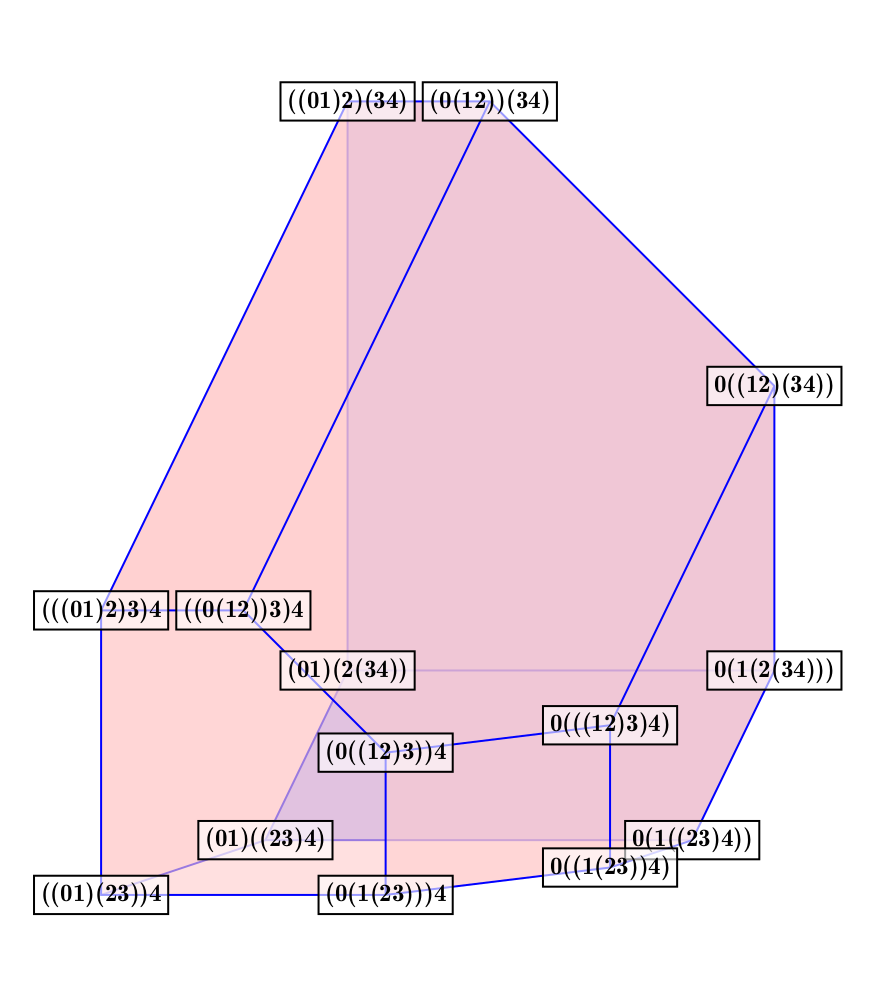
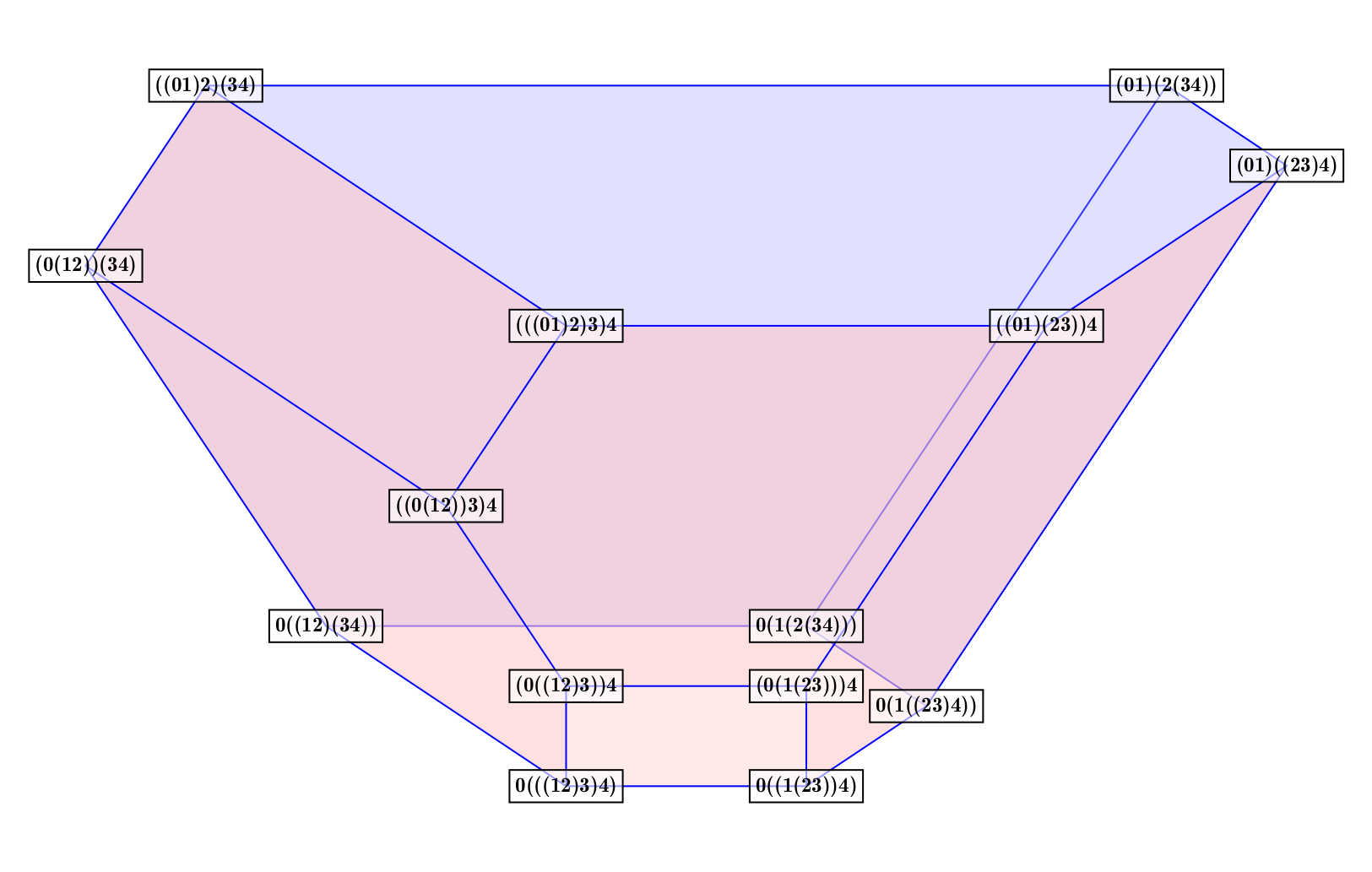
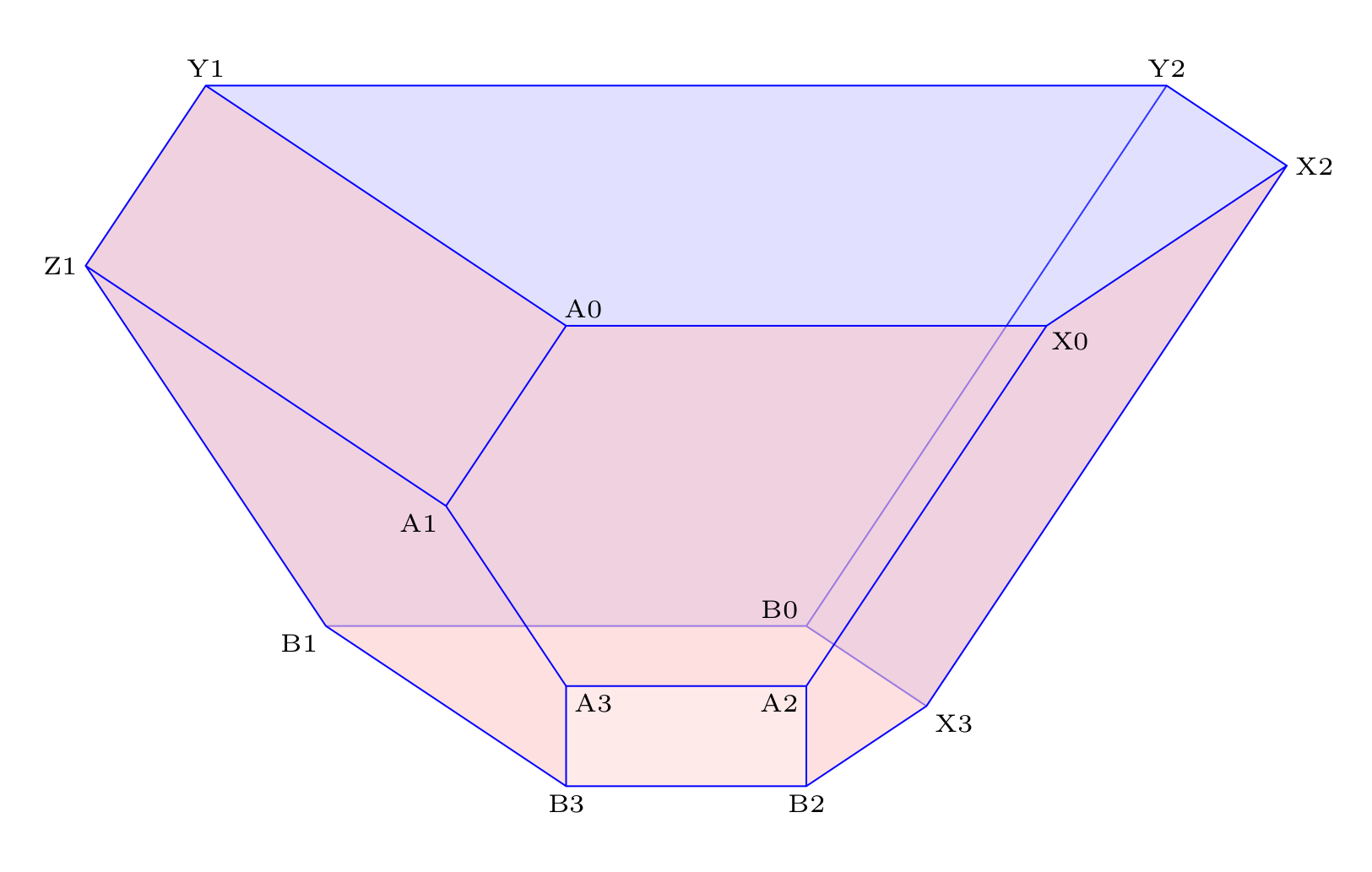
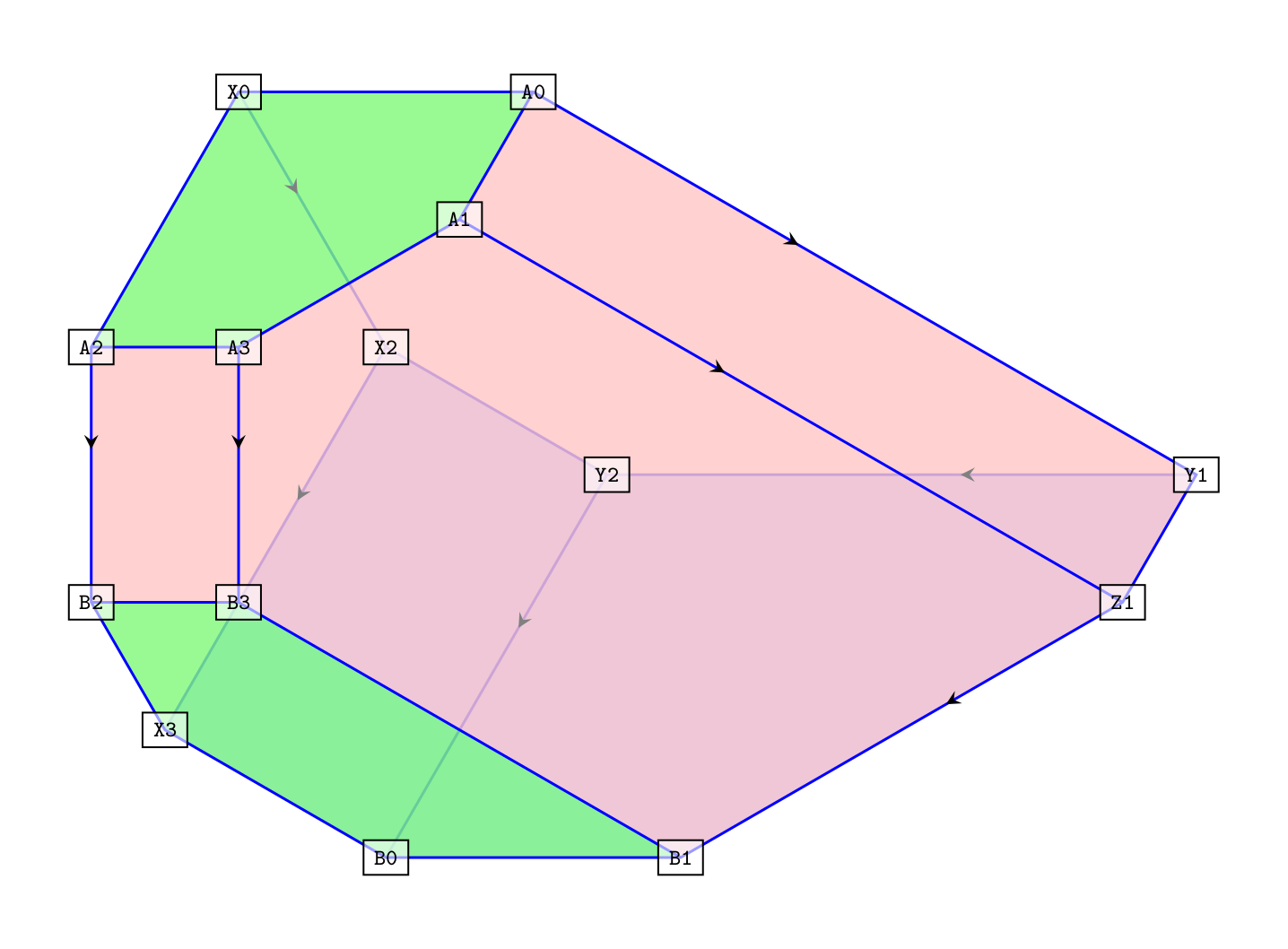
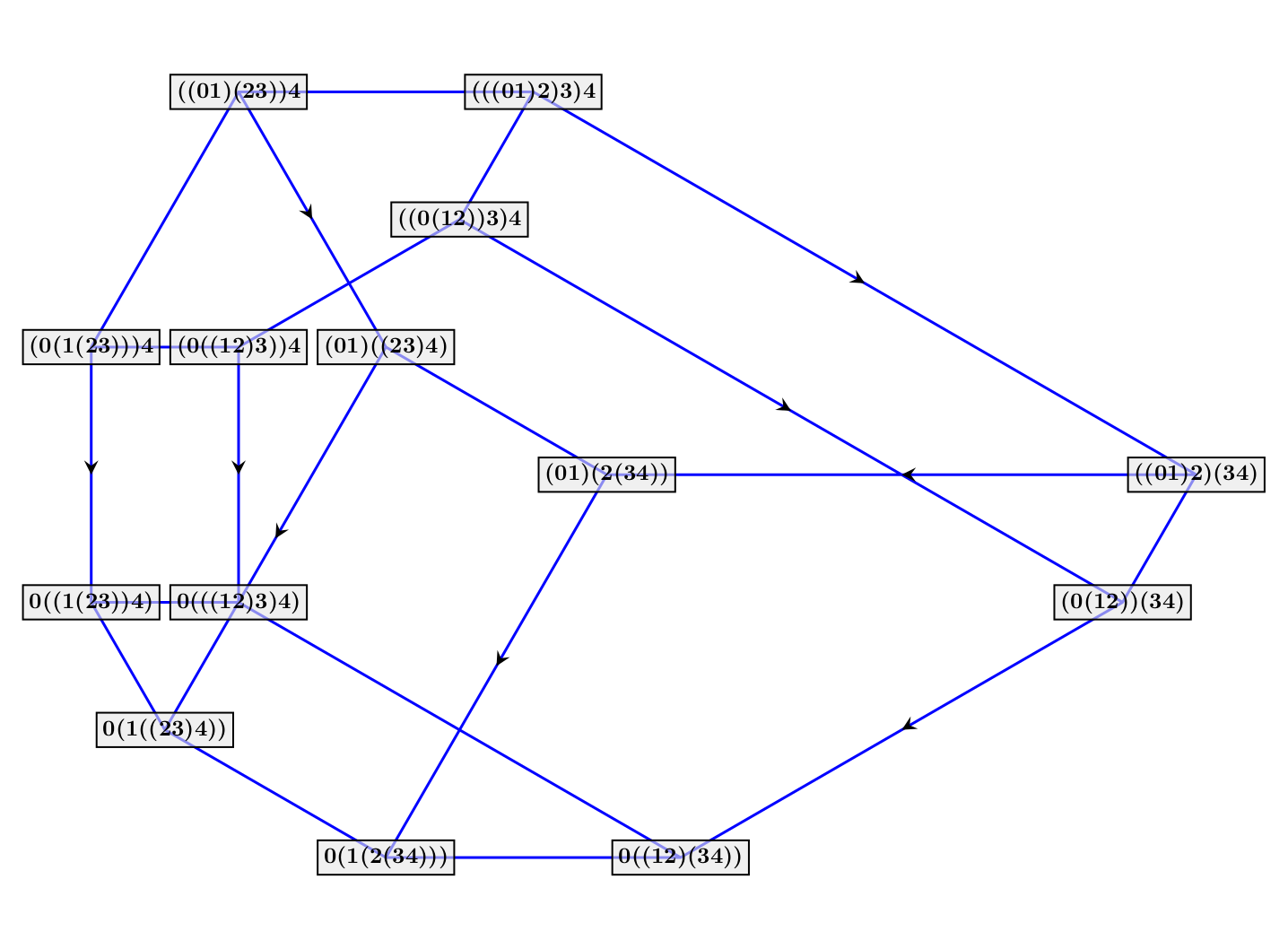
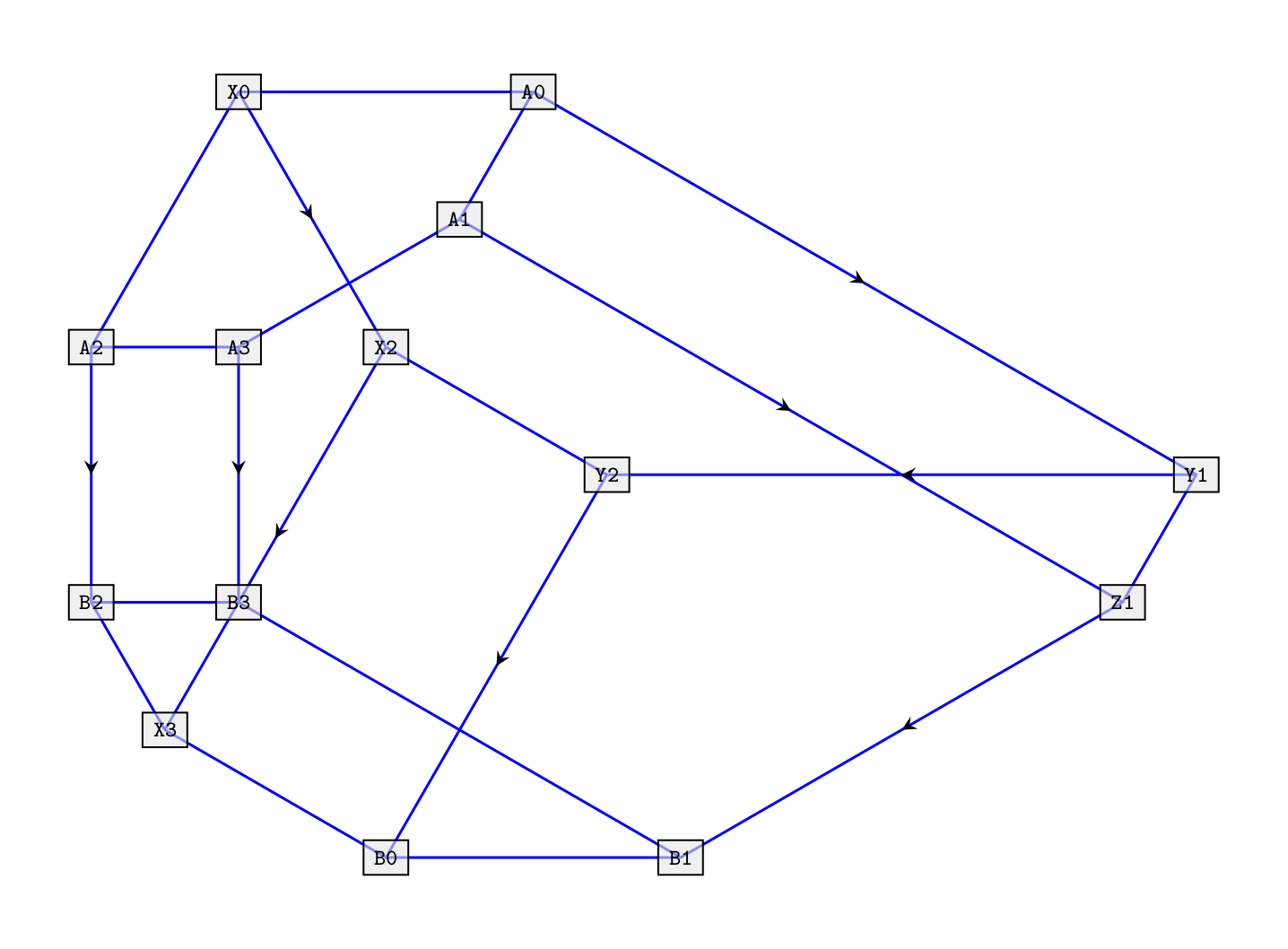
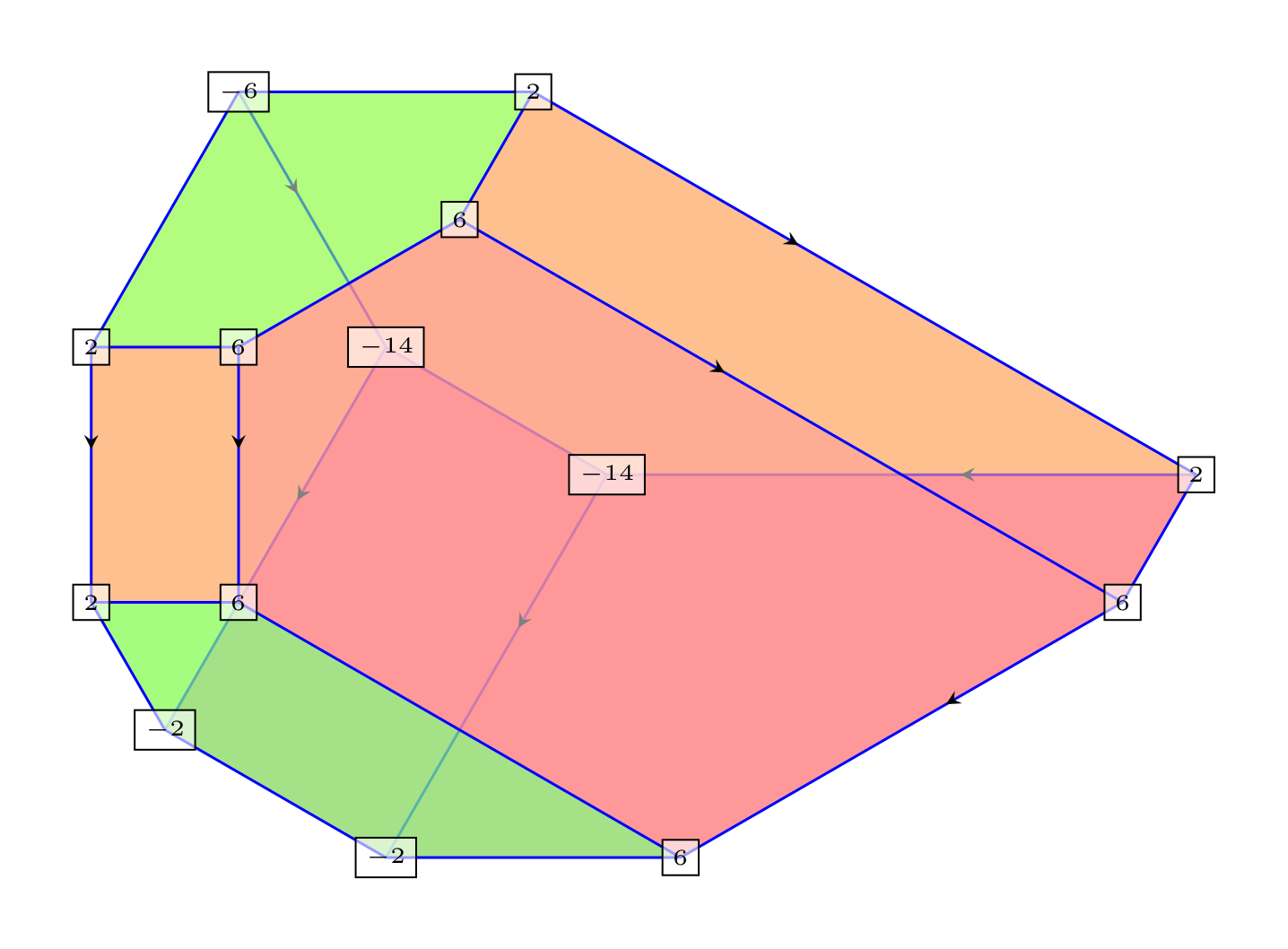
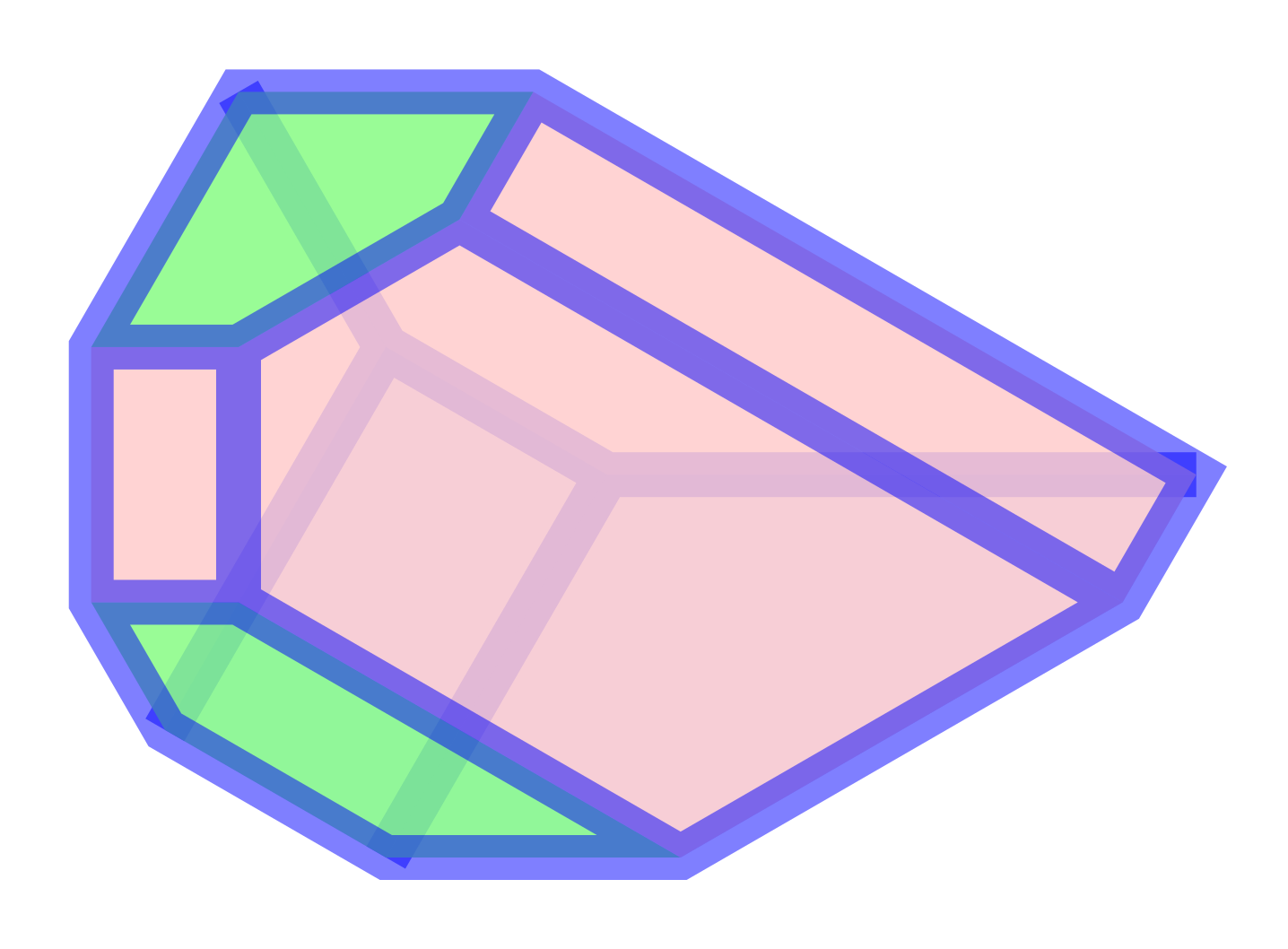
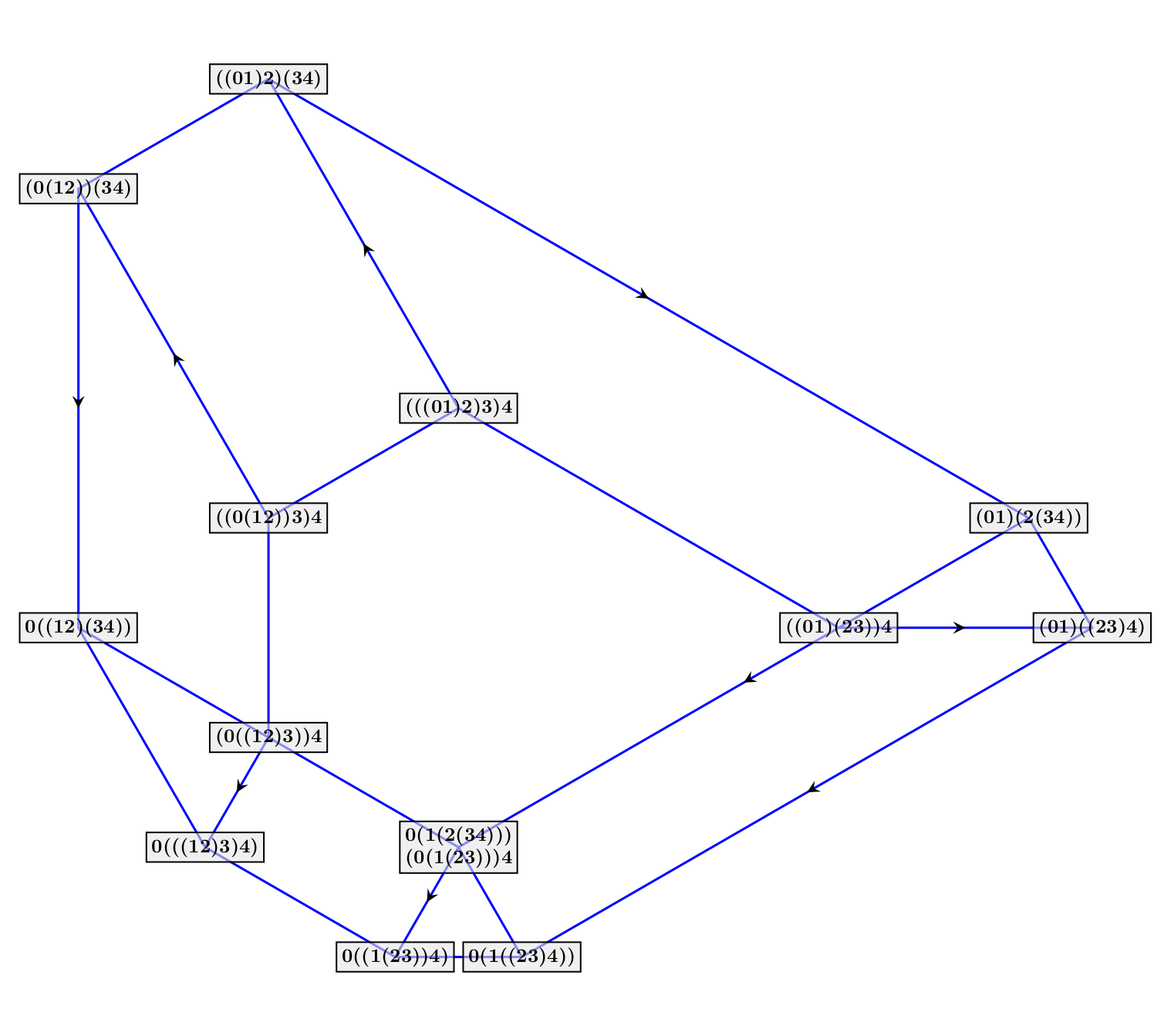
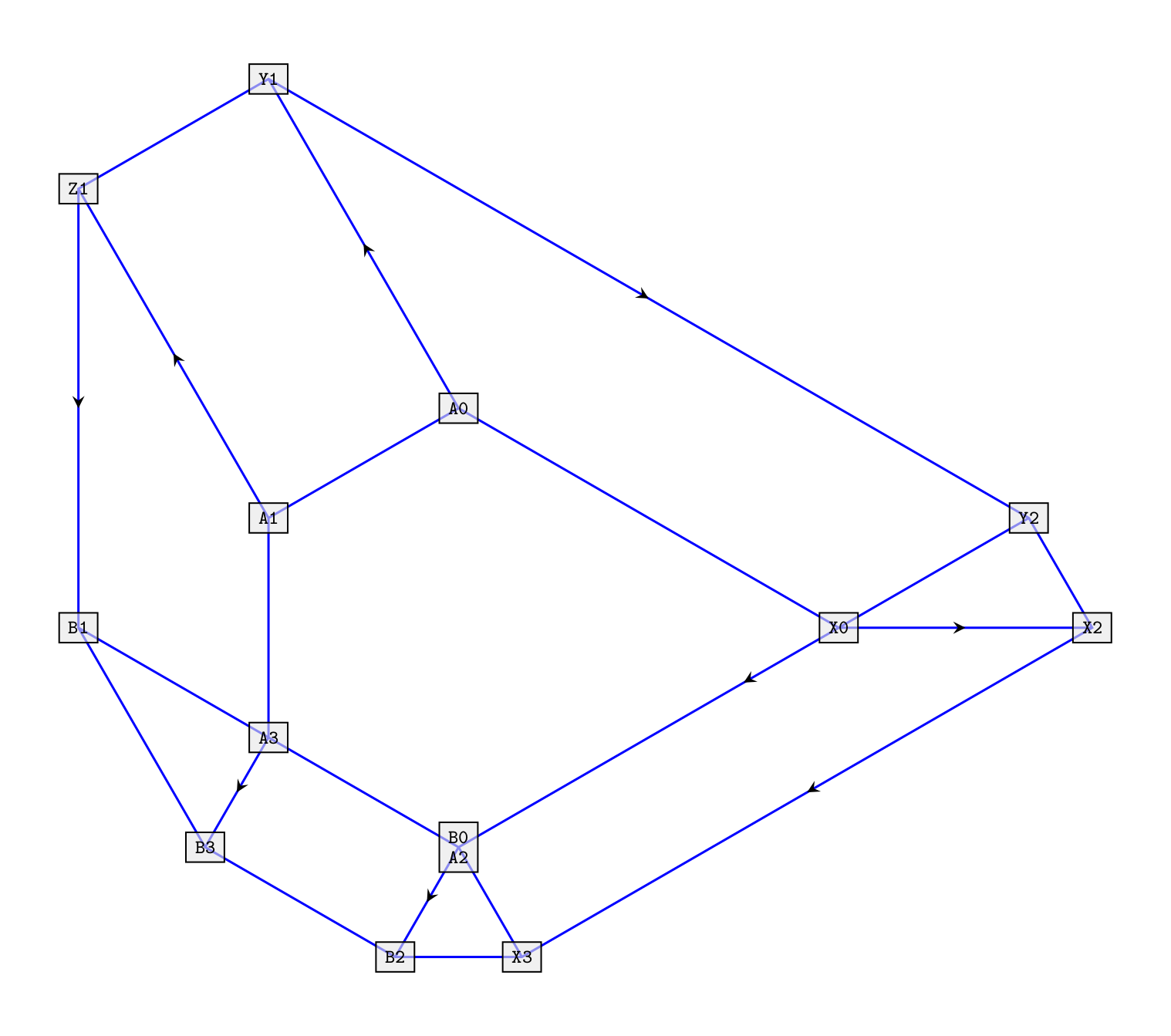
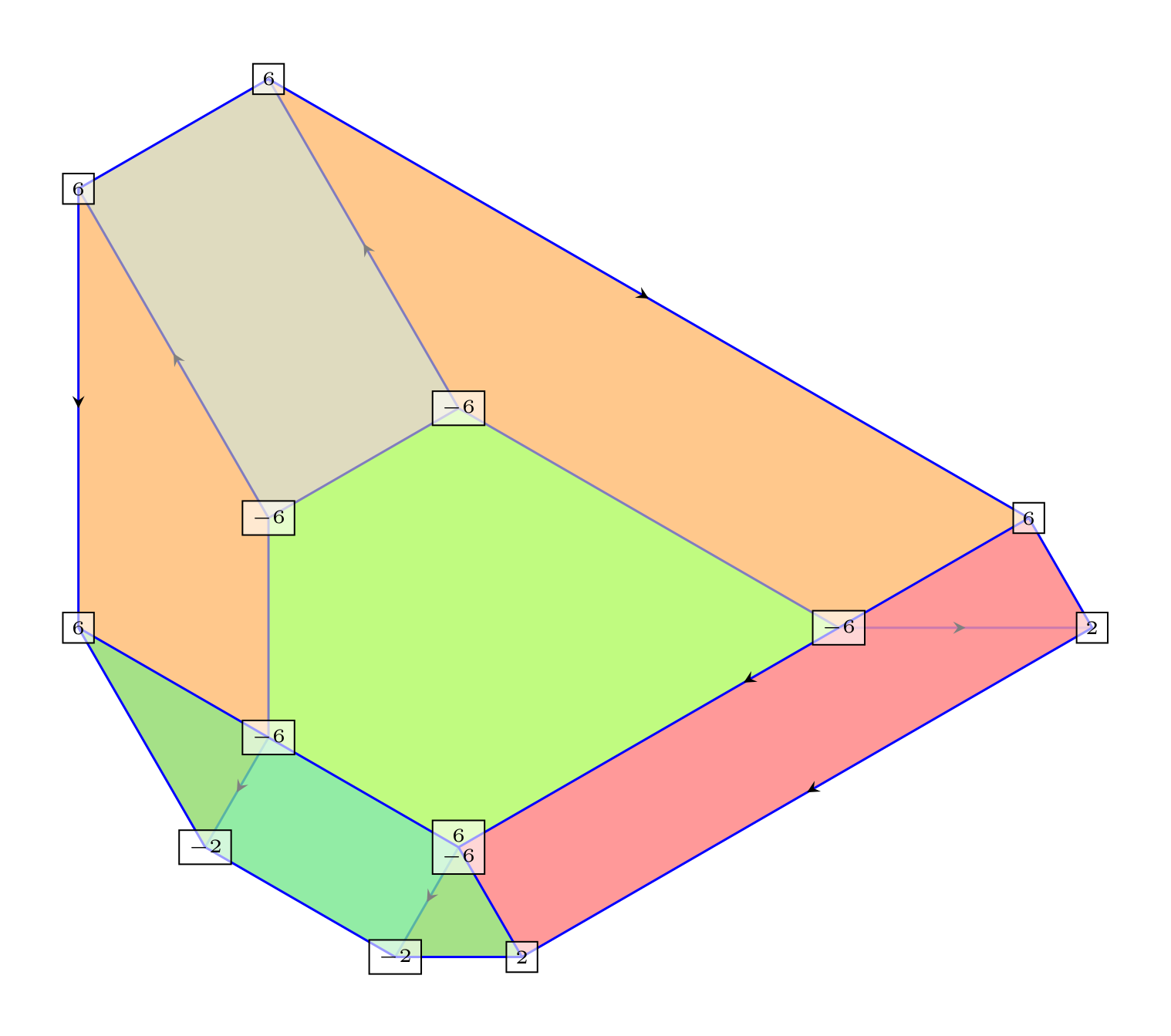
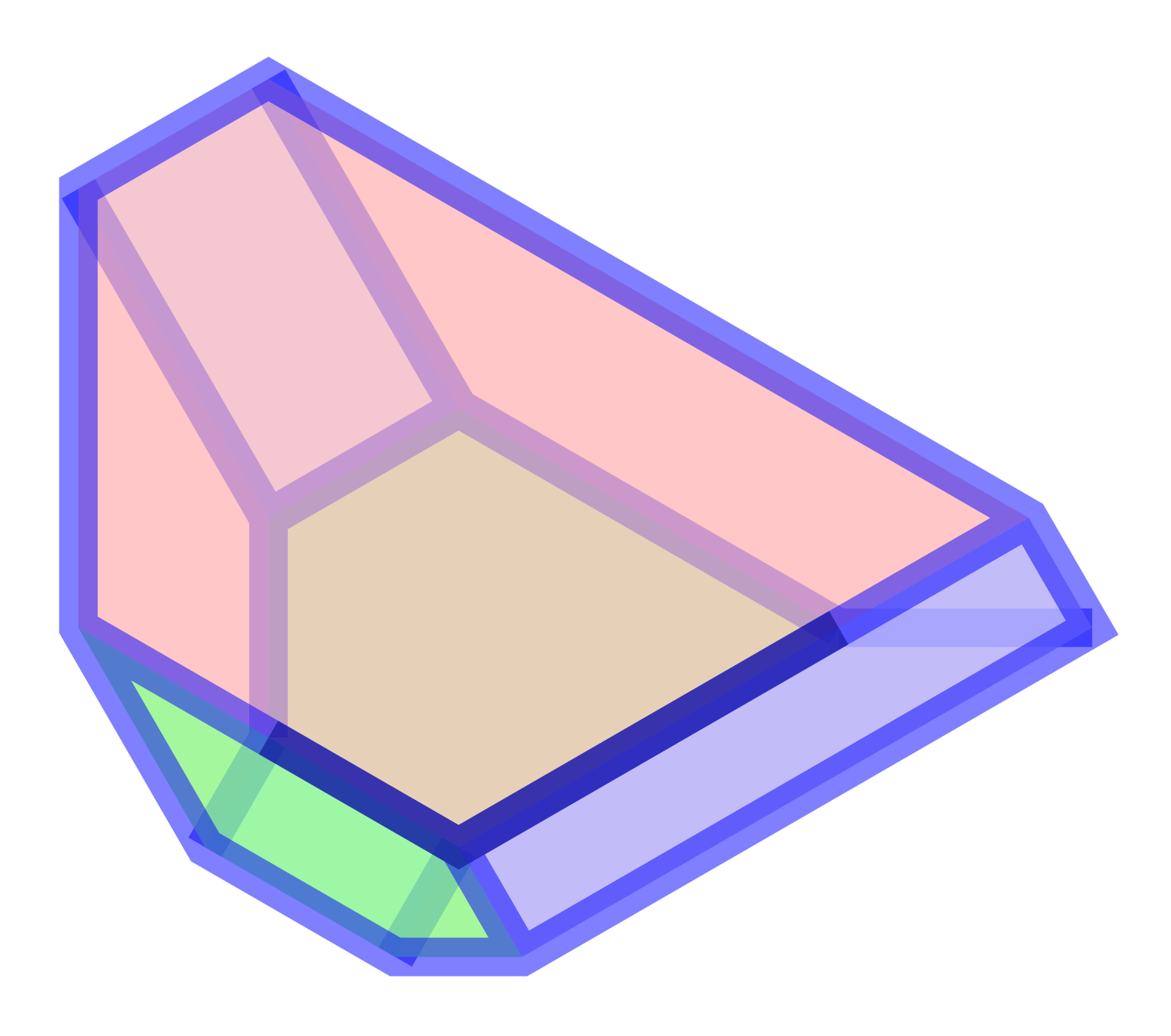
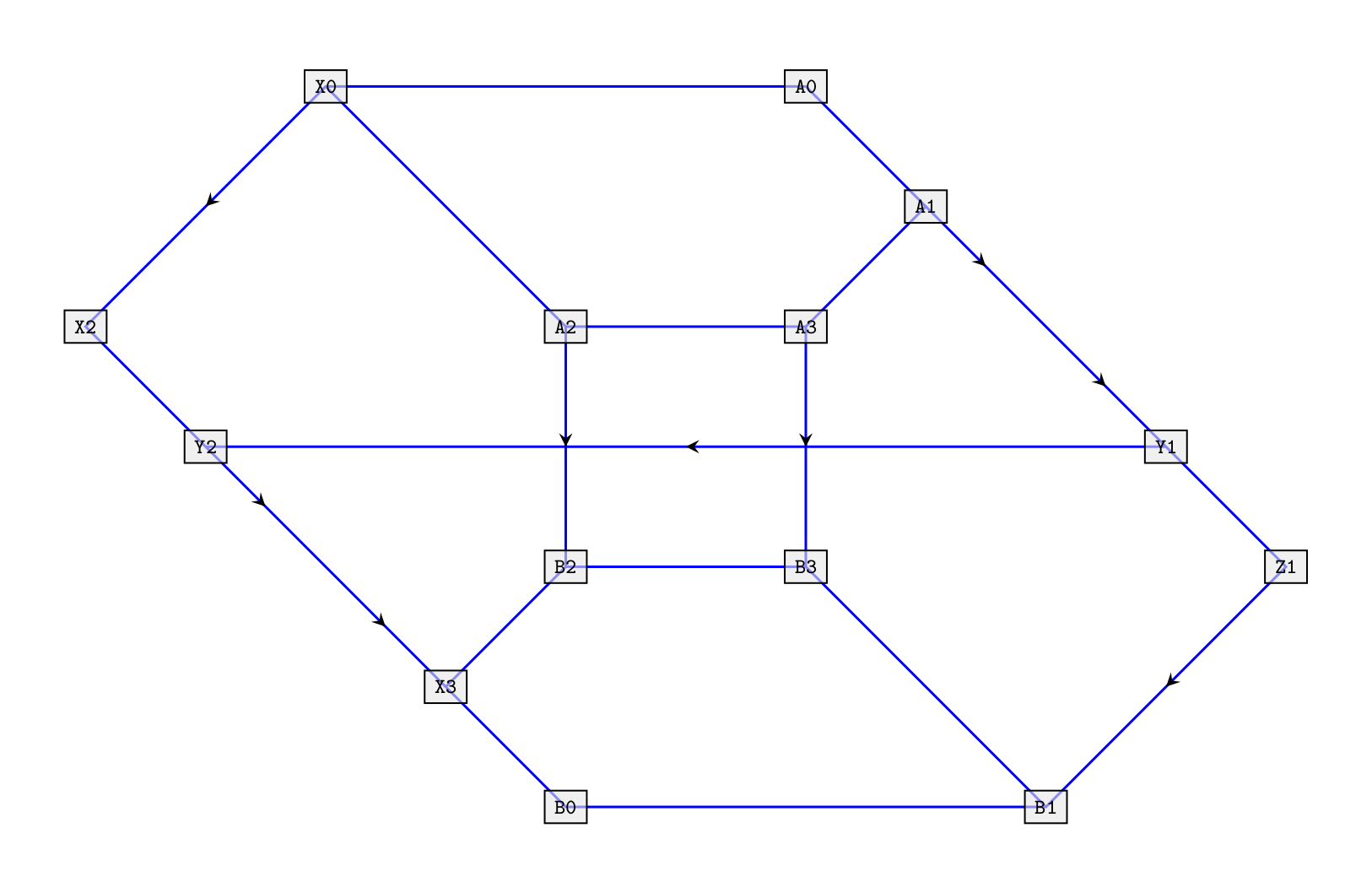
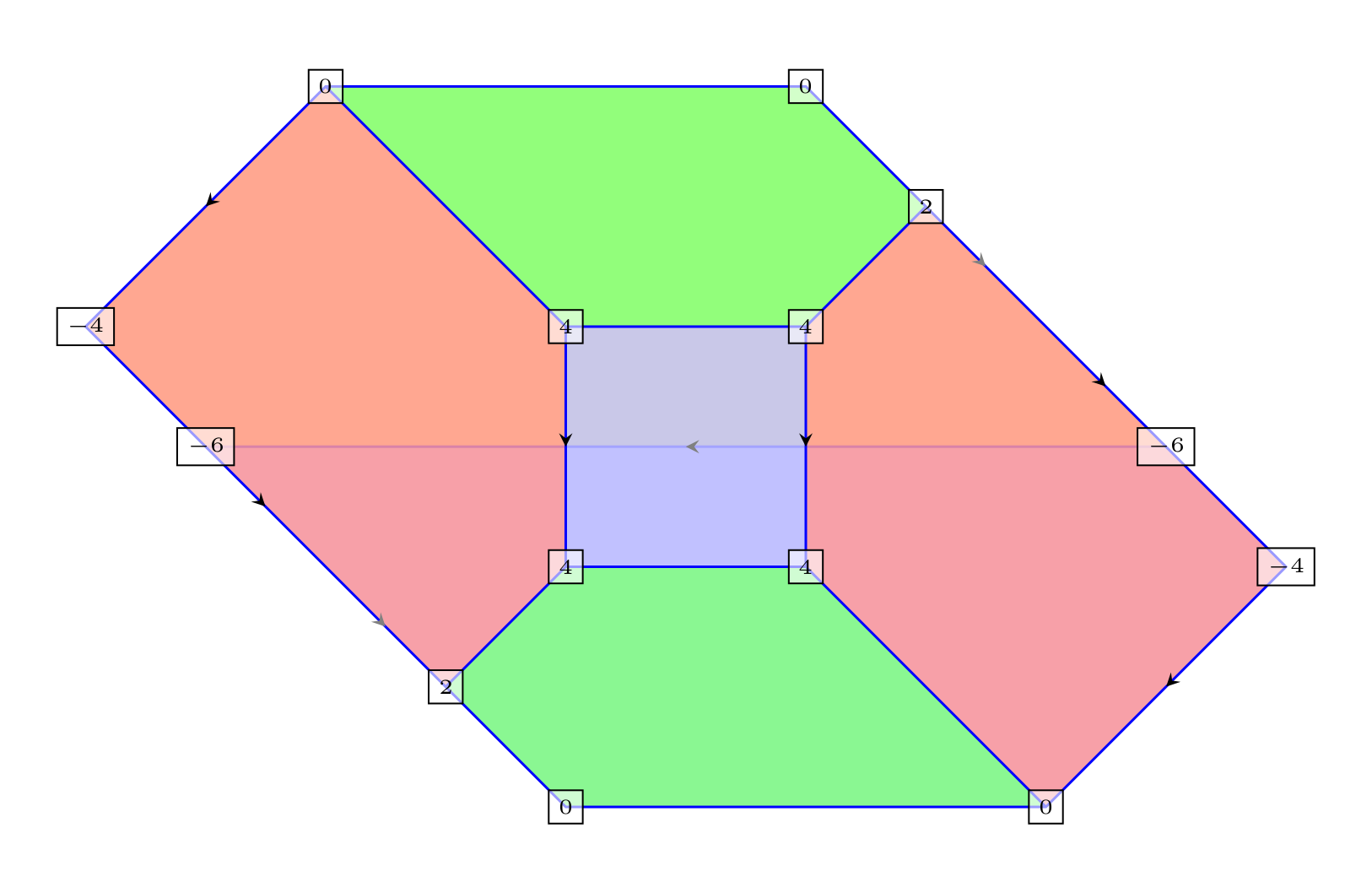
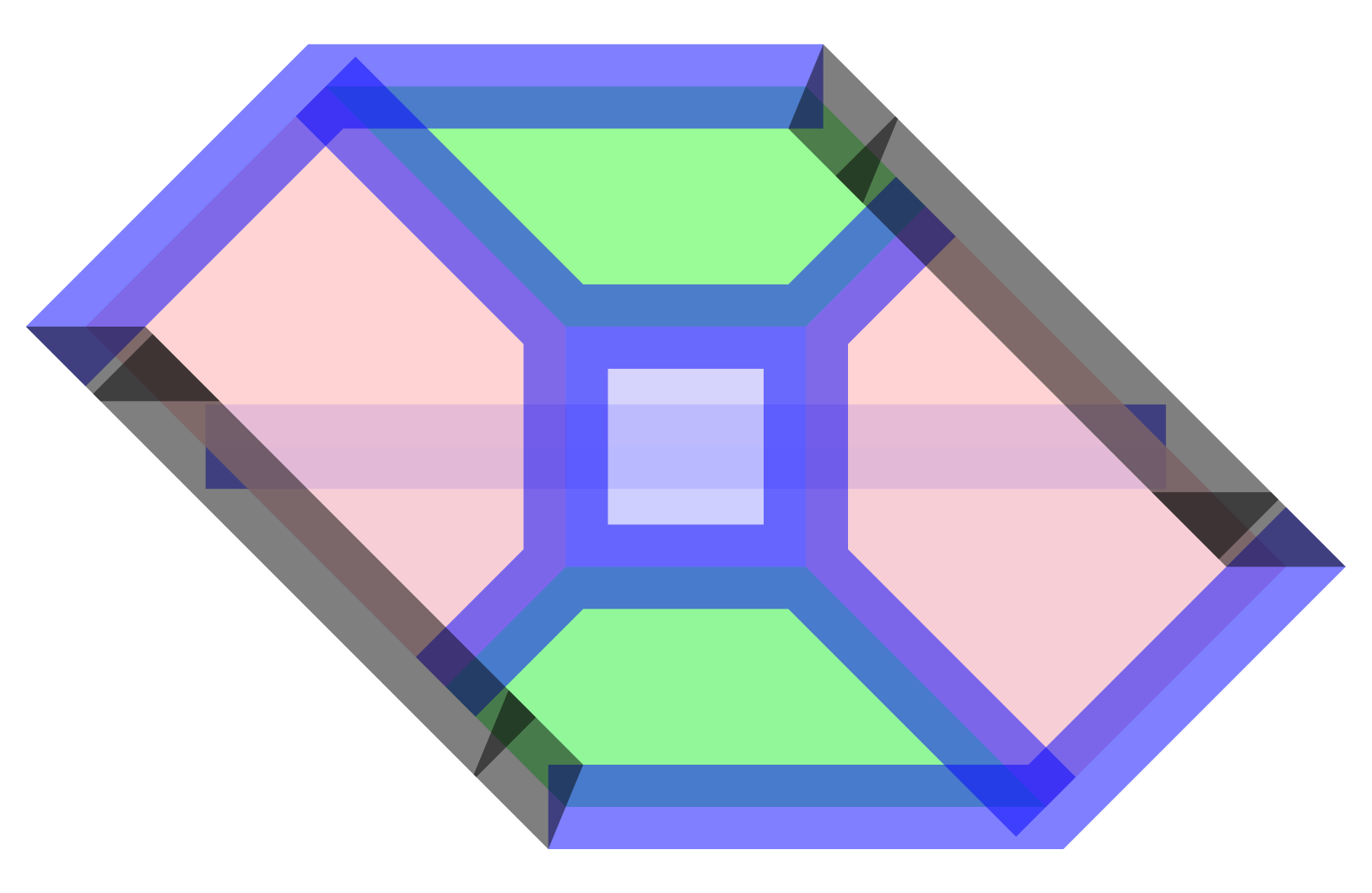
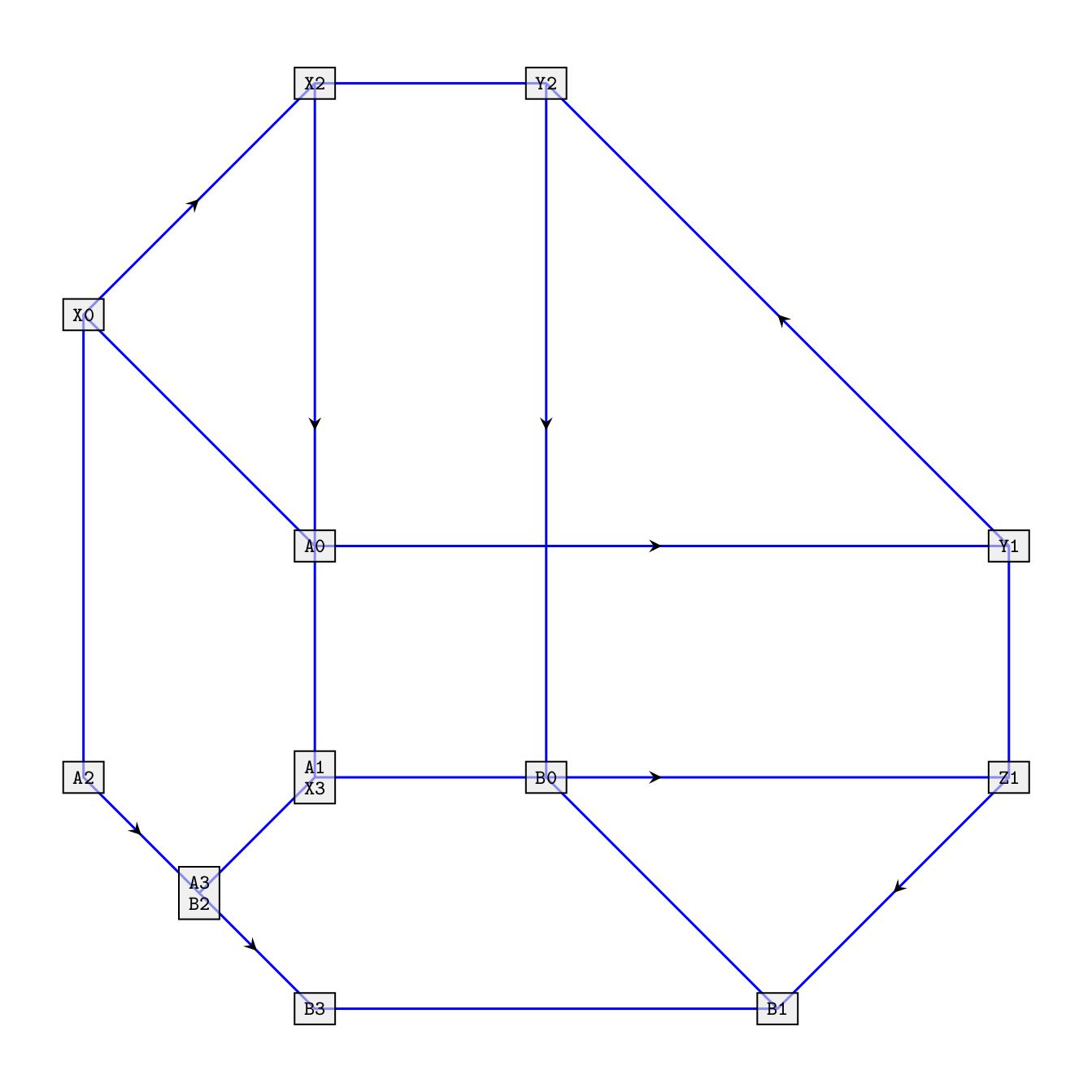
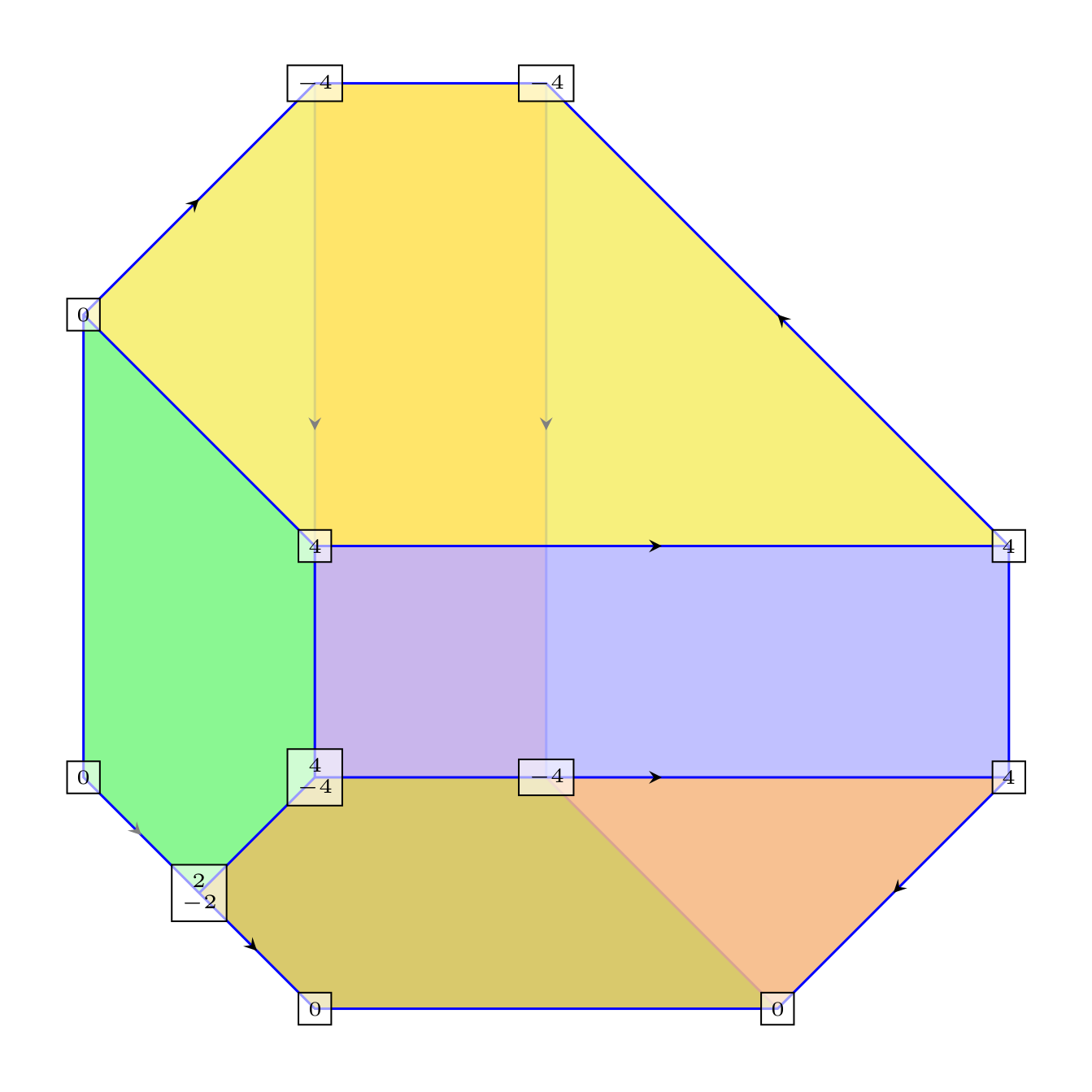
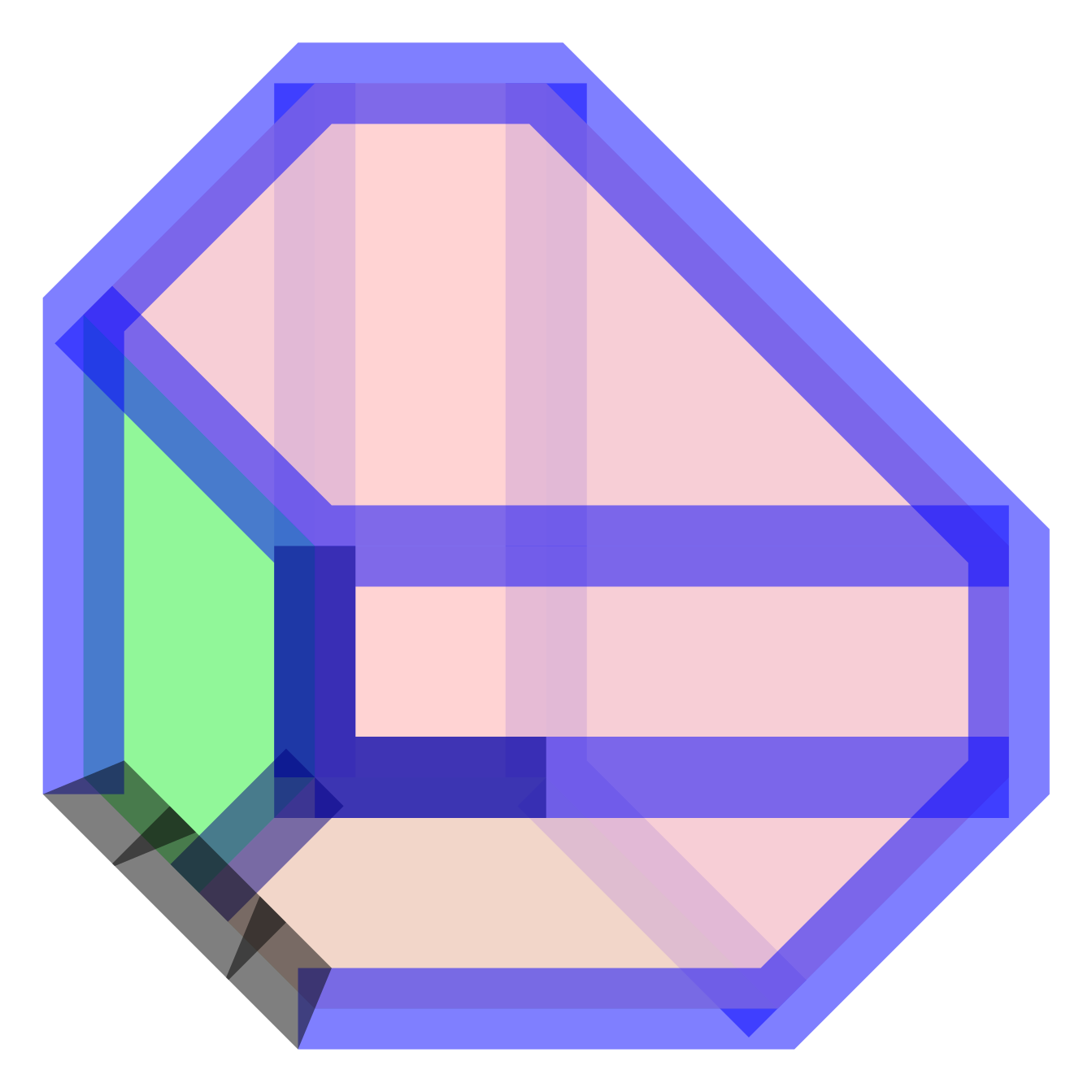
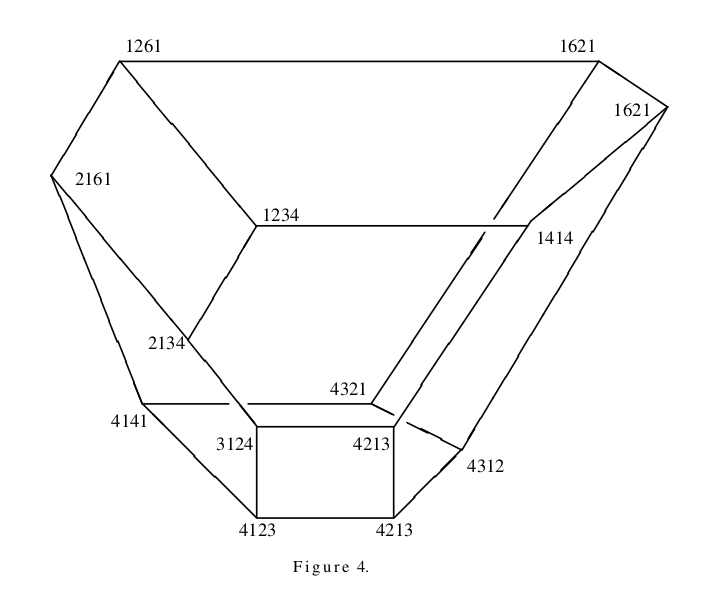
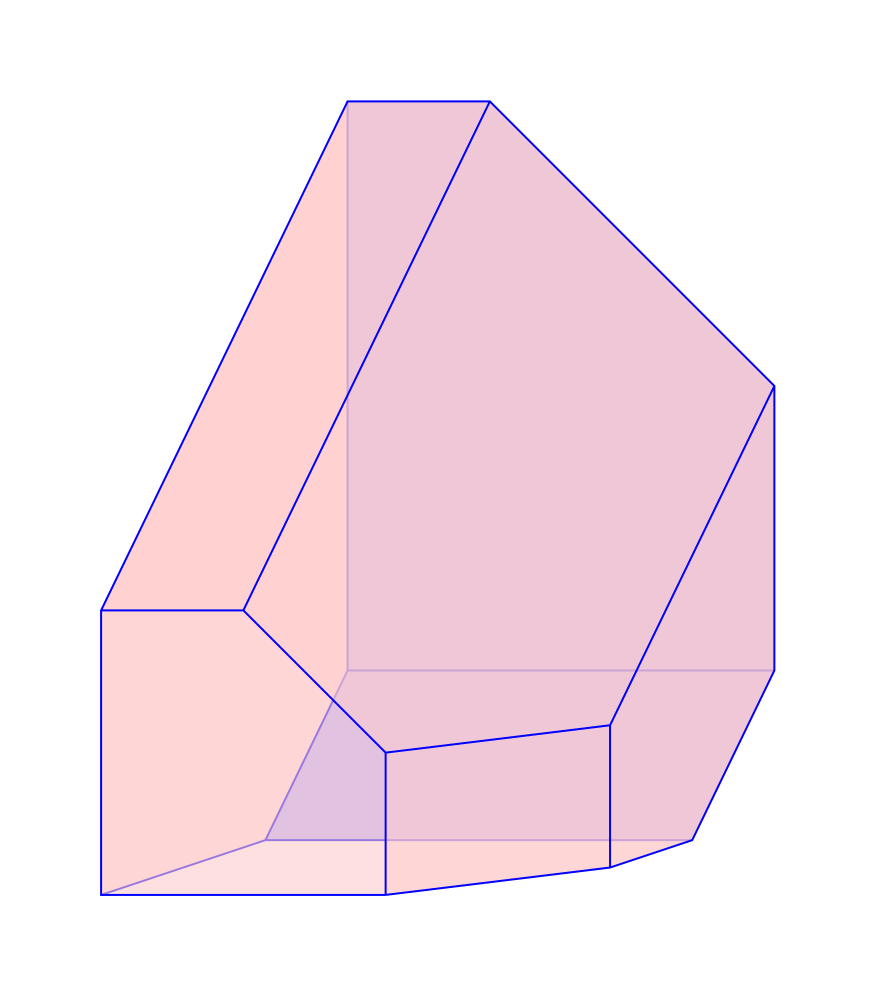
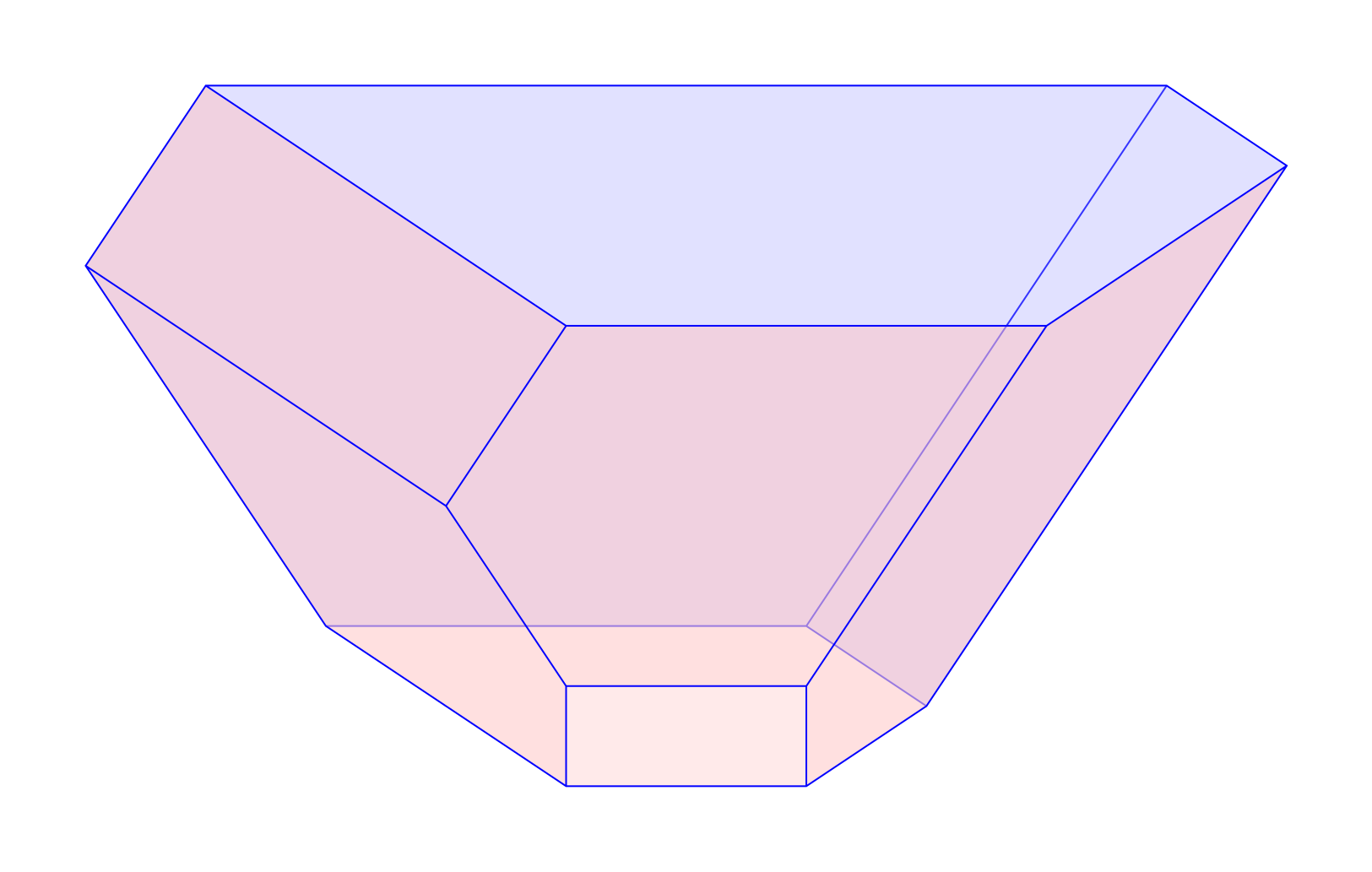
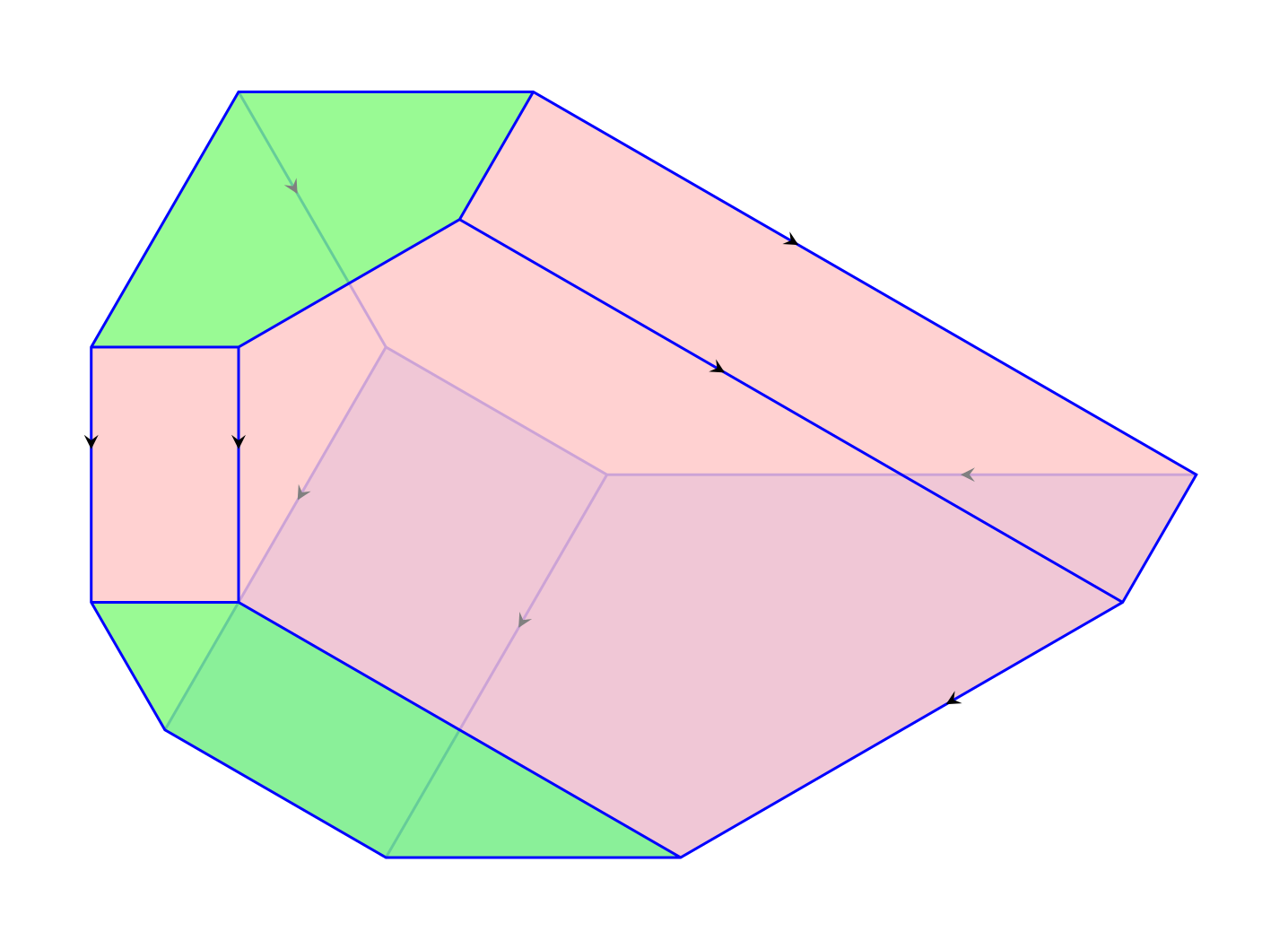
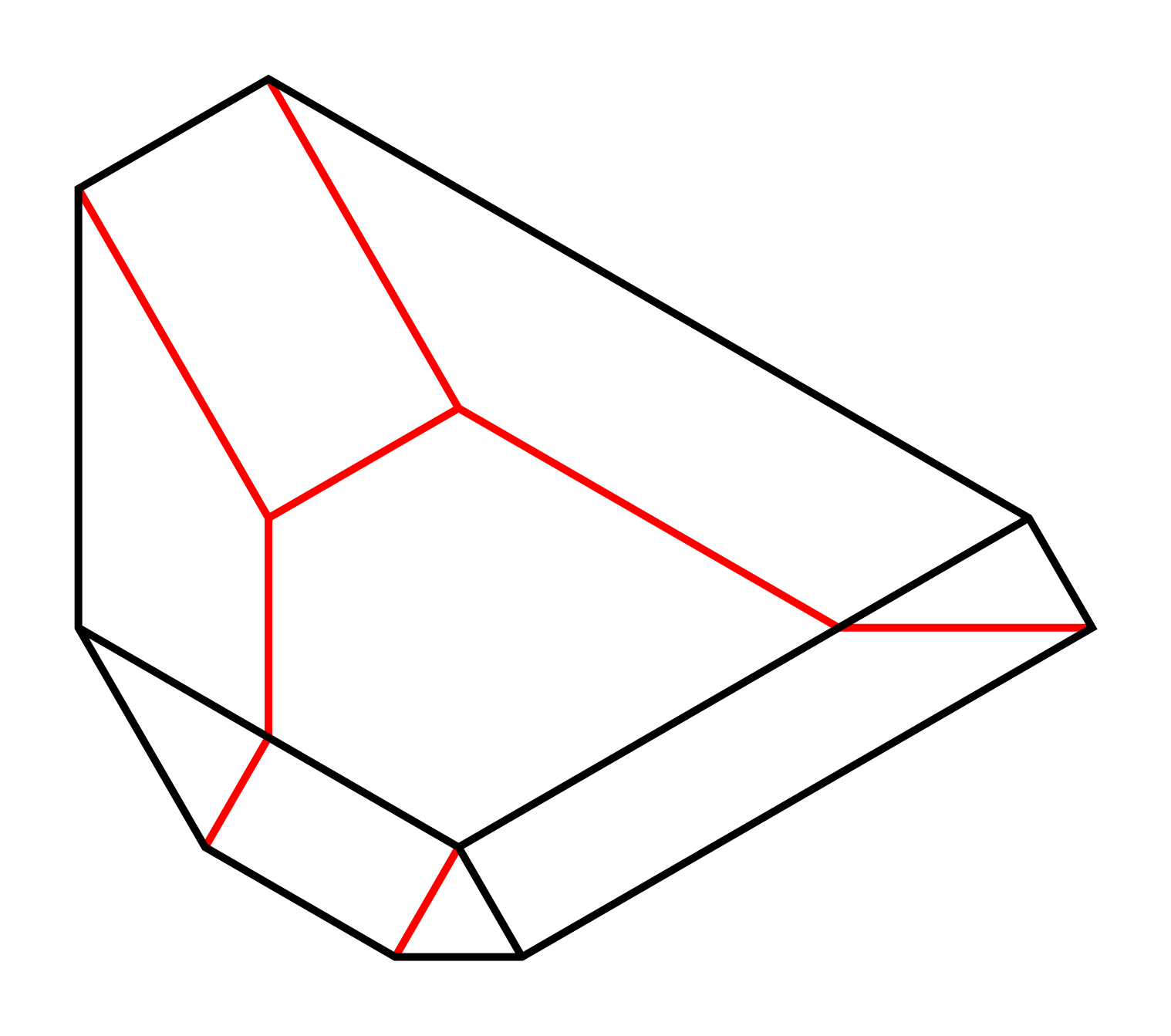
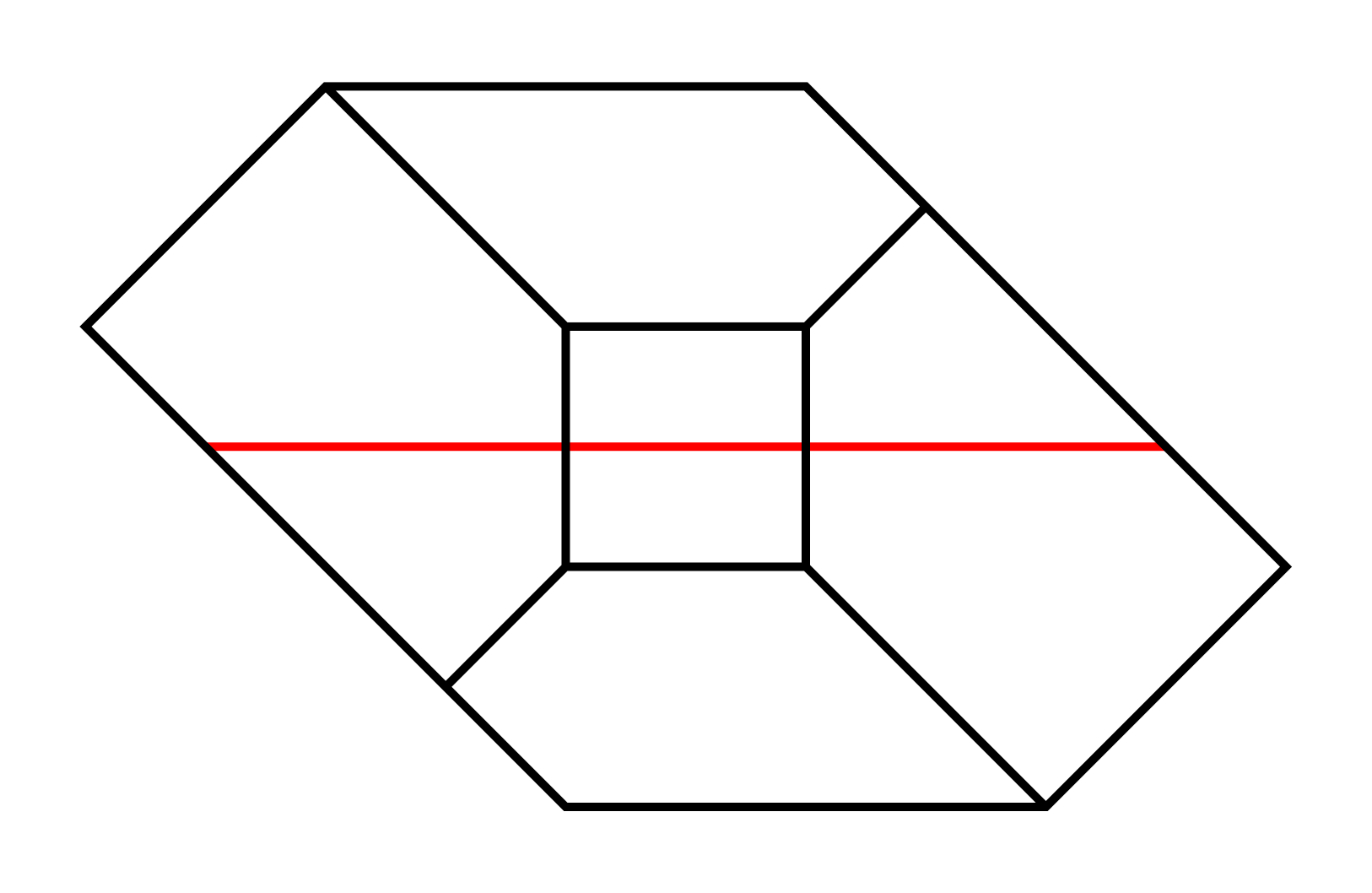
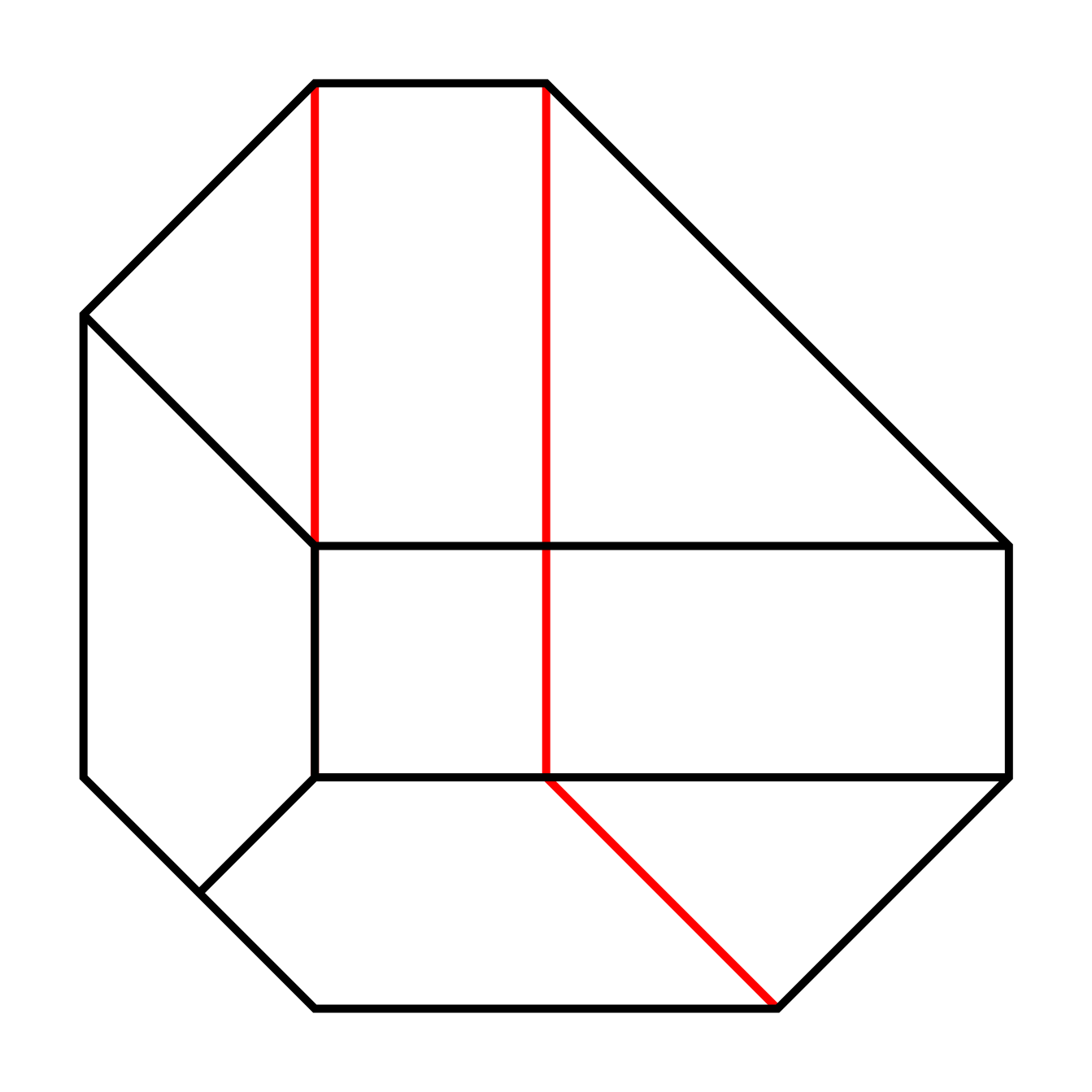
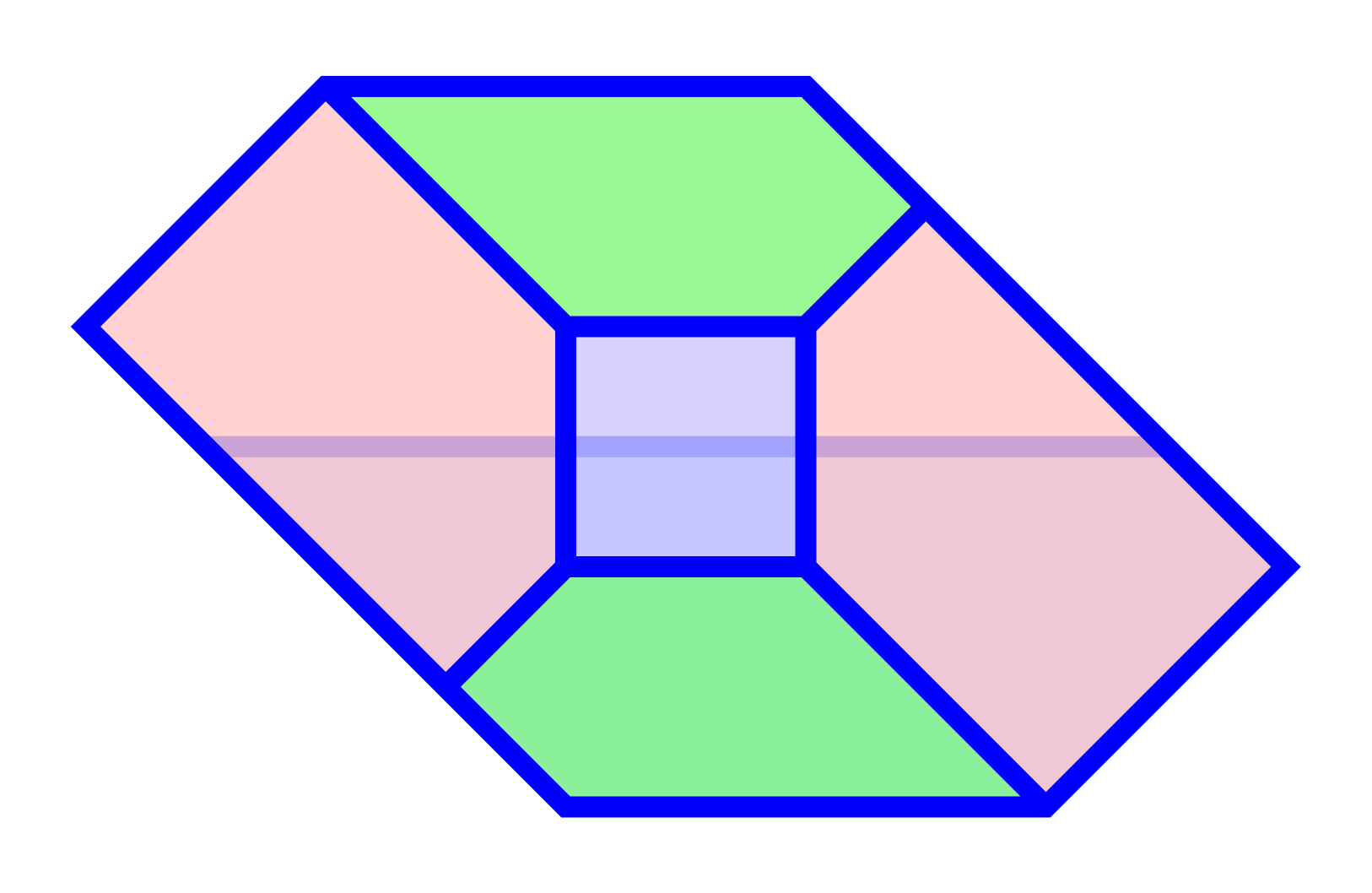
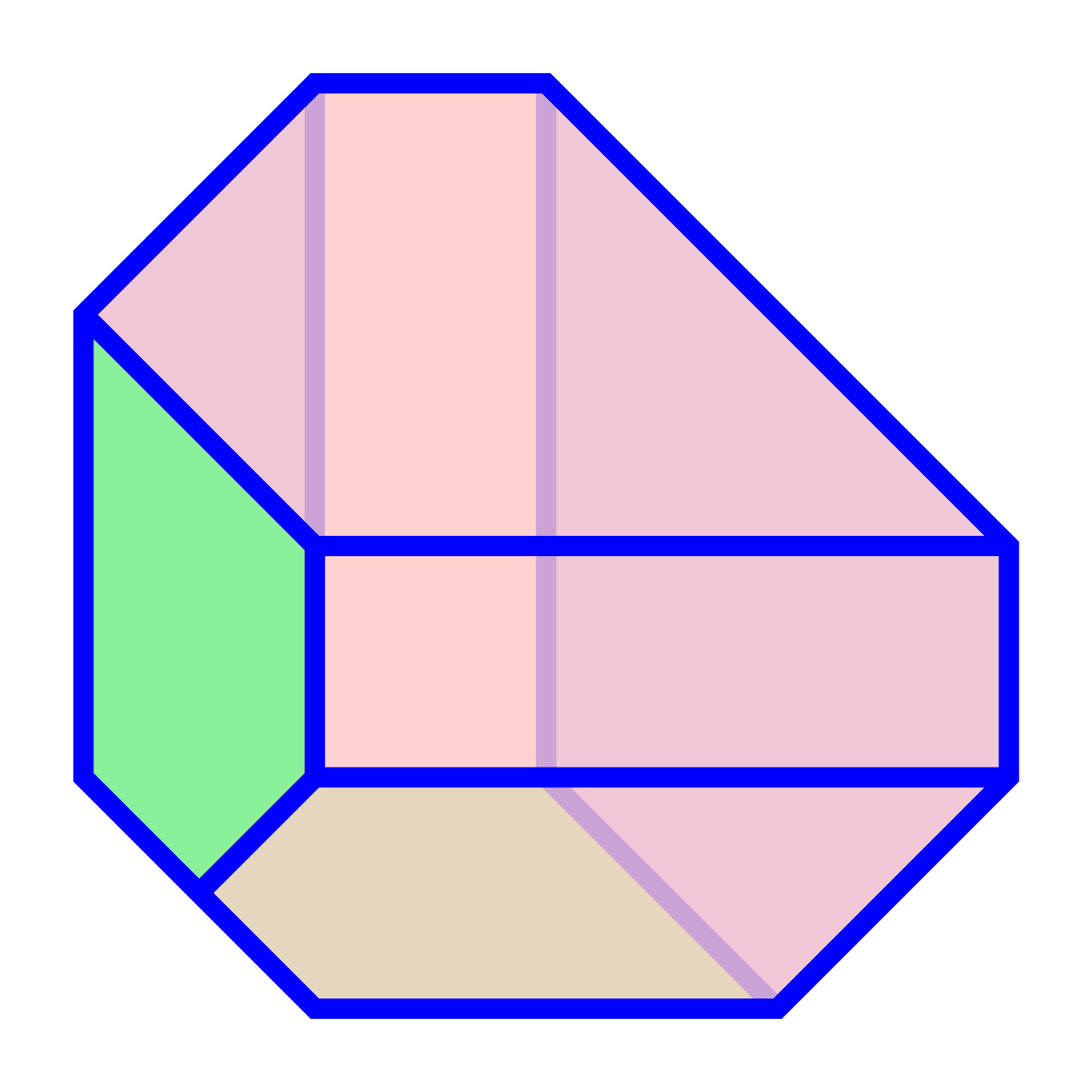
Here are affine projections to the plane of the Loday realization of the 3-dimensional associahedron as a polytope.
Click on the images for high resolution versions.
The first image is simply the result of a first attempt.
The second image is close to the drawing at the end of Loday's paper [Loday, Jean-Louis. Realization of the Stasheff polytope. Arch. Math. 83, no. 3, 267-278, 2004. MR 2108555, Zbl 1059.52017].
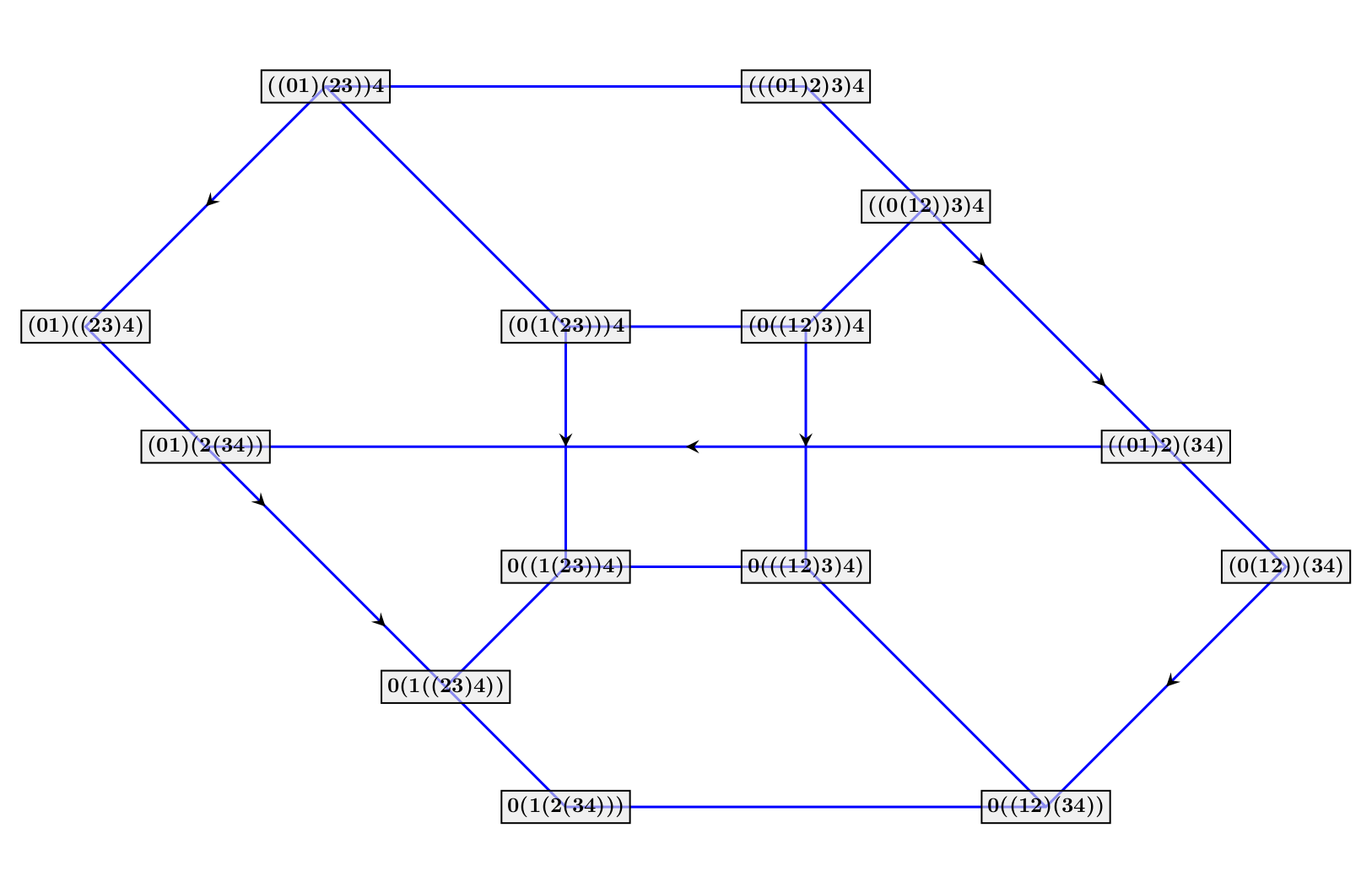
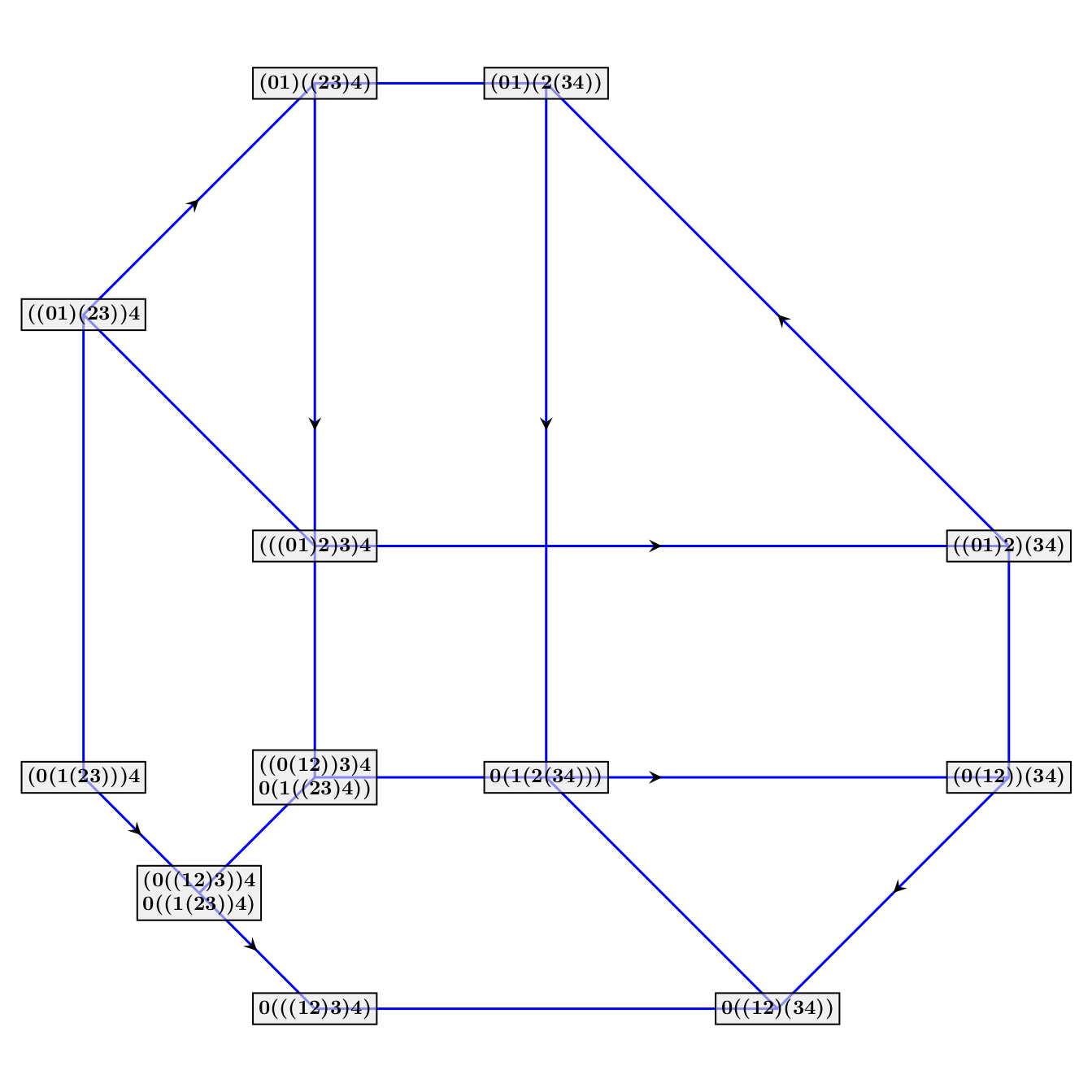
The third image shows the orthogonal projection to a particular face (the pentagon in front). The two 2-dimensional sub-associahedra are drawn in green. The homotopy between them is indicated (see the page The 3-dimensional associahedron unfolded and the blue arrows in the "homotopy" variant of Tamari's diagram).
See also section More images and source code.
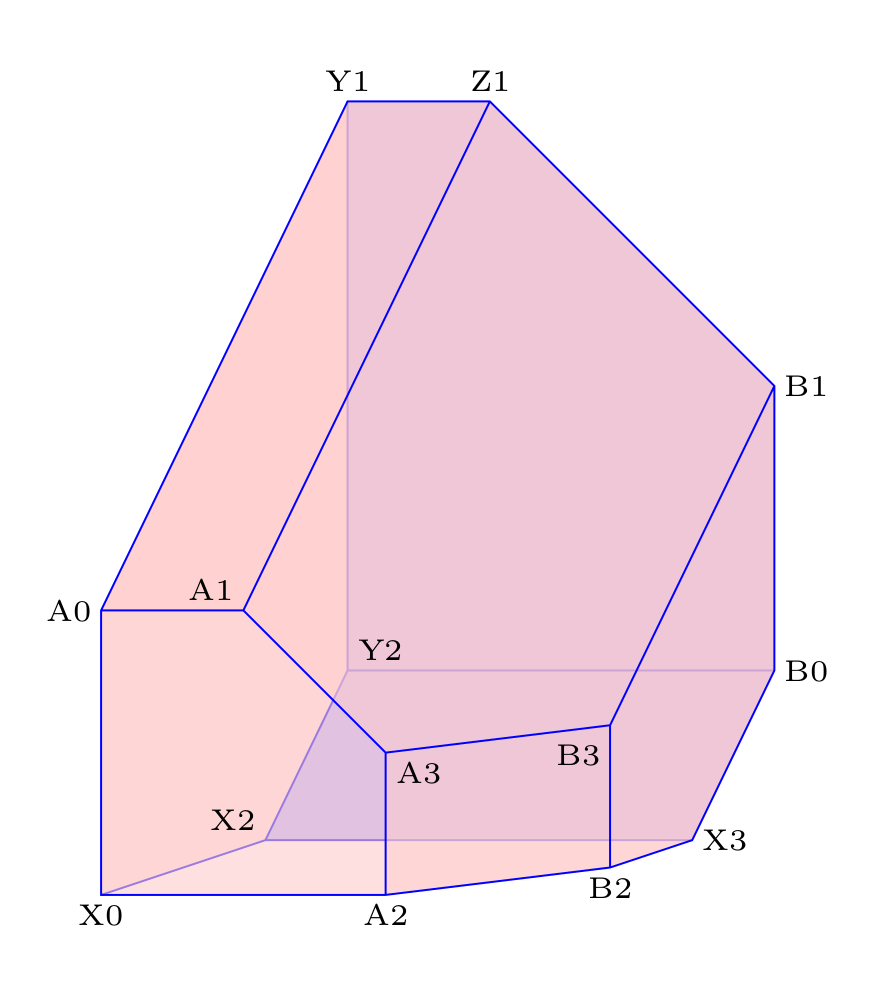
Here is a real realization of Loday's realization of the associahedron:
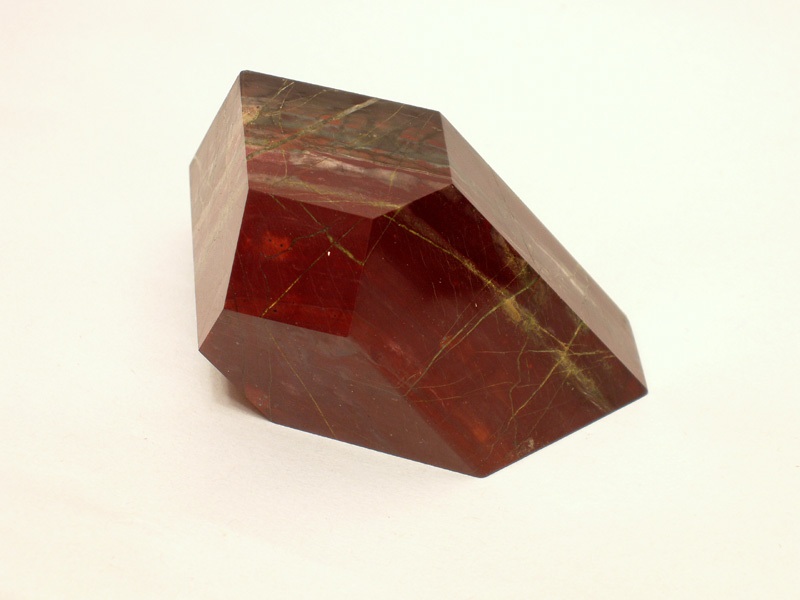
Sources (with identical images):
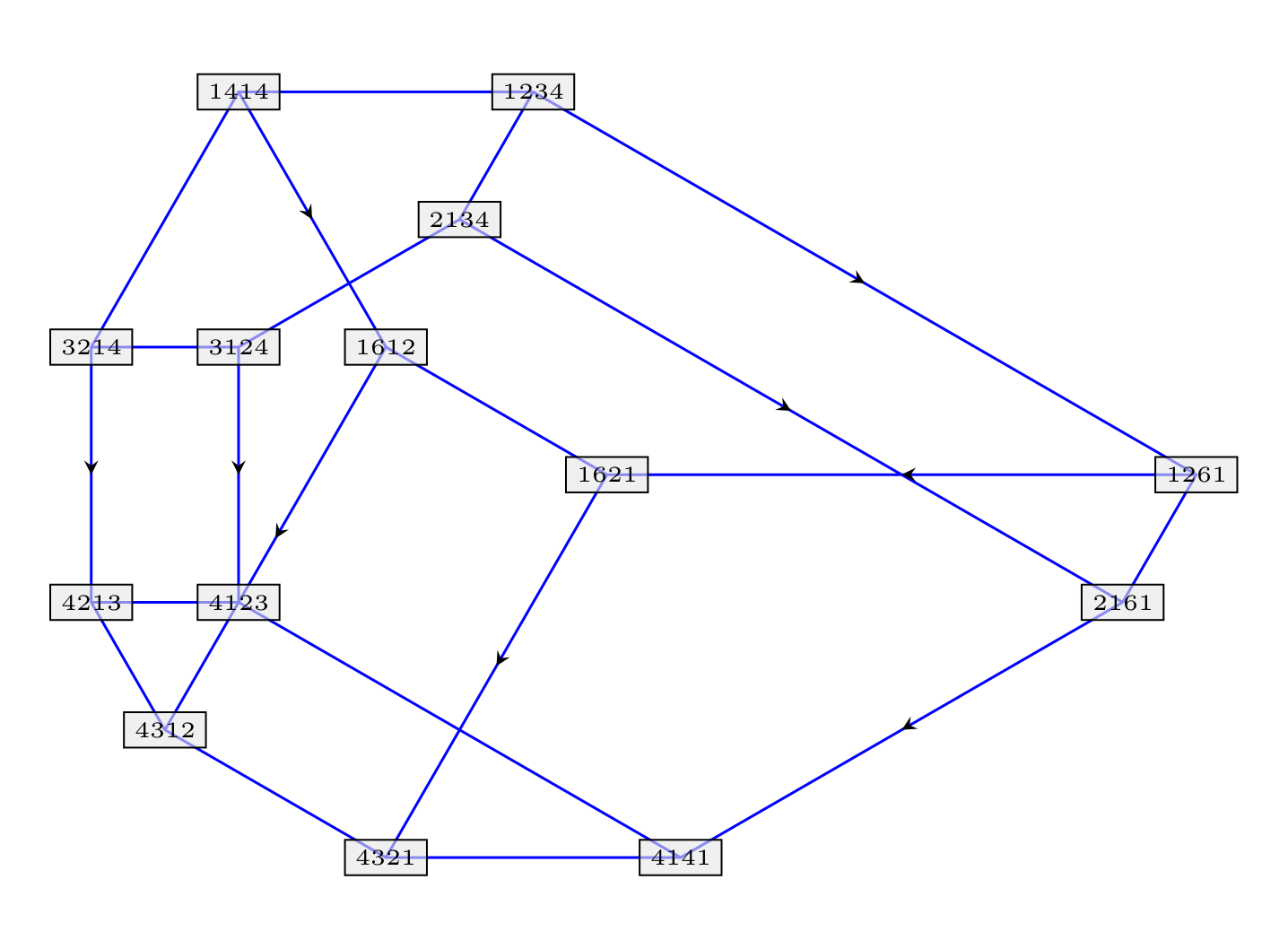
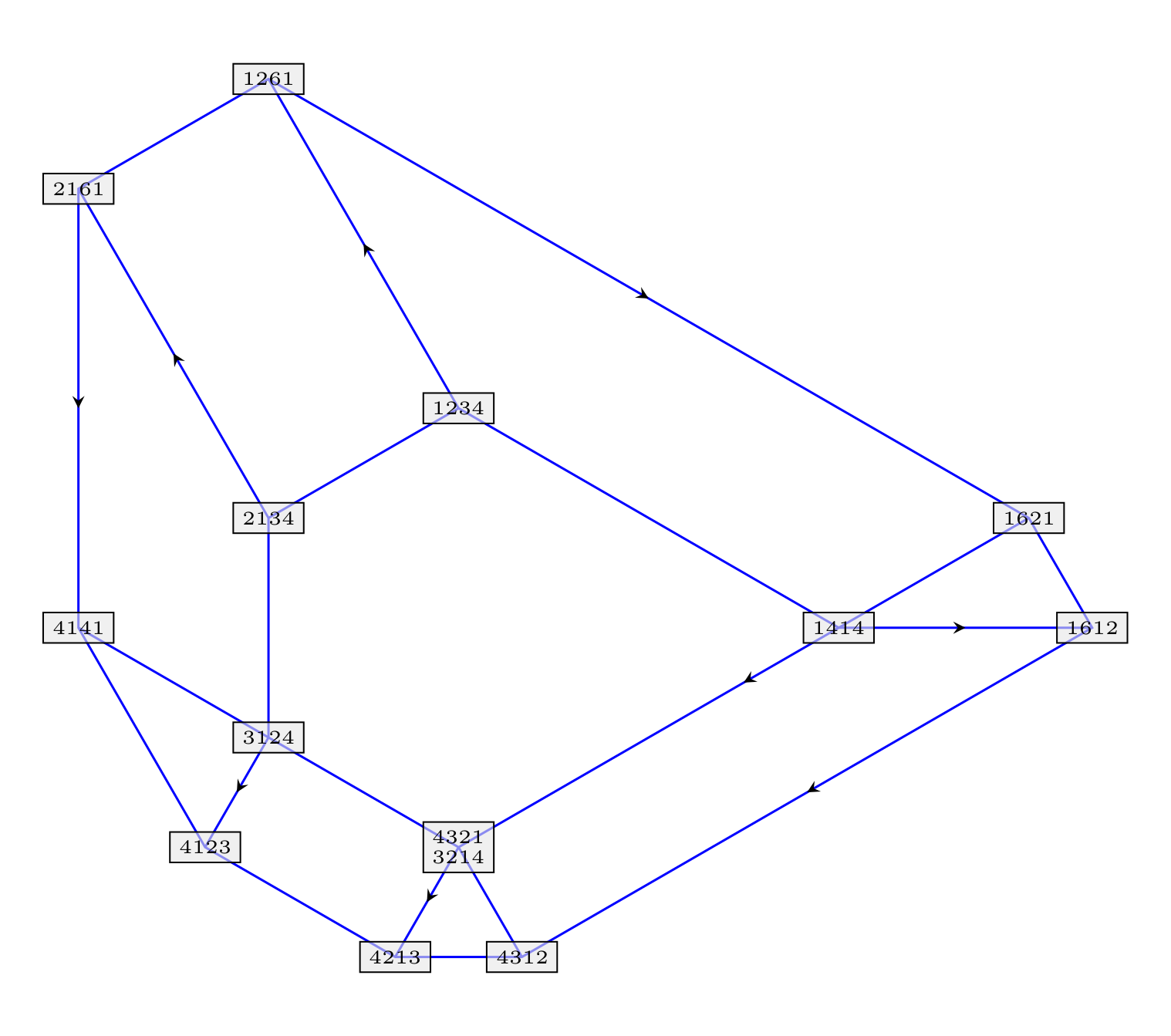
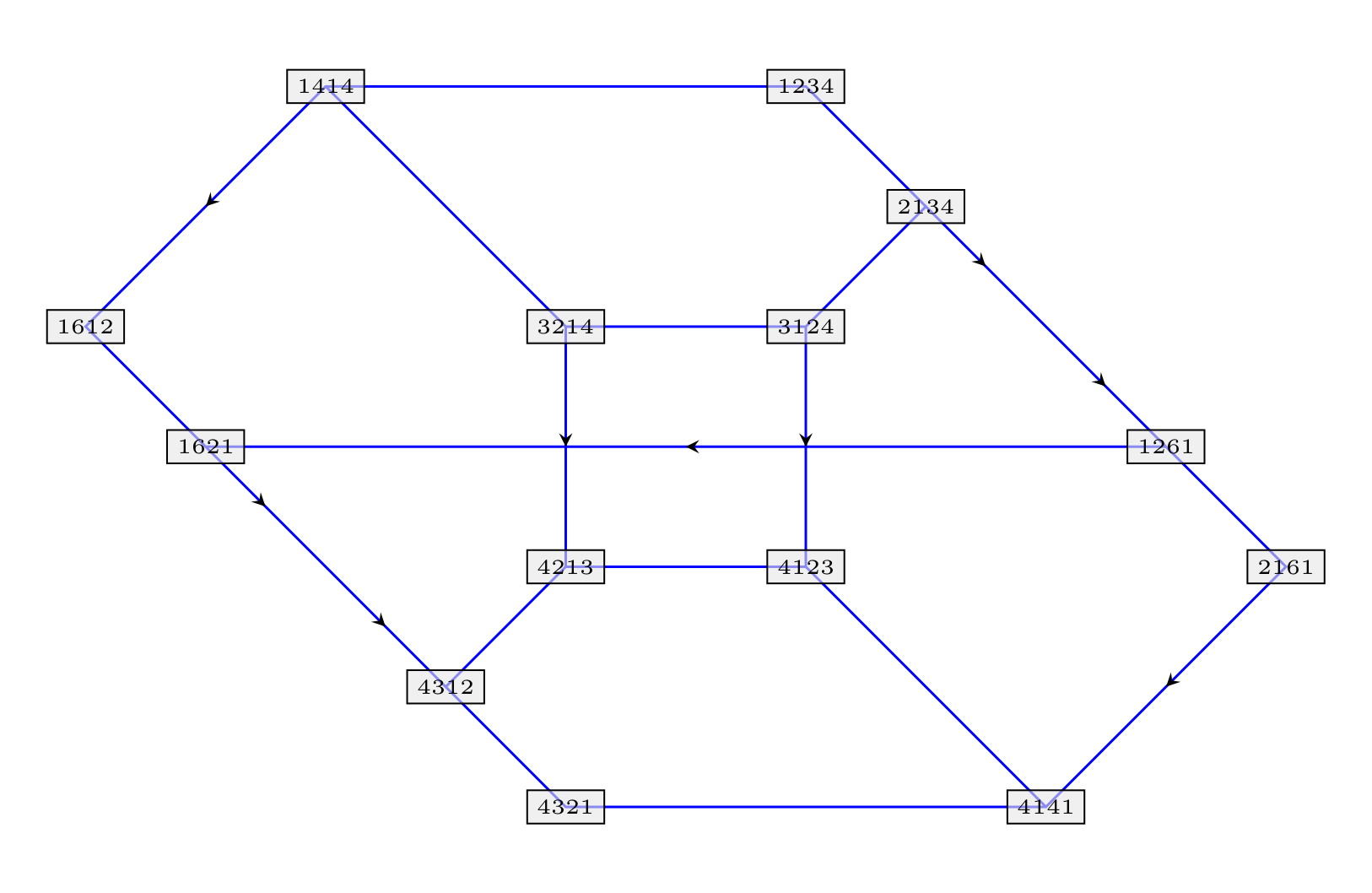
The 9 faces (6 pentagons and 3 rectangles) yield 4 essentially different orthogonal projections:
| Projection 1 | Projection 2 | Projection 3 | Projection 4 |
|---|---|---|---|
 |
 |
 |
 |
[click on the images for more detailed high resolution versions]
The realization lies in the hyperplane
x+y+z+t=10
and has the symmetry
T: (x,y,z,t) ↔ (t,z,y,x)
The quadrilateral faces are the parallelograms
Quadrilateral Q0 is a square invariant under T. Quadrilaterals Q1, Q2 are 1x3 rectangles interchanged by T and lying in parallel planes.
The 6 lines orthogonal to some face are
Counting faces: (1+1)+(2+2)+1+2=9.
"Projection 1,2,3,4" refers to the projection along L1, L2, L3, L4, respectively. The projections along L1', L2' are implied via T.
Projection 1 makes vertex 4123 incident to edge 1612-4312. It is otherwise generic (incidence-wise) and appears as the least degenerate among the 4 projections.
Projection 2 identifies vertices 3214, 4321. The projections of the adjacent pairs of parallel edges 3214-3124, 4321-4141 (direction [0,-1,1,0], length ratio 1:2) and 3214-1414, 4321-1621 (direction [-1,1,0,0], length ratio 2:3) overlap accordingly. In brief: The larger of the two pentagons orthogonal to L2 covers the other one (the sub-associahedron NNN4). The 2 pentagons are depicted below in section Pentagon geometry (120°/60°).
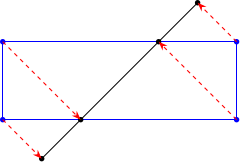
Projection 3 collapses Q1, Q2 like this:
Projection 4 collapses Q0 along its diagonal 3124-4213 and lets Q1, Q2 overlap, identifying corners 2134, 4312. It identifies edges 3124-2134 and 4213-4312.
The following images (click for high resolution versions) indicate the vertex incidences (circles), edge overlaps (dark blue) and face collapses (black).
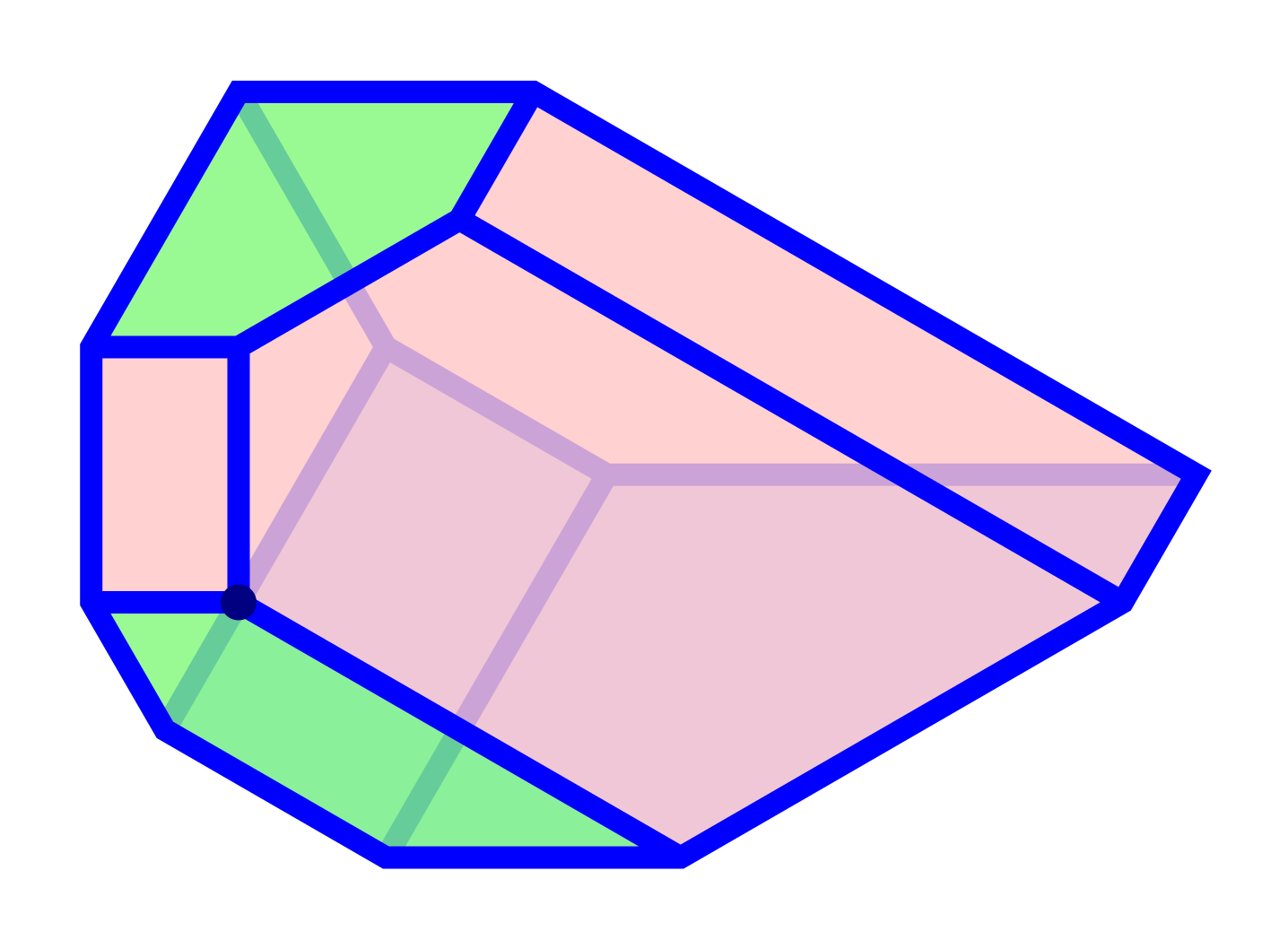
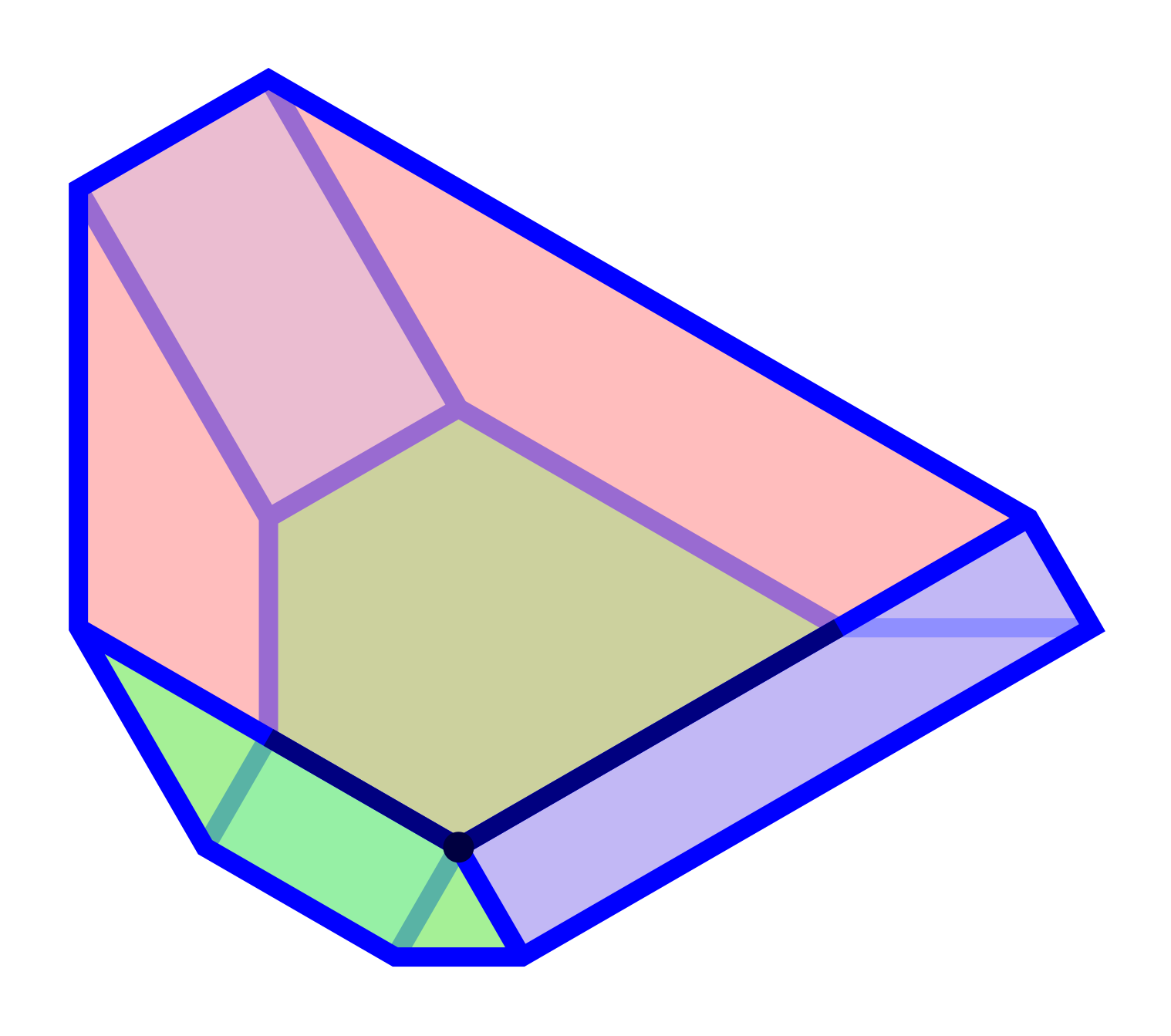
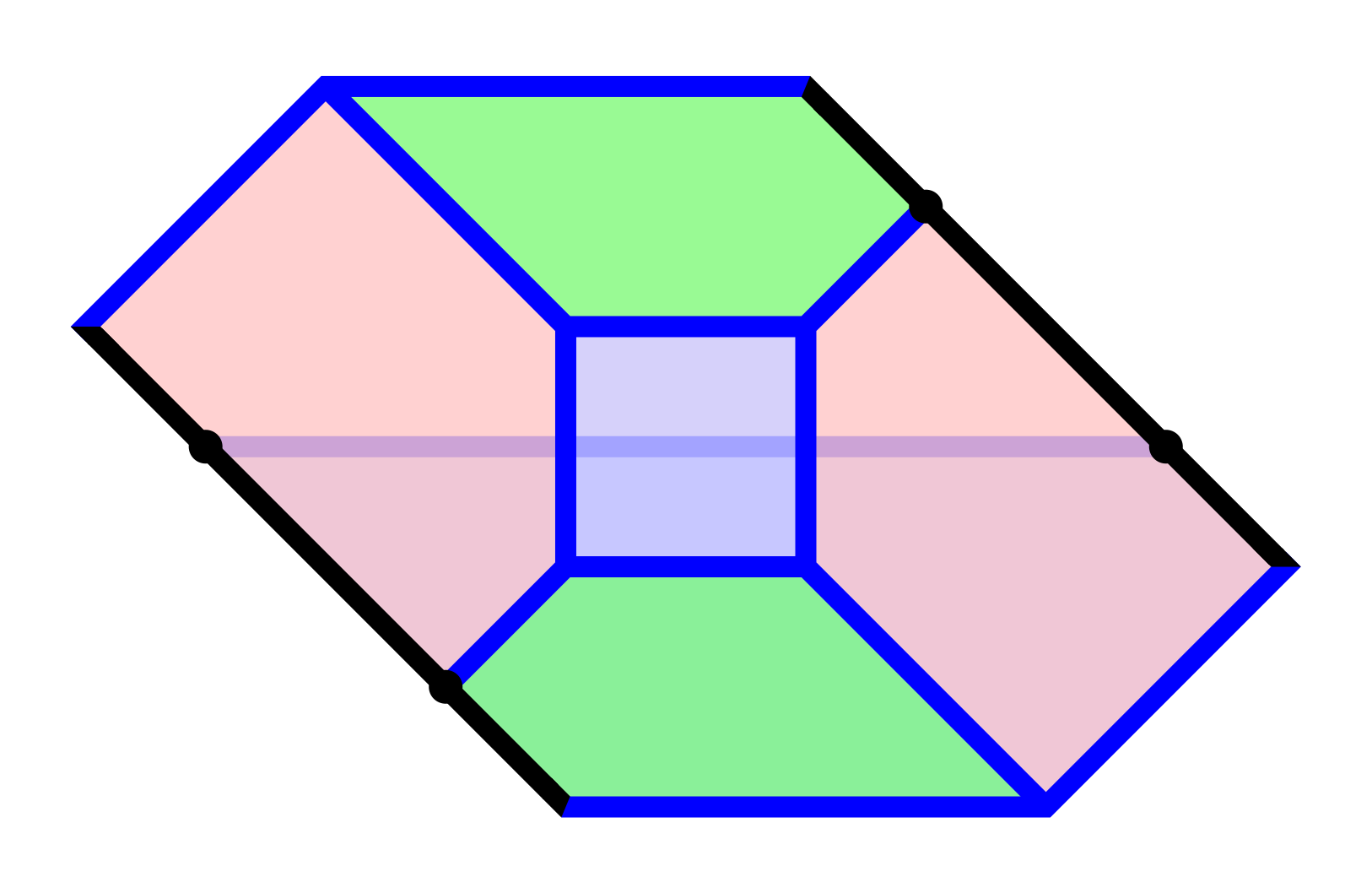
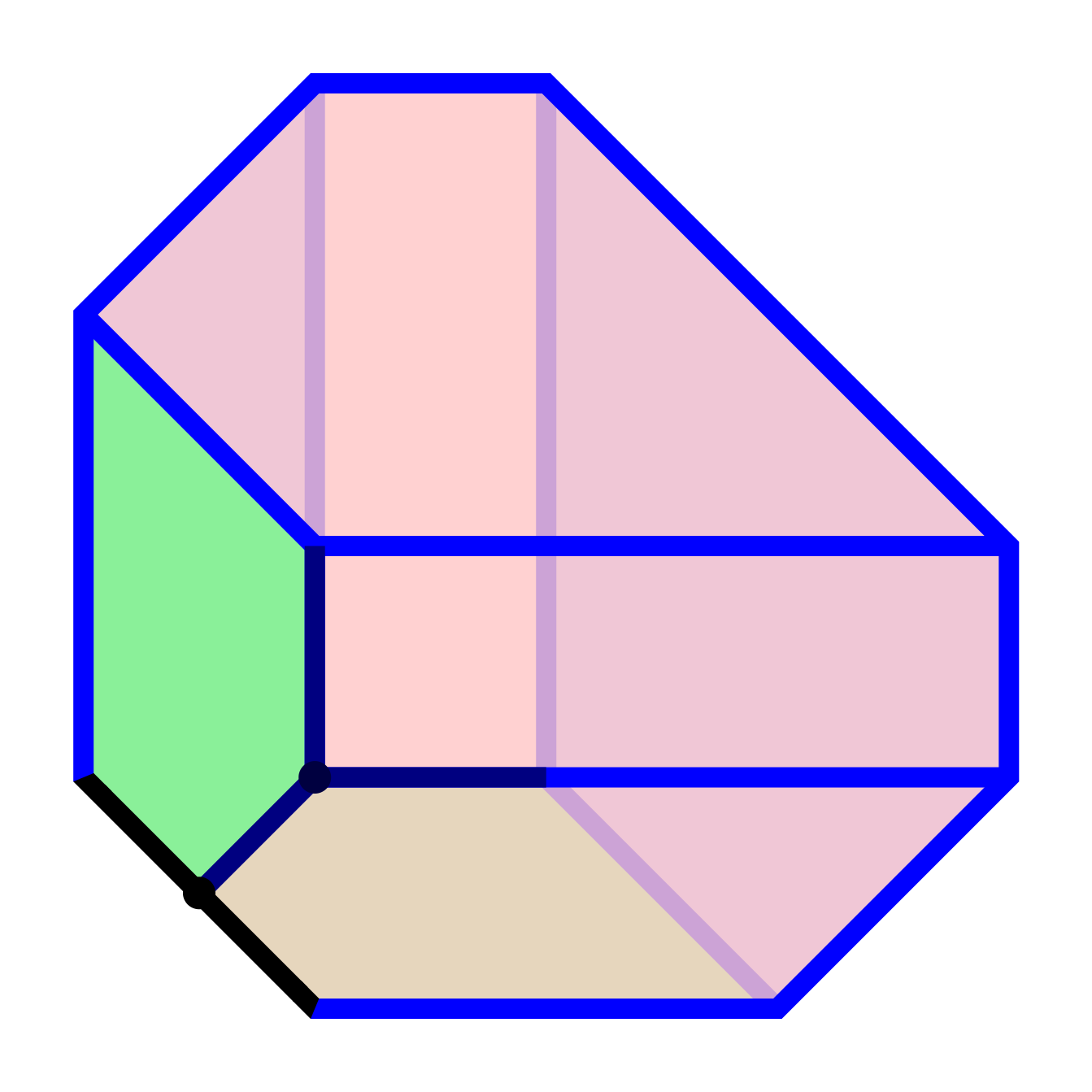
The projection heights (altitudes) of the vertices are shown in images in section More images and source code below.


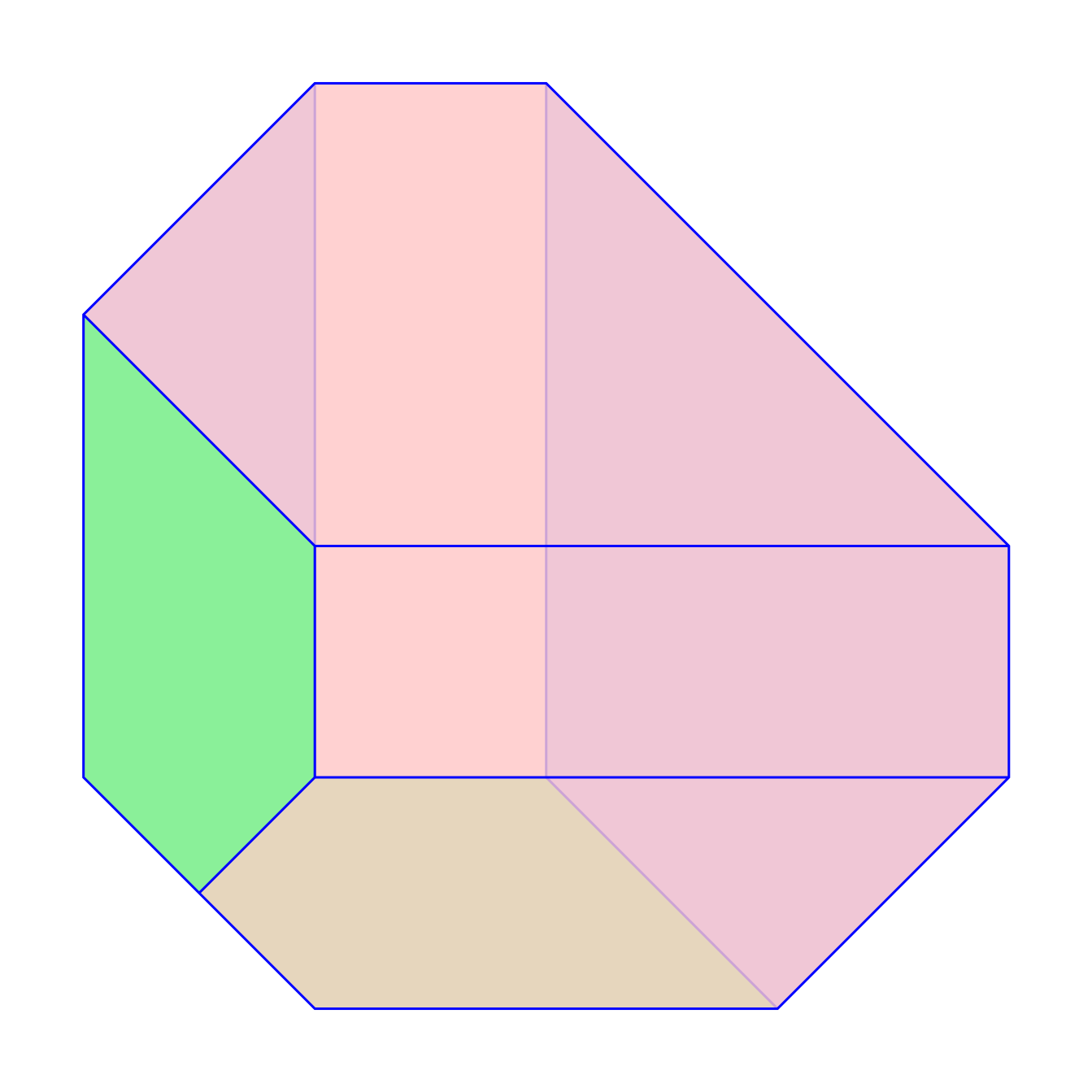


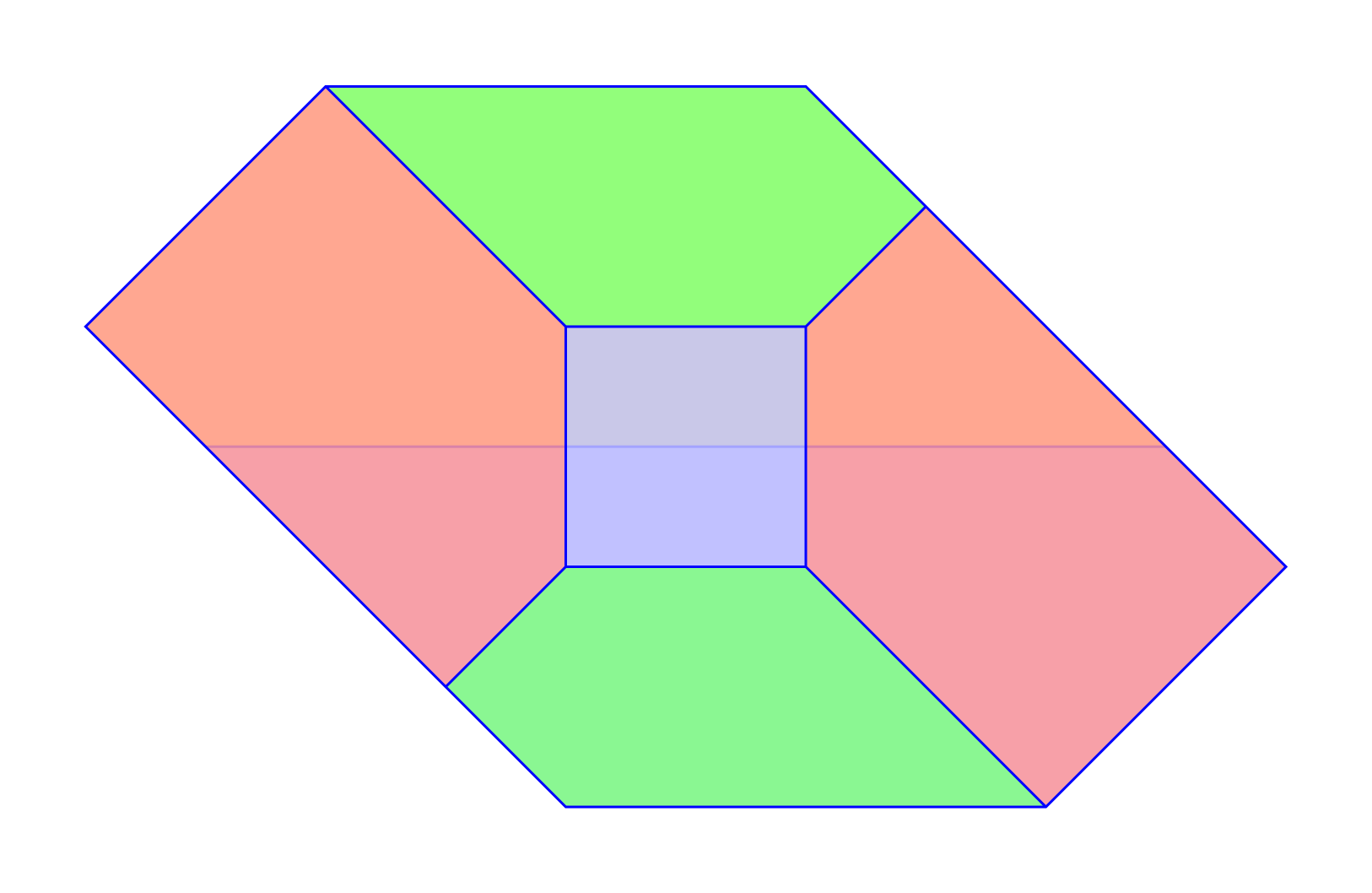
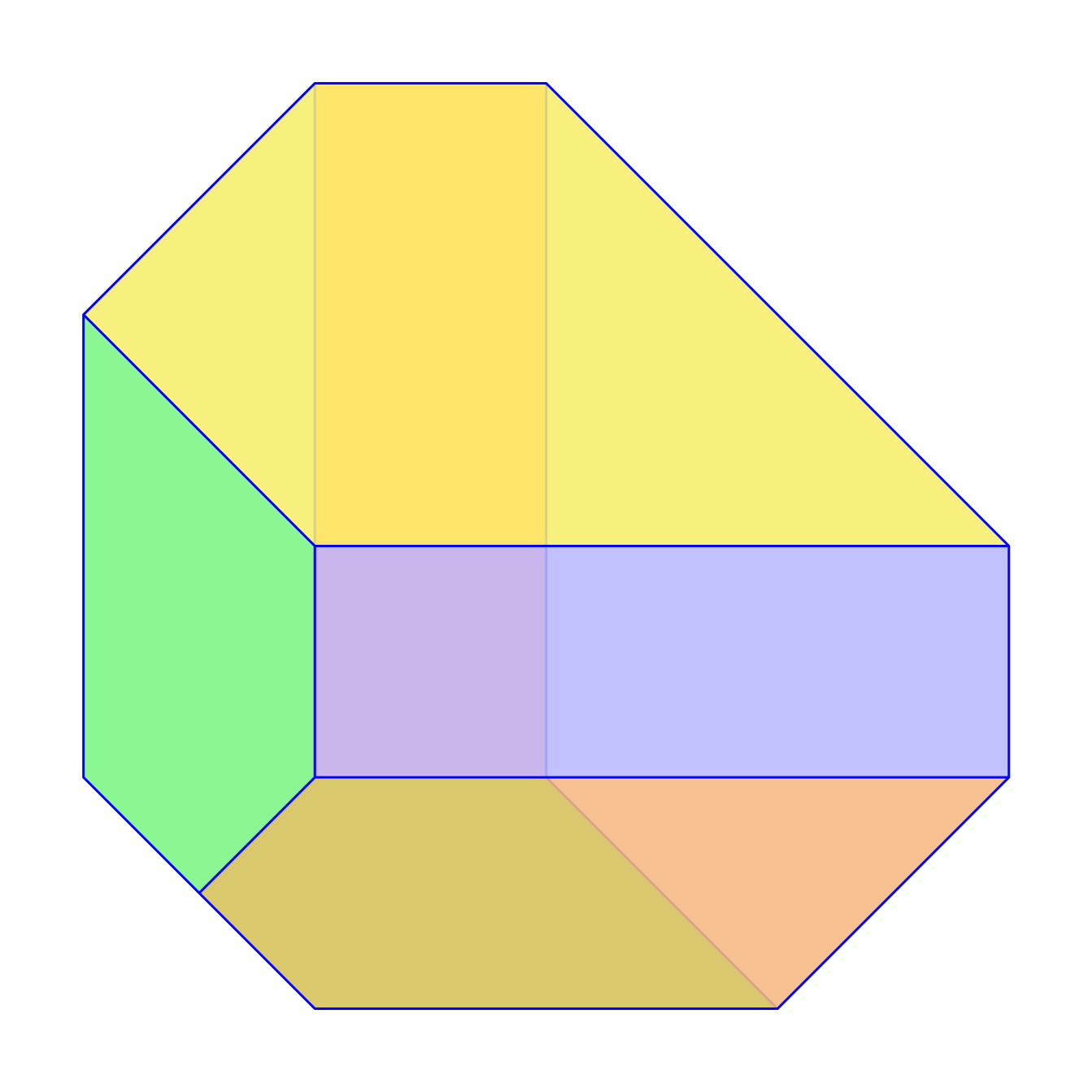
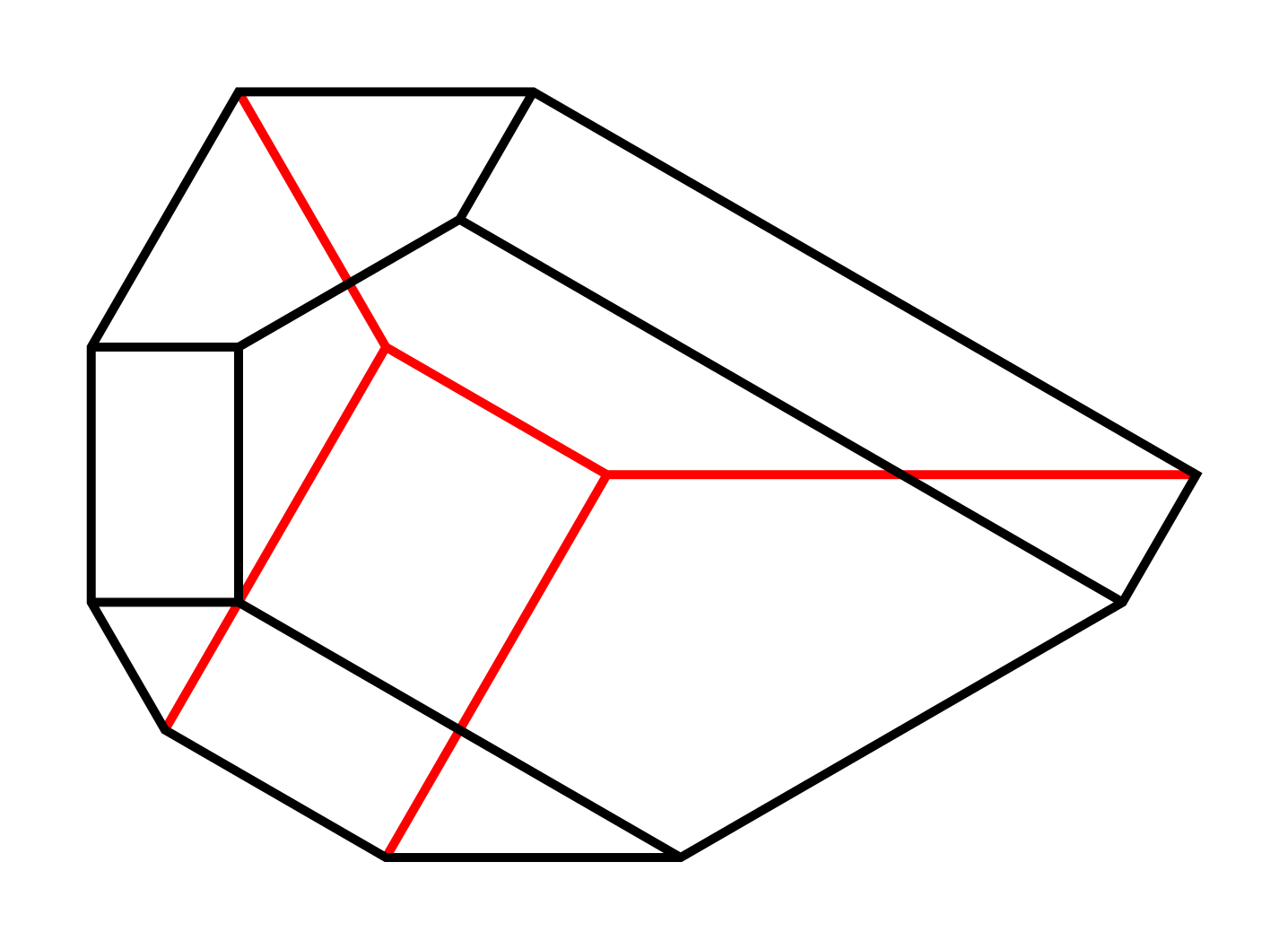
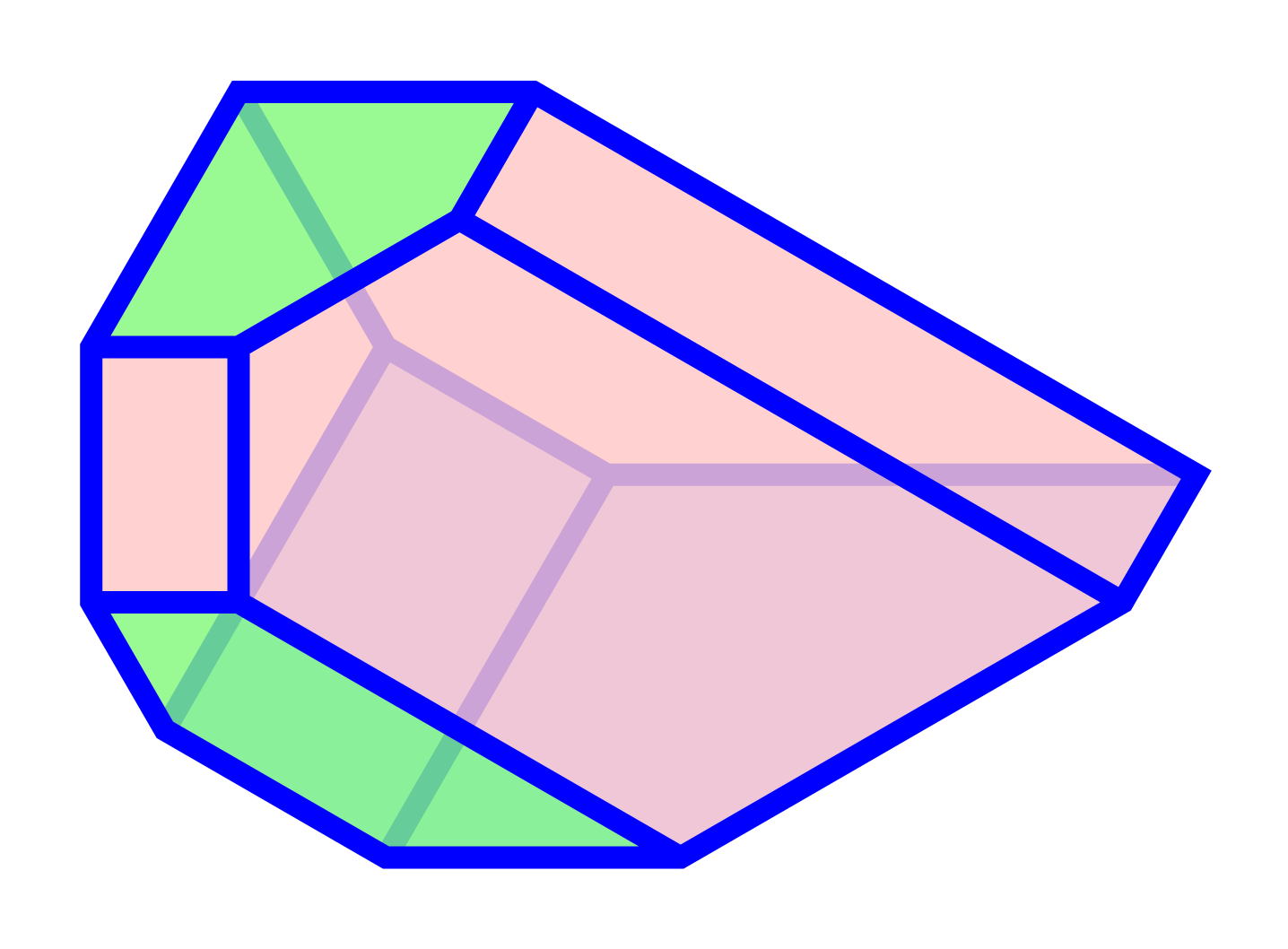

[click on the images for high resolution versions]
The pentagon orthogonal to L1 and the 2 pentagons orthogonal to L2 have the shapes
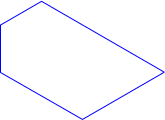
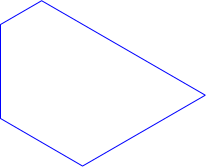
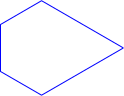
The 3rd pentagon is the Loday realization in the 2-dimensional case.
The pentagons have angles 4x120°+60° and the length ratios are 1:1:3:2:2, 2:1:4:3:2, 1:1:2:2:1, respectively.
Let us call any pentagon with only angles 120°,60° a 120°/60°-pentagon. Furthermore, for such a pentagon, the corner is the vertex with the unique acute angle (of 60°), the base is the side opposite to the corner, the sides adjacent to the base are called the short legs and the sides adjacent to the corner the long legs. A long leg is adjacent to a short leg and is parallel to the other short leg. (A long leg can be shorter than the adjacent short leg.)
Extending sides of a 120°/60°-pentagon erects outside equilateral triangles at the 120°-120° sides (the base and the short legs):
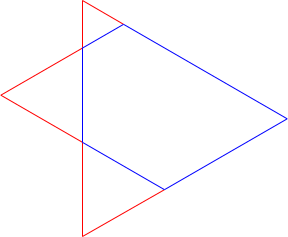
In particular, one gets an equilateral triangle (by extending at the short legs) and a parallelogram with angles 120°,60° (by extending at the base):
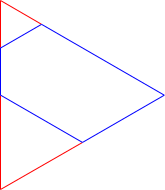

Conversely, the pentagon is obtained by cutting off accordingly two equilateral triangles from an equilateral triangle resp. one equilateral triangle from a 120°/60°-parallelogram.
Clearly, a 120°/60°-pentagon is determined by the lengths of its base and its short legs. The extension to the parallelogram shows:
The length of a long leg is the sum of the lengths of the parallel short leg and the base.
This follows also from the extension to the equilateral triangle: its side length is long leg + adjacent short leg = base + short legs.
Besides the TeX/TikZ source files there are images with
and, for the 4 orthogonal projections,
Here are related Python scripts (also included in [Source: assoc-L3A.tex]):
Go to: Associahedron and associator identities · Publications and Preprints · Markus Rost's Web Page